The art of not choosing
JAZU launches omakase evenings in Sofia: three hours, sake pairings and a menu revealed course by course
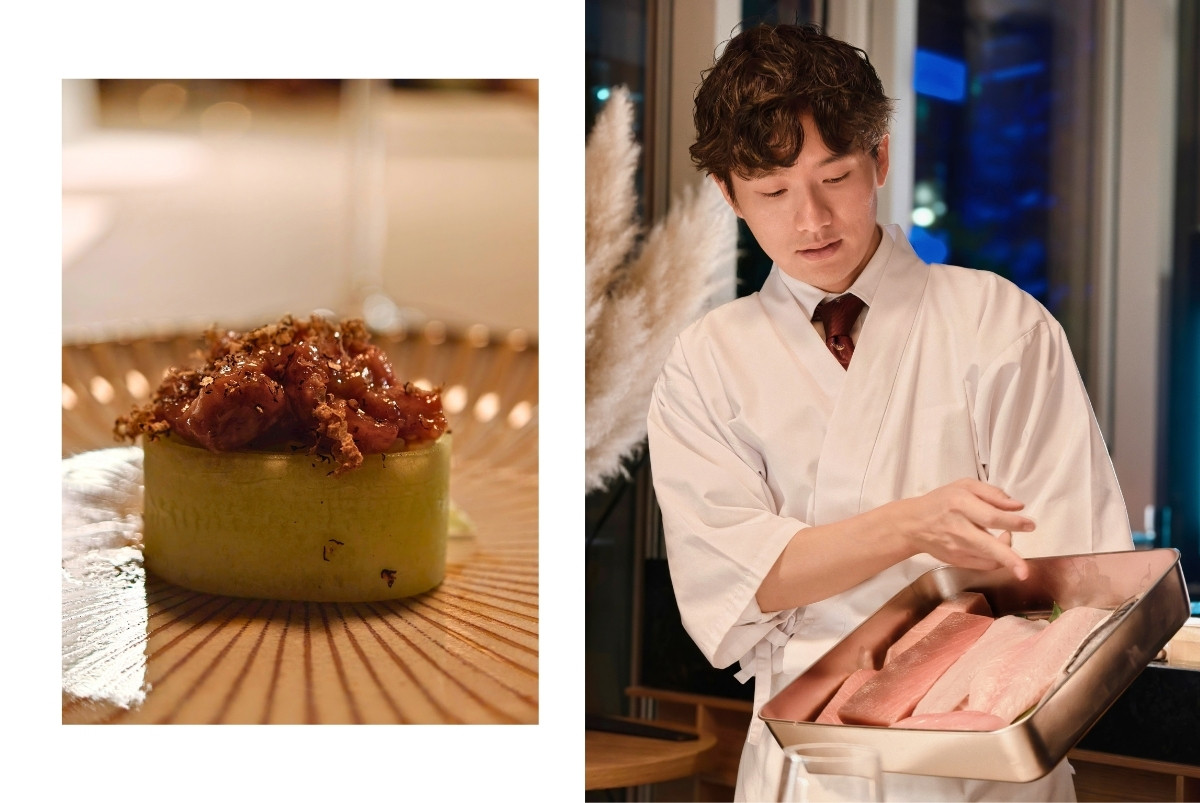
We were at JAZU’s first omakase evening,
a format we know from good restaurants abroad and have long wanted to see in Sofia. Omakase means roughly “I leave it to you”, which is a useful starting point. Once you sit down, the chef decides what you eat, in what order and at what pace. At JAZU, a table for eight occupies a separate room. One group can reserve it, or you can sit with people you’ve never met. Our evening brought together journalists from different publications; over three hours, conversation naturally became part of dinner. Before each course, the chef came out, showed us the ingredients, explained the techniques and cooked in front of us. Sake pairings accompanied the menu. By halfway through, the need for so few guests and so much time made perfect sense.
What we ate
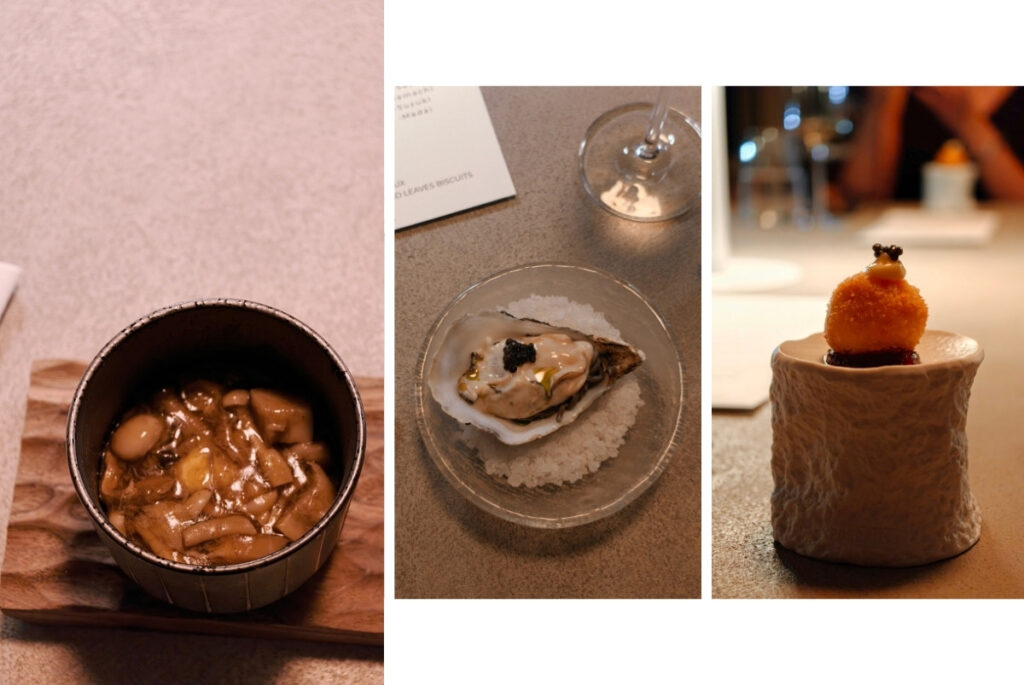
We began with chawanmushi, a savoury Japanese egg custard with Japanese mushrooms, Bulgarian porcini and yuzu. Then came an oyster with soba noodles, beurre blanc and caviar, followed by hamachi with umeshu ponzu, green apple, cucumber and fresh wasabi. The menu doesn’t stay within strict Japanese boundaries: French techniques, Bulgarian references and ingredients from around the world all have a place.
Lobster korokke arrived with homemade tonkatsu sauce and caviar,
followed by one of my dishes of the evening: grilled Hokkaido scallops with aonori, sake and ikura. Wagyu rib-eye came next, along with perhaps the menu’s most entertaining cultural exchange: Japanese beef with “Snezhanka” nukazuke. The nod to Bulgaria’s yoghurt-and-cucumber salad was recognisable, but used the Japanese technique of fermenting in rice bran. It worked. Very well.
The fish’s journey to the table
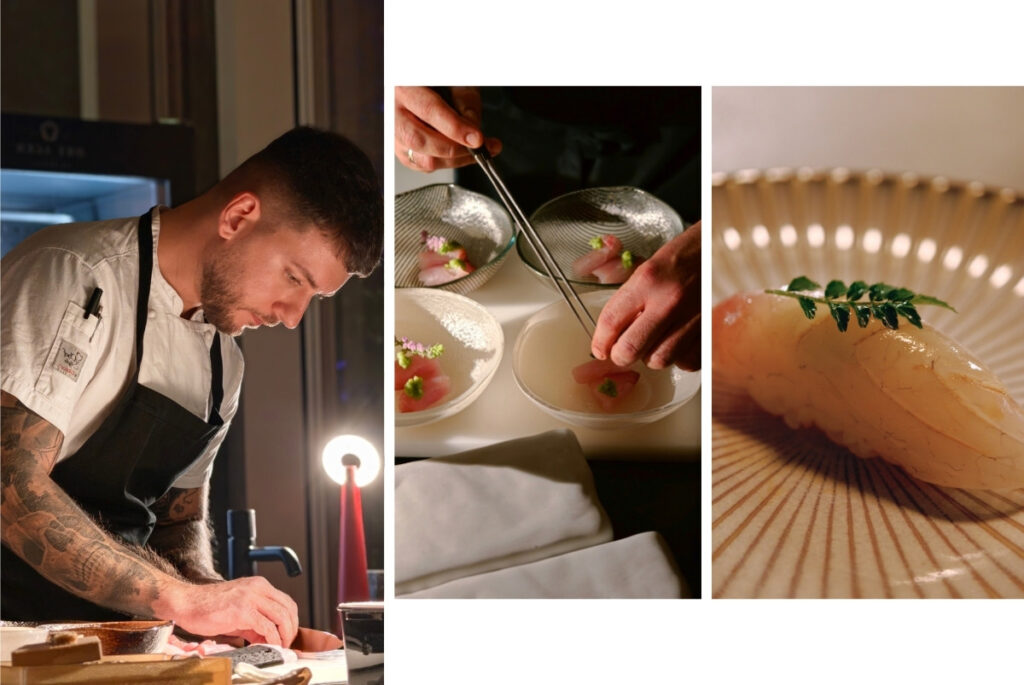
For me, the most interesting part began with the aged-fish selection. Some fish had aged for four days; the tuna for 30. Fish dry-ageing is still relatively unusual in Sofia. Controlled ageing changes the texture, reduces moisture and concentrates flavour. Here the result was clear:
deep, full umami flavours, particularly across the different tuna cuts.
The chef also demonstrated something an ingredients list can’t convey: the precision of nigiri. The amount of rice, the pressure of a hand, temperature and the cut of fish all seem simple until you watch someone who knows exactly what they’re doing.
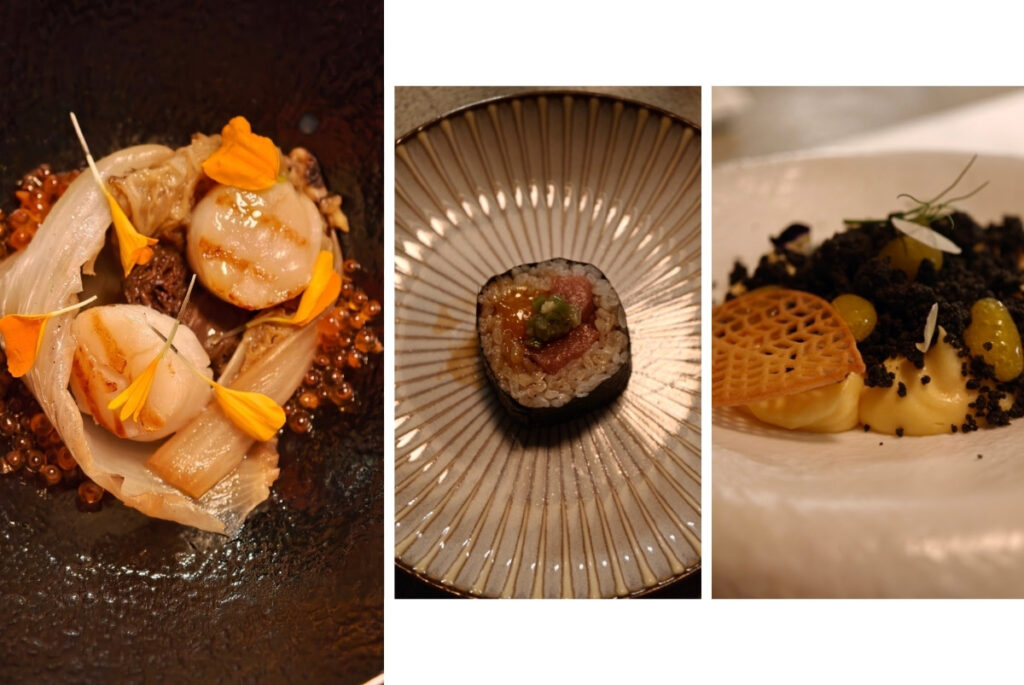
We tasted akami and chutoro, alongside saba, hamachi, suzuki and madai. There was chu-maki with akami, chutoro, otoro and frozen egg yolk, too. After those textures and degrees of richness, you begin to understand sushi’s place in omakase. Towards the end came wagyu gunkan, followed by a very welcome yuzu sorbet. Dessert was pumpkin crémeux with black-sesame crumb and leaf biscuits, then bonbons to finish.
Three hours later
JAZU plans monthly omakase evenings, arranged by advance enquiry. There are just eight seats, and no fixed price had been announced at the time of our visit. We’ve eaten very good Japanese food in Sofia and seen plenty of tasting menus, but I had missed this format. Perhaps because my best previous experiences of it had been in Michelin restaurants in Europe, leaving the bar in my head inconveniently high. Three hours after dinner began, I left JAZU with the rare feeling that Sofia could now offer an experience of that order. No plane ticket required.
With love for Japanese food: JAZU and its new chef Petar Kikov (in Bulgarian)
What’s happening in the city? Follow GoGuide on Instagram to hear about it first.
Subscribe to our YouTube channel for a closer look at the city, and a wider view.