Inner Space: What's Keeping Us Awake?
For the nights spent watching the clock and counting the hours until your alarm
Ever found yourself unable to fall asleep after a stressful stretch, just when you thought things had finally settled down?
Nothing seems obviously wrong, yet something is still disturbing your nights. Like an unsettled stomach, trouble sleeping can be one of the ways worries, dissatisfaction or bottled-up emotions make themselves felt. Sleep is essential to our physical and mental wellbeing, and as the days grow shorter and we settle into an autumn rhythm, getting proper rest feels all the more relevant. Sleep loss can take a serious toll on the body, and a lie-in is no substitute for regularly getting enough rest. Sleep is more than a welcome pause between two busy days: it is when our bodies and minds recover. Consistently cutting it short can have serious consequences.

For this month's column, we spoke to Marieta Baycheva, a psychologist and practitioner of positive psychotherapy, part of the therapist community at hOUR SPACE Mental Health Hub. Her profile at the hub lists her psychotherapy practice as supervised. She studied at St Cyril and St Methodius University of Veliko Tarnovo, first pursuing education and then psychology. Her work draws on positive psychotherapy, an integrative, transcultural approach that explores inner conflicts, current and basic capacities, and the balance between different areas of life. Here, she shares examples from her practice and a few simple but useful pointers for those nights when the body is ready for sleep and the mind refuses to stop. Read on.
Trouble sleeping: when the brain won't switch off
Words by Marieta Baycheva

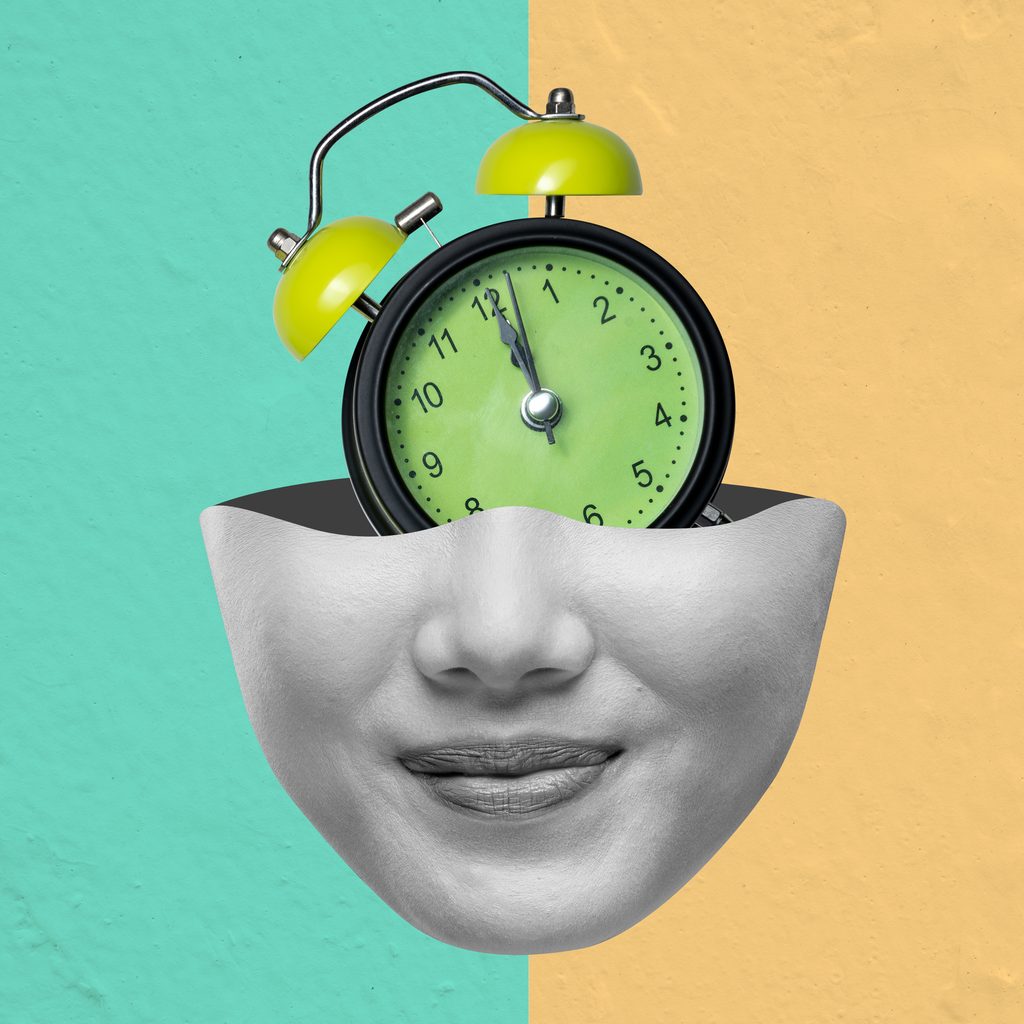
“I'm so tired that all I think about all day is getting into bed. Then I finally lie down, and sleep disappears.” I hear versions of this sentence more and more often. Sometimes a person falls asleep easily but wakes at three or four in the morning and cannot get back to sleep. Other times, the body is exhausted and the eyes are closing, but the thoughts seem to decide that this is the perfect moment to get to work. “What did I miss today? What do I need to do tomorrow? Why did he say that to me? Is my child OK? How will I manage the money this month? What if...?” And the more we tell ourselves, “I have to sleep, I'm up early tomorrow,” the more awake we become.
We usually think of sleep as something we have to do
In fact, sleep is something we have to allow to happen. We cannot force ourselves to fall asleep in the way we can force ourselves to get out of bed and go to work. To fall asleep, the body needs a very important message: the day is over; you can let go of control. Sometimes, that message simply never arrives.
Imagine someone thousands of years ago hearing a noise behind the trees and spotting a predator. There is no time to think things through. The body's ancient survival system kicks in: the heart beats faster, muscles tense and attention locks onto the danger. Cortisol plays a part in this response, as one of the hormones that help us mobilise our resources under stress. But the predator either leaves or the situation ends in some other way. The danger has an endpoint. Today's “predators” are rather more persistent.
They are deadlines, loans, conflicts, caring for parents and children
Uncertainty. Work messages arriving at ten at night. Worst of all, we can carry them everywhere, including into bed. The body is lying down, but the brain is still at work. One client put it perfectly: “It's as though there's a radio station in my head that I can't turn off.”
There was no single thought keeping him awake. There were dozens. As soon as one ended, another began. The harder he tried to stop them, the more insistent they became. This is one of the paradoxes of sleep difficulties: at some point, sleep itself becomes a task. You glance at the clock: 00:47. Then 01:23. You start doing the maths: “If I fall asleep now, I'll get five and a half hours.” A little later: “Four hours left.” Now you are not just lying awake.
You are worrying about being awake
The bed, which ought to be associated with relaxation, can gradually become associated with effort, anticipation and tension instead. Sometimes the first important change is to stop chasing sleep. If we have been lying awake for a long time and can feel our frustration building, it can help to get up, go into another room or sit somewhere quiet, read something undemanding in dim light, and return to bed when we feel sleepy again. Every minute in bed does not have to be a battle with our own bodies.

How we arrive at bedtime matters just as much. We cannot answer work messages, read upsetting news or have an argument until 23:58 and expect the brain to obediently press OFF at midnight. We need a transition between activity and sleep. It need not be complicated. For one person, it might be a warm shower; for another, a book, quiet music or a short walk. Dimming the lights and keeping the phone out of bed can help. Not because there is a magical evening ritual, but because repetition gradually creates a familiar signal: we are done for today.
Many people take everything they haven't resolved that day to bed with them
Sometimes a very simple habit helps: before bed, write down what is worrying you and what you need to do tomorrow. You do not have to find the solution. Moving the task from your head onto paper can be enough. “I won't forget it. I'll deal with it tomorrow.”
What we do with our bodies matters too. Caffeine late in the day, alcohol, a heavy meal just before bed, too little movement or an erratic routine can all disrupt sleep further. Daylight, physical activity and a reasonably consistent waking time, on the other hand, help our internal clock distinguish between time to be active and time to rest. And when we feel physically tense,
a few minutes of slow breathing can be more helpful than another attempt to “stop thinking”
Especially if the out-breath is gentle and a little longer than the in-breath. We do not have to empty our minds. It is enough to give the body a chance to gradually come out of its state of alert.
There is something else worth remembering. Not all insomnia comes from stress, and not every sleep problem can be solved with tea, breathing exercises and less time on the phone. If difficulties persist, if you regularly wake in the night, feel exhausted during the day, snore loudly, experience choking or gasping, or have had disrupted sleep for weeks, seek a medical assessment.
Sometimes insomnia is linked to medical conditions or medication
Hormonal changes and other sleep disorders can also be involved. And when anxiety and constant thinking are part of the problem, psychotherapy may help too. Sleep is a curious state. Every evening, we willingly surrender control over the world for a few hours. Perhaps it is not so surprising that the people who spend all day having to keep everything under control sometimes find it hardest to let go at night.
We cannot order our brains to “switch off”
But we can gradually show them that the day is over. That the tasks can wait. That not every thought needs a solution at two in the morning. Above all, that right now there is nothing that needs to be rescued, fixed or controlled. Sometimes sleep begins right there: when we stop demanding it of ourselves and allow ourselves simply to rest.
Inner Space: Personal Boundaries (in Bulgarian)
What's happening around town? Follow our Instagram and be the first to know.
Subscribe to our YouTube channel for a closer look at the city and beyond.