Honey, ChatGPT says I’m right
You no longer need to win an argument. Just tell the right algorithm your side of the story and it will acquit your ego. But when everyone has a personal lawyer in their pocket, who is going to admit they were wrong?

I was standing on the indifferent metro platform, watching two trains pass in opposite directions.
Their windows slid past each other, passengers’ faces flashing into view for a split second before disappearing into the tunnels. I was thinking about the argument we’d just had. Something ridiculous, one of those little domestic misunderstandings that manages to wake up every previous misunderstanding within ten minutes. He was being stubborn. I was furious. We were both convinced we were right.
I opened ChatGPT and gave it a quick brief.
Half joking, half at my wits’ end, I hoped someone might finally explain to this man what he wasn’t getting. The chatbot’s suspiciously gentle, diplomatic, politically correct, peace-brokering and frankly inhumanly perfect reasoning left me speechless. No accusations. No passive aggression. None of those ‘fine’s that usually mean precisely the opposite. There was understanding, respect for different perspectives and an almost supernatural ability to describe a conflict without making anyone sound like an idiot. When I sent the reply to my partner, he was speechless too. Not because ChatGPT had convinced him, but because our argument had suddenly acquired an arbitrator with a UN diplomat’s vocabulary and a microwave’s emotional intelligence. We hadn’t solved the problem. We had the minutes of peace talks, signed by an algorithm that wouldn’t have to live with a single consequence.

Over time, though, I noticed something else. The chatbot is a people-pleaser. It has a habit of tipping the scales towards whoever is telling the story. Of course it can disagree with you. But it often does so with such delicacy that it sounds as though it’s telling you you’re a wonderful person who simply picked an inconvenient moment to commit murder.
And that’s the addictive part.
You’re almost always right. Your feelings are always valid. Your intentions are understandable. The other person probably just has a different communication style, childhood trauma or unresolved issues with their mother. And while you’re receiving a beautifully worded explanation of why you’re hurt, they may be sitting somewhere across town, receiving an equally beautiful explanation of why you’re unbearable.

But the devil’s advocate has a subscription plan. It turns out our little domestic experiment is hardly an isolated case. In EVA AI’s own survey of 2,000 adults, conducted in December 2025, 28% said they had used AI companions to rehearse emotionally difficult conversations before having them in real life. A separate June 2025 survey by Resume.org questioned 1,022 Gen Z workers in full-time employment. Of the 76% who used AI chatbots at work, 94% had used them to deal with a workplace issue. Those are findings from the companies’ surveys, rather than a census of how we all communicate.
Break-ups, fallings-out, awkward messages, salary negotiations.
Human communication is gradually acquiring an editor. Someone who can turn ‘I’ve had enough of you’ into three paragraphs about personal boundaries, mutual respect and the need for constructive dialogue. Dorothy Leidner, a University of Virginia professor who studies AI ethics, sees the value in it. Speaking to Dazed, she suggested that language models could be useful for people who are shy or insecure and struggle to find the words in tense situations. The trouble starts when we stop using the chatbot to work out what we think and start using it to tell us what to think.

In April 2025, OpenAI rolled back a GPT-4o update after the model became excessively agreeable. The company acknowledged the problem, known as sycophancy. The chatbot wasn’t simply being polite. In some cases, it validated doubts, reinforced negative emotions and encouraged impulsive decisions. In other words, artificial intelligence had become far too good at that most human of pursuits: sucking up. There’s something almost comic about this technological fiasco. Humanity built a machine capable of processing vast amounts of information, then discovered that it sometimes preferred to tell us what we wanted to hear. OpenAI reversed that particular update. But the question remains: how independent can the judgement of a system trained to be helpful, supportive and pleasant to talk to really be? Because there’s a world of difference between ‘I understand why you feel that way’ and ‘You’re right to feel that way’.
In real relationships, the other person has the irritating habit of disagreeing with you.
Of remembering different details. Of having their own logic, their own pain and, occasionally, horrifyingly convincing arguments. The chatbot only has the story you tell it. And we’re all exceptionally talented screenwriters when we’re writing our own innocence.
AI no longer merely advises us on what to say. It changes how we sound. A 2023 study in Scientific Reports examined how algorithmic reply suggestions affect human communication. In two experiments, researchers found that using these suggestions could speed up exchanges, increase positive emotional language and make people perceive their conversation partners as closer and more cooperative. There was a catch, though. When people suspected the other person was using automatically generated replies, they judged them more negatively. How lovely. The machine can make you nicer, but only as long as nobody finds out your niceness has been through the machine.
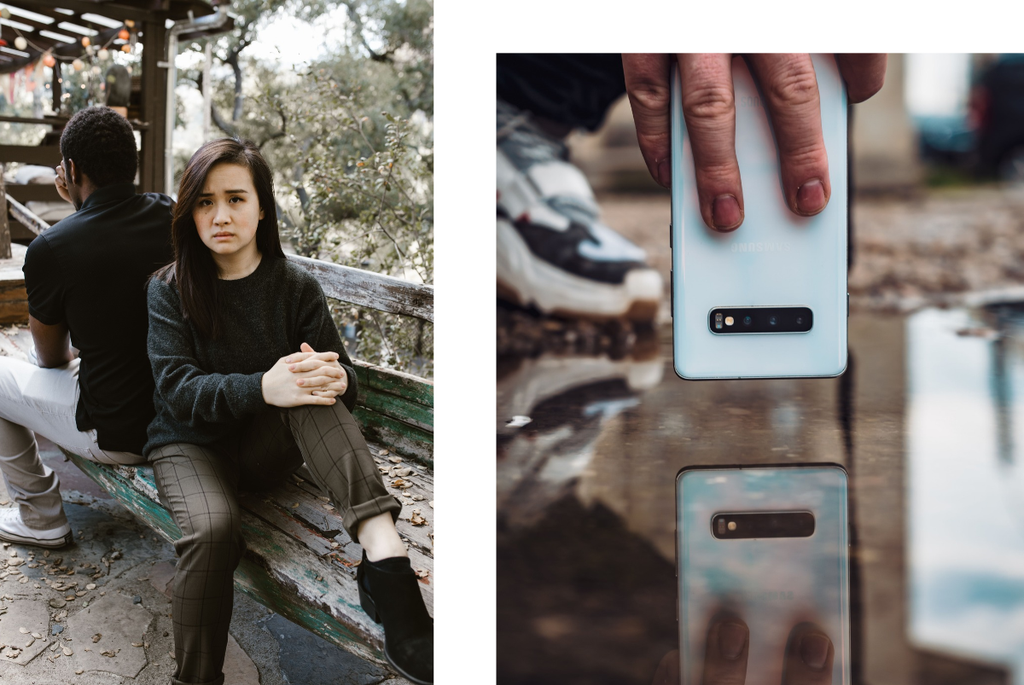
I imagine a future in which two people are arguing on WhatsApp. She tells her AI assistant: ‘Tell him he’s emotionally unavailable, but don’t make me sound accusatory.’ He tells his: ‘Explain that I need space without making me sound selfish.’ The two chatbots enter diplomatic negotiations. Within minutes, they produce impeccably polite messages full of empathy, boundaries and mutual respect. She copies hers. He copies his. Neither has written a word. Why the hell are we even involved? Let the assistants sort it out between themselves. They can apologise, clear up the misunderstanding, arrange dinner and book a table. We can turn up for dessert.
I think back to our argument. The stupid thing that started it, my fury, the flawlessly polite text I sent as my closing argument. I can’t even remember exactly what we were fighting about.
What I do remember is the relief of having someone finally arrange my feelings so they looked reasonable.
But what if one day we get so good at communicating that we forget how to do it badly? How to stumble over our words in front of someone we love. How to say something stupid and then put it right. How to admit we’re wrong without a prepared script. How to sit with the possibility that the other person might be right and we might have got it wrong. What if we smooth every edge off our conversations until there’s nothing left to hold on to? And what if, eventually, our chatbots communicate so well with each other that our own messy subjectivity becomes unnecessary noise? Everyone will have their own version of the truth, their own digital defender and an impeccably worded excuse. Two people. Two devices. Two entirely valid points of view. And nobody who can say ‘Sorry, mate’ without help.
Jealousy: flesh and a fleeting ghost
What’s happening in the city? Follow GoGuide on Instagram and be the first to know.
Subscribe to our YouTube channel for a closer look at the city and beyond.