Mihaela Vacheva: “Not everyone simply has a home”
The photographer on freedom on two wheels, belonging and the slow work of building a home.
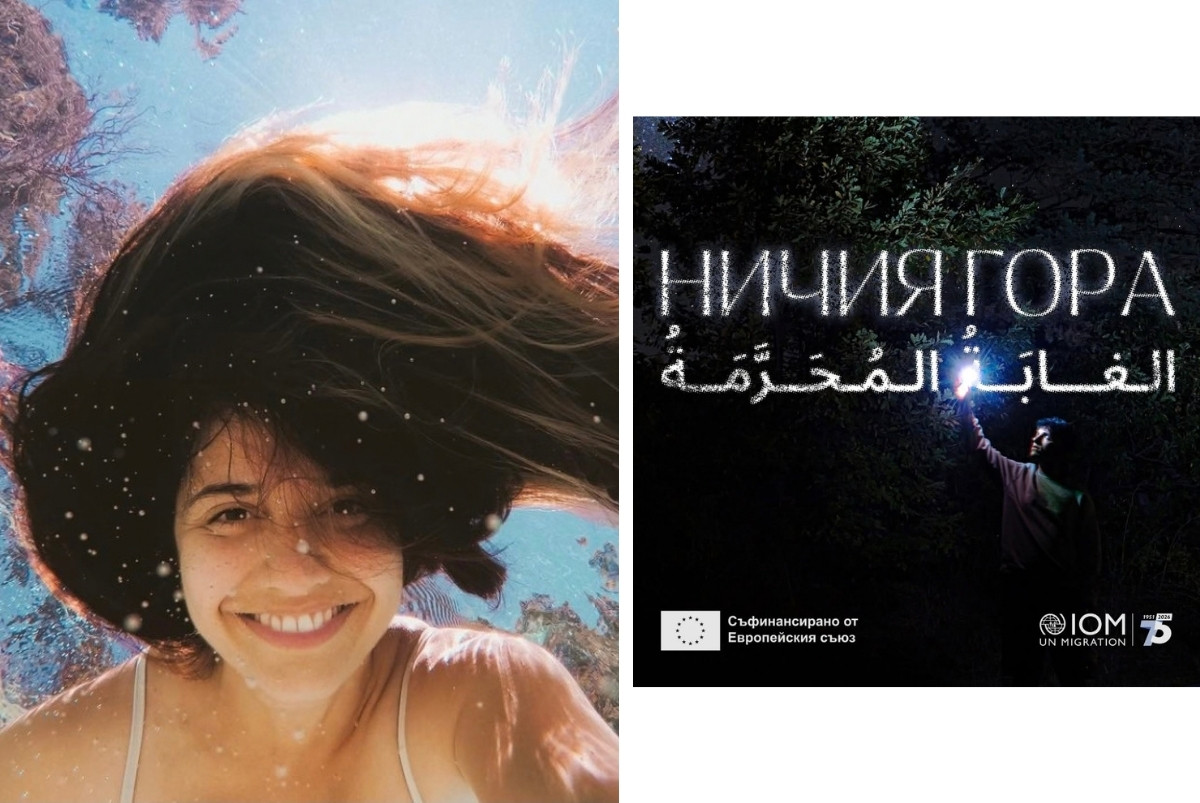
Photography: Mihaela Vacheva
Sometimes, to understand another person’s story, you have to change your own pace.
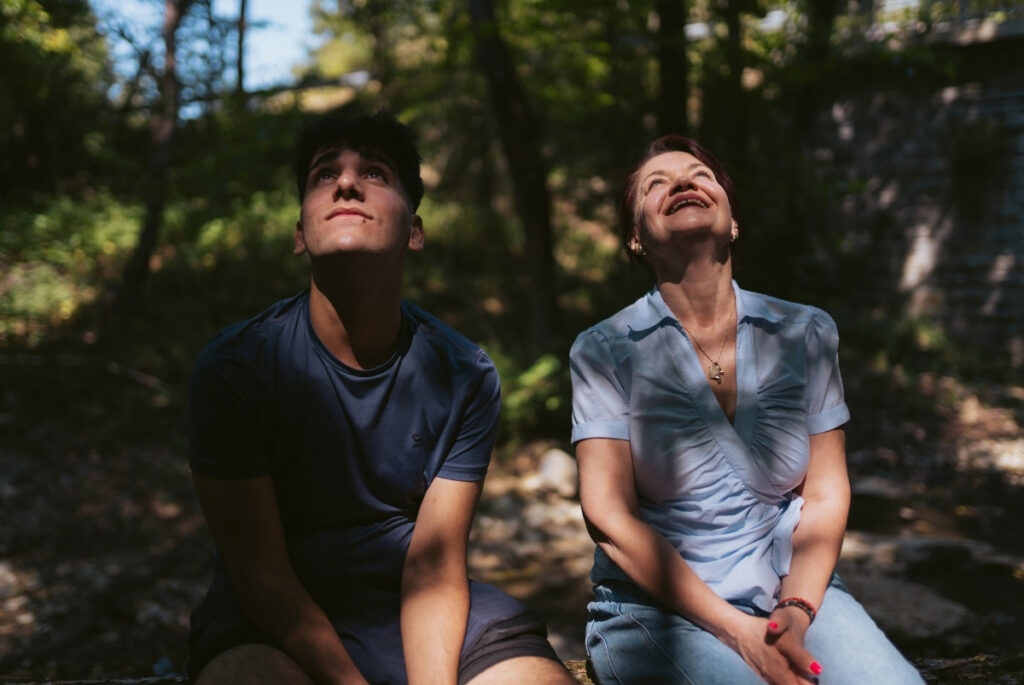
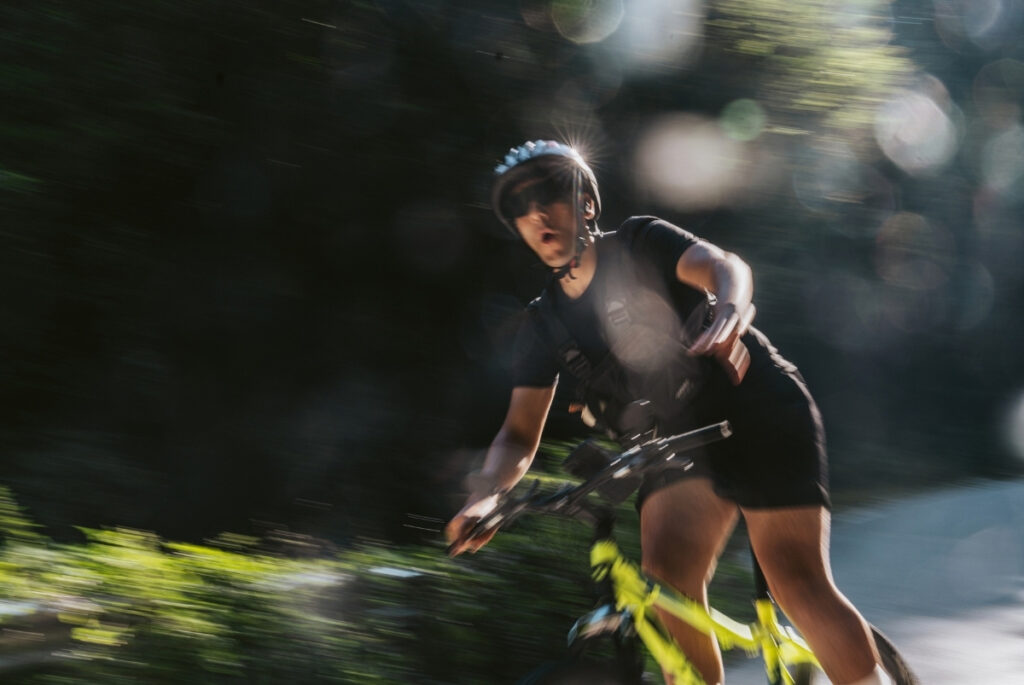
This year, photographer Mihaela Vacheva travelled less, spent countless hours cycling, ran through forests and overcame her fear of open-water swimming. In that slower rhythm, she found a connection with Alaa Hadid, a boy from Syria who cycles nearly a hundred kilometres through the Balkan Mountains every Saturday. Vacheva lives between Bulgaria and the US, and her photographs have appeared in The New York Times, The Washington Post and Der Spiegel. Her first solo exhibition, No One’s Forest, stays close to Alaa’s daily life: his journeys, time alone and life with a foster family in Tryavna. It makes room for a story about the joy of movement and the effort of building a home while your future remains uncertain. We spoke before its 11 October opening at Bobbina Cultural Space about freedom, belonging and what becomes audible when we slow down.
What draws you to socially engaged photography, and how do you choose your stories?
The idea of justice has occupied me since early childhood. I want to believe in the social contract between us: that if we choose to live together, we owe one another certain things. I wonder how we decide who belongs in our community, who we leave outside it, and what it means to feel that you have a place among other people.
I choose subjects with which I have a personal connection,
and which allow me to stay with people and their stories for a long time. I return again and again because I am interested in how our understanding changes: of what happened, and of how we experience it.
What made you slow down and immerse yourself in a Syrian boy’s everyday life in Tryavna?
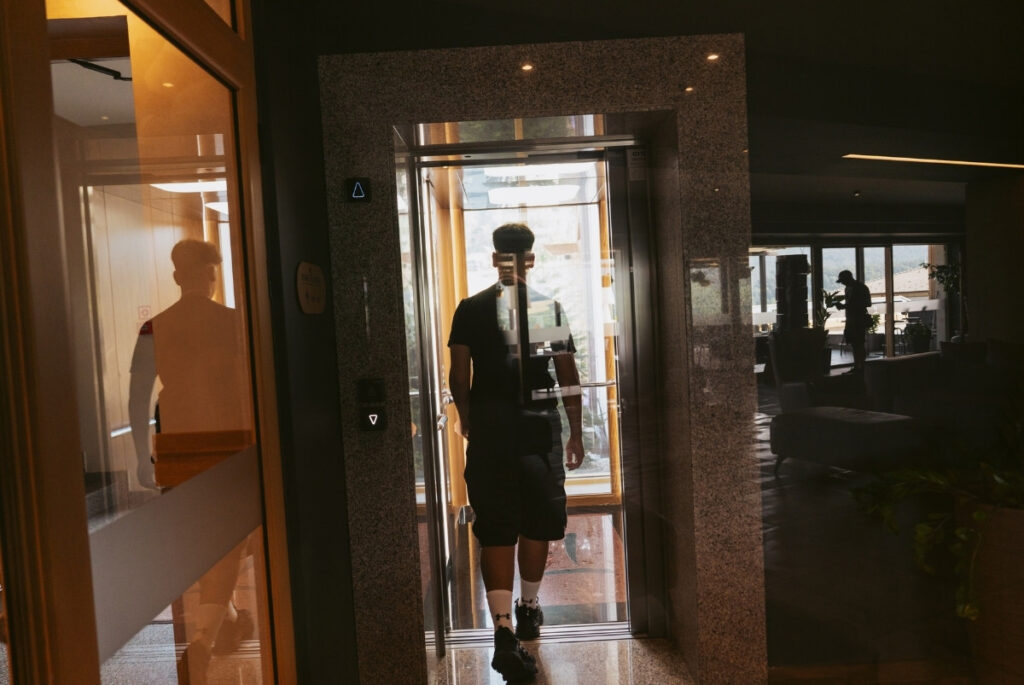
Alaa’s story unfolds in the distances he covers on his bicycle, his time alone in the forest, the slow moments at his foster family’s house, the wait for documents, and the strange feeling of a life that does not yet know whether it is temporary as a dream or the beginning of something lasting. My own life has been slower than usual this year. After a difficult end to last year, I spent a lot of time creating a new structure and routine through sport. I overcame my fear of open-water swimming, spent countless hours cycling and went running, especially in forests. That meant a hell of a lot of time alone. A lot of repetition. Much less travel.
I used the privilege of that slower pace
to tune into Alaa’s story at a different frequency. To understand his cycling as an expression of joy and a form of resistance. To feel how finding solitude in something we once feared can be healing.
What moves you most about working with refugee children who arrived without their families? How did you find that in Alaa’s story?
As a mother, I am most moved by the unimaginable sacrifice their mothers made when saying goodbye, believing separation would give their children a better life. Whenever I am with the children, I say silently to their mothers: “They are with me, and they are all right.” I am also moved by the distance between the weight of what these children have experienced and their continuing ability to believe in goodness. With Alaa, that is particularly clear. He has had a hard life, but possesses an extraordinarily strong desire to create good around him, to be useful, bring people together and improve himself.
You live between Bulgaria and the US. What did you recognise of your own search for home?
The feeling that not everyone simply has a home. For some of us, home is something we gradually build between different places, people we love and versions of ourselves.
Living between Bulgaria and the US has taught me that belonging can be uncertain.
You can have more than one address and still wonder where you are truly at home. For Alaa, that feeling is much sharper. It is not only an emotional question: his future also depends on whether the state allows him to stay. I think that makes his movement through Bulgaria’s forests even more significant. Literally and metaphorically, he is looking for somewhere to move forward.
No One’s Forest takes us away from the city’s noise. What would you like us to bring back into everyday life?
A little more attention to the almost invisible processes that make up a human life. A reminder that in nature, where we all belong equally,
it is easier to hear what we need in the moment.
Perhaps that is also a way of thinking about Alaa: not as someone who has been “saved”, but as someone who continues to listen to himself and work at building things we take for granted, such as routine, belonging and a sense of home.
This article was produced with the financial support of the Bulgarian Fund for Women and the European Union. The views and opinions expressed are those of the author alone and do not necessarily reflect those of the Bulgarian Fund for Women, the European Union or the European Education and Culture Executive Agency. Neither the Bulgarian Fund for Women, the EU nor the EACEA can be held responsible for them.
Yana Buhrer Tavanier: “Hope is a strategy”
What’s happening in the city? Follow GoGuide on Instagram to hear about it first.
Subscribe to our YouTube channel for a closer look at the city, and a wider view.