Yana Buhrer Tavanier: “Hope is a strategy”
The Fine Acts co-founder on extreme heat, violence against women and making change imaginable.
Some people see a problem and walk straight past it.
They might even cross the road to avoid getting involved. Others carry the possibility of change within them, and act on it. They also carry the hope that they are not exceptional superheroes: that everyone has a spark waiting to be lit. The people behind Fine Acts, a global creative studio for social impact, belong to that second group. In summer 2026, they launched the European campaign HEAT, using art and creative interventions to show how extreme heat can increase the risk of violence against women. What connects the two? Why does awareness matter, and how does real change happen? We asked Yana Buhrer Tavanier, Fine Acts’ co-founder and executive director.
The campaign brings together two pressing issues: global warming and violence. Why does the connection still receive so little attention?
Perhaps because we tend to think about climate change through its most visible consequences: fires, floods, droughts and extreme temperatures. We talk much less about its effect on relationships, safety and everyday life. Yet the evidence points to a connection:
periods of extreme heat are associated with an increased risk of violence against women, particularly intimate partner violence.
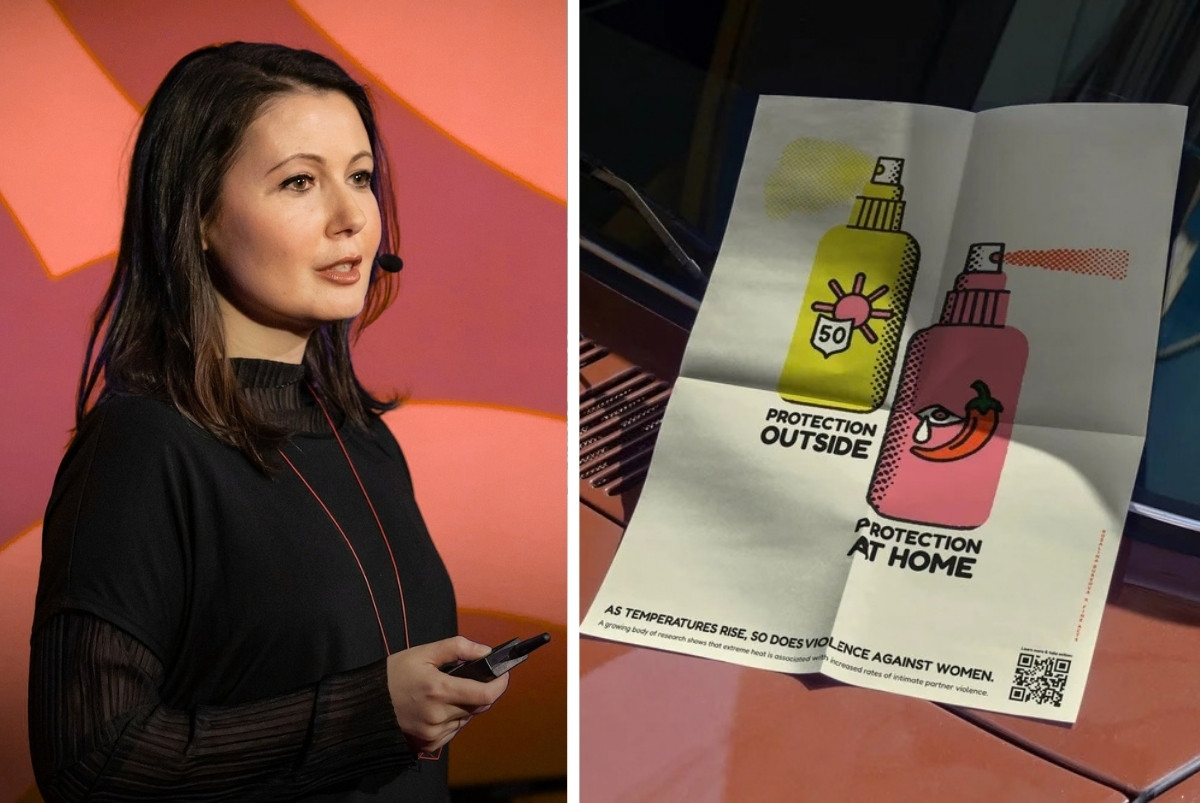
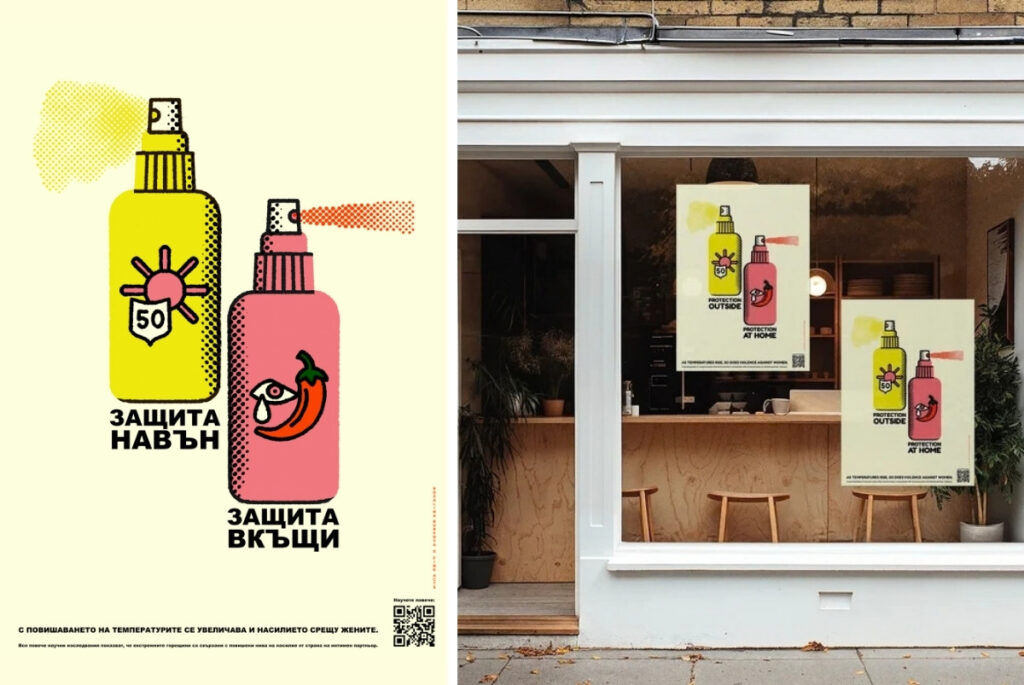
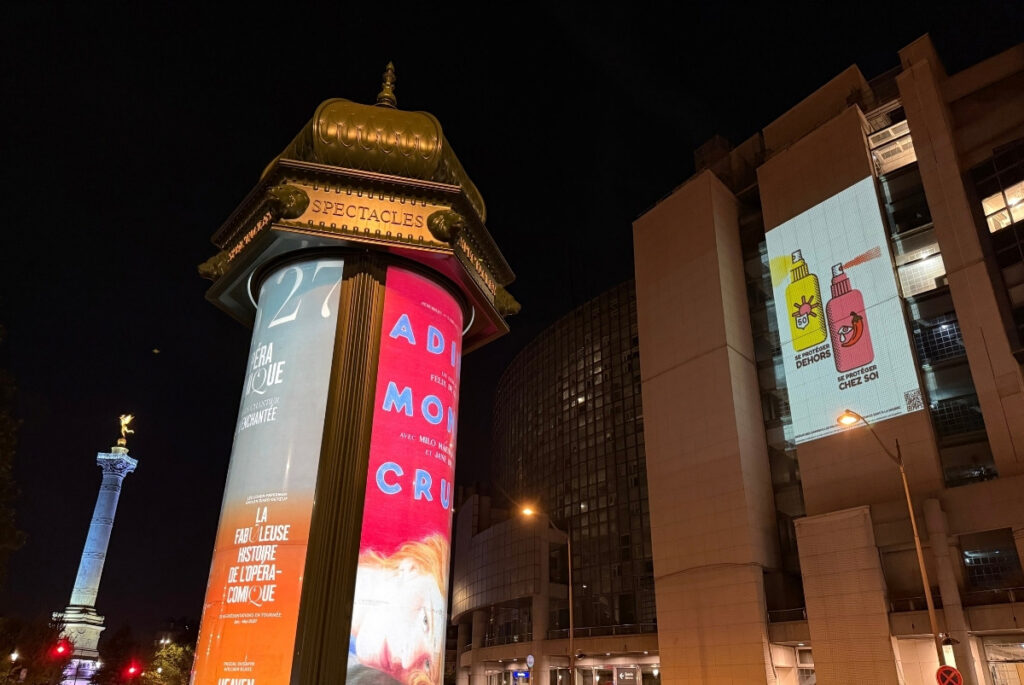
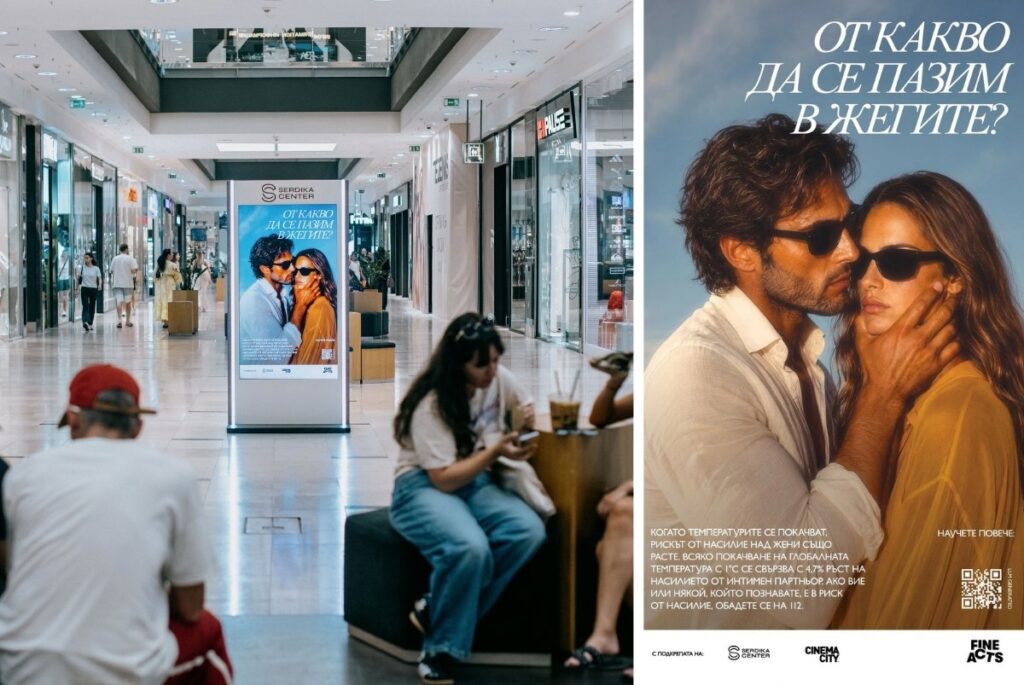
We need to be absolutely clear: heat does not excuse violence, ever. It can intensify existing risk factors and tensions. That is why we launched HEAT this summer: to make this overlooked connection visible in ways people would find difficult to ignore. Working with leading creative agencies, we intervened in places where people already encounter messages about hot weather. In Slovenia, we went directly into heatwave news coverage. In the UK, we turned the familiar weather-forecast phrase “feels like” on its head. In Bulgaria, we borrowed the visual language of glossy summer advertising and transformed it into a warning about violence. In Hungary, we took over one of the country’s most-watched weather webcams. We also brought the campaign’s imagery to the streets of Berlin, Paris and Madrid, while activists and local organisations took it to more than ten other European countries.
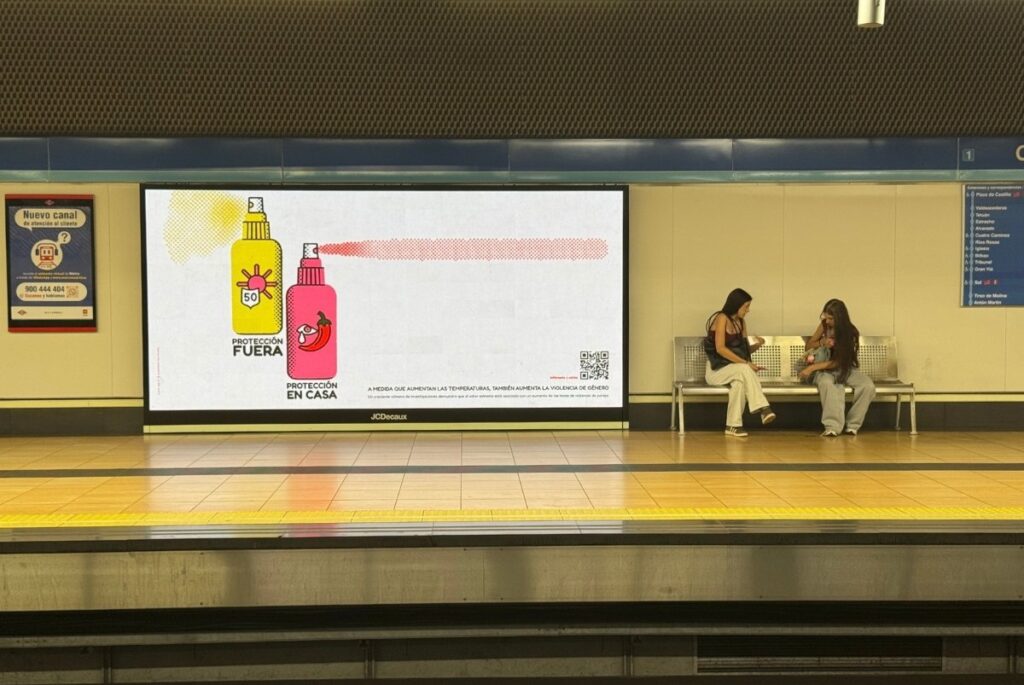
The idea connecting all these interventions is simple: when we warn people about the risks of extreme heat, women’s safety must be part of the conversation.
You use the term “climate stress” to explain the connection. What does it mean?
It is the pressure extreme climatic conditions put on people, as well as nature and infrastructure: physical, psychological, social and economic pressure. In extreme heat, for example, we sleep less well, become more irritable and find it harder to regulate our emotions. There may also be isolation, more time together in enclosed spaces and greater difficulty accessing support. In relationships already marked by control and violence, that additional stress can increase the risk of escalation. But the distinction matters enormously: climate stress is a risk factor, not an excuse. Responsibility for violence always lies with the perpetrator.
The campaign focuses on violence against women. Is there evidence of a connection with violence more broadly?
Yes, studies connect high temperatures with different forms of interpersonal violence. But we wanted to focus specifically on women, because two enormous problems intersect here: climate change and existing gender inequality and violence.
What role does art play?
At Fine Acts, art is never simply an illustration of a problem. It is a way to make someone stop, feel something and see a familiar subject from an entirely different angle. People often encounter climate change and violence through numbers, impenetrable statistics and apocalyptic news. All that information is necessary, but
sometimes its sheer volume creates distance or a sense of powerlessness.
Art can break through that distance, turning an abstract statistic into something recognisably human. That is the basis of Fine Acts’ work around the world. We use art, creativity and creative play not simply to attract attention, but to turn attention into understanding, and understanding into action.
The campaign website offers practical advice for people who witness or become aware of violence. Could you share some of it?
One of the simplest points is this: if you hear something worrying from a neighbour’s home, do not automatically dismiss it as their private business. If there is no immediate danger requiring the police, and it is safe for you, ringing the doorbell with an ordinary question can interrupt the situation. You might ask whether their electricity is working, or whether you can borrow a cup of sugar. Do not put yourself at risk or confront the perpetrator.
A small interruption may help break a moment of escalation.
In immediate danger, call 112. Bulgaria also has a national helpline for people affected by violence: 0800 1 8676, free to call within Bulgaria and available around the clock. Perhaps the most important thing is not to look away. You do not have to be a specialist to notice, believe someone who confides in you, help them find support or simply show them that they are not alone.
How can awareness help?
Awareness alone does not solve the problem, but it changes what we can recognise, and therefore how we respond. Knowing that risk can rise during extreme heat helps social services, crisis centres, institutions and communities prepare. Friends, relatives and neighbours can be more attentive. Climate policies can start considering human safety alongside temperatures and infrastructure. That is what the campaign is trying to do: bring a missing connection into public discussion.
It is difficult to prepare for a risk we do not even recognise.
Imagine a weather forecast that described the effect on relationships as well as the temperature. What would it sound like?
Perhaps: “Today we expect 39 degrees, with an increased risk of heatstroke, fires and escalating violence behind closed doors.” That is one of the ideas behind the campaign. Weather forecasts warn us about many risks, but not this one. Climate does not stop at our front door. It affects our bodies, minds, economic security and relationships. Perhaps the forecast of the future needs to account for that too.
The Bulgarian campaign, made with Much Better, looks like a summer advertisement. How have people responded?
That was precisely Much Better’s idea. At first, you see a beautiful, familiar summer ad: sunshine, sunglasses, golden light, the promise of a carefree season. Only on a second look do you realise that its warning about staying safe in the heat is about protection from violence. That moment of surprise is what we value most in the response.
The campaign does not announce from a distance that it is a social cause.
It meets people where they least expect that message, in shopping centres and cinemas across the country. The subject moves beyond the places where we usually discuss violence and enters everyday life.
What is Fine Acts’ mission, and what keeps giving you hope and a sense of purpose?
Our work begins with the belief that another world is possible, but first we need to be able to imagine it. Hope is not passive optimism, or shutting our eyes to difficult realities. Quite the opposite:
hope is a strategy.
Psychological research gives us a useful framework. It treats hope not simply as a feeling that everything will be all right, but as the combination of two things: being able to see possible paths towards change, and believing we can act on them. Hope has much more to do with action than optimism. That is how we understand it at Fine Acts: naming problems honestly while creating alternatives, experimenting, bringing people together and opening up new possibilities for action. When problems seem enormous, hope helps us move from “Nothing can be done” to the much more useful question, “What are we doing?” Perhaps that is what drives us. Again and again, we see an idea, an image or an unexpected creative intervention open a conversation where there was silence. Very often, that is where change begins.
Life’s sweet and salty moments with Dimitar Ivanov, The Captain
What’s happening in the city? Follow GoGuide on Instagram to hear about it first.
Subscribe to our YouTube channel for a closer look at the city, and a wider view.