Pushkin’s African great-grandfather
From an uncertain childhood to military engineering at the court of Peter the Great.
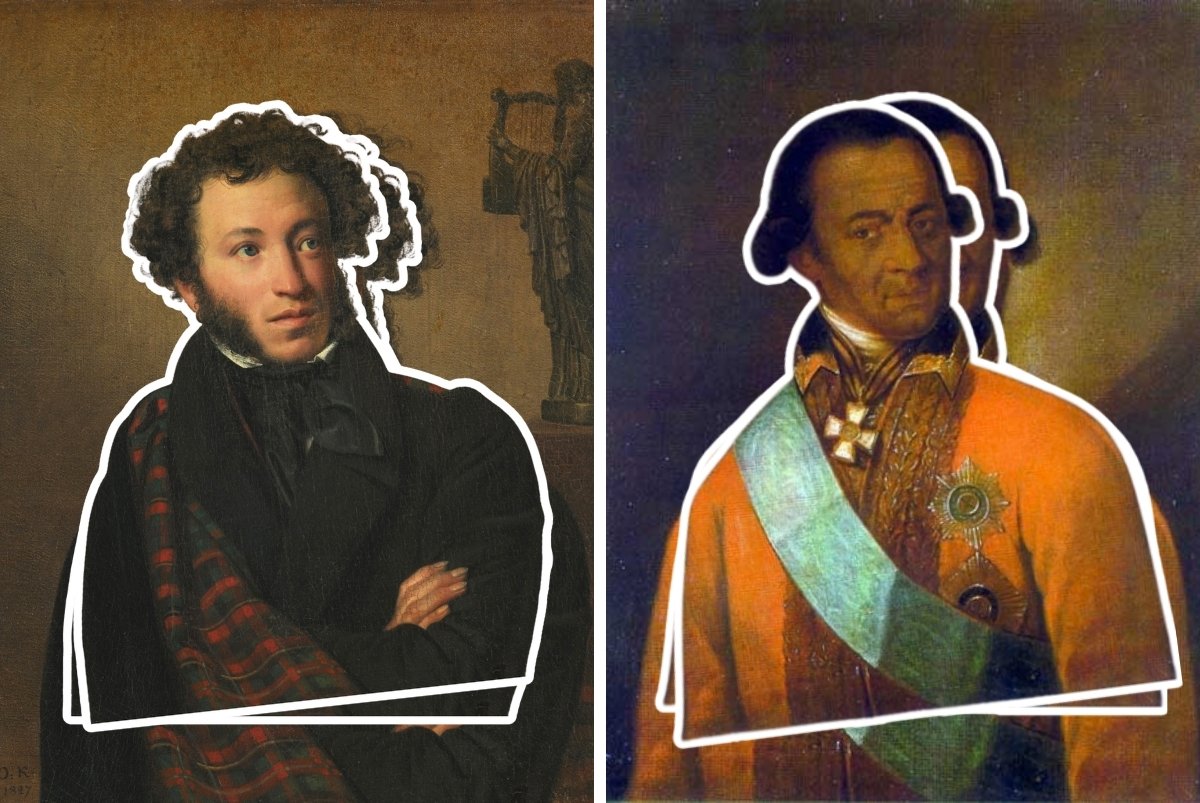
Alexander Pushkin died in 1837 at thirty-seven and is often called the father of modern Russian literature.
The duel that ended his life has received endless attention. Our subject is an earlier, equally remarkable family story: his African great-grandfather, Abram, or Ibrahim, Hannibal. His life seems ready-made for a film, though the gaps in its early record would give any screenwriter plenty of room. Those gaps also deserve to remain visible.
Who was Abram Hannibal?
His birthplace is the largest unresolved question. In a petition of 1742, he described himself as born in Africa, in a place he called Lagon, where his father had been a ruler. It is a central piece of evidence. For a long time, historians placed that origin in Abyssinia, now Ethiopia. A later argument locates it in the region of present-day Cameroon. The disagreement has not been conclusively settled. As a child, Ibrahim was taken to Constantinople.
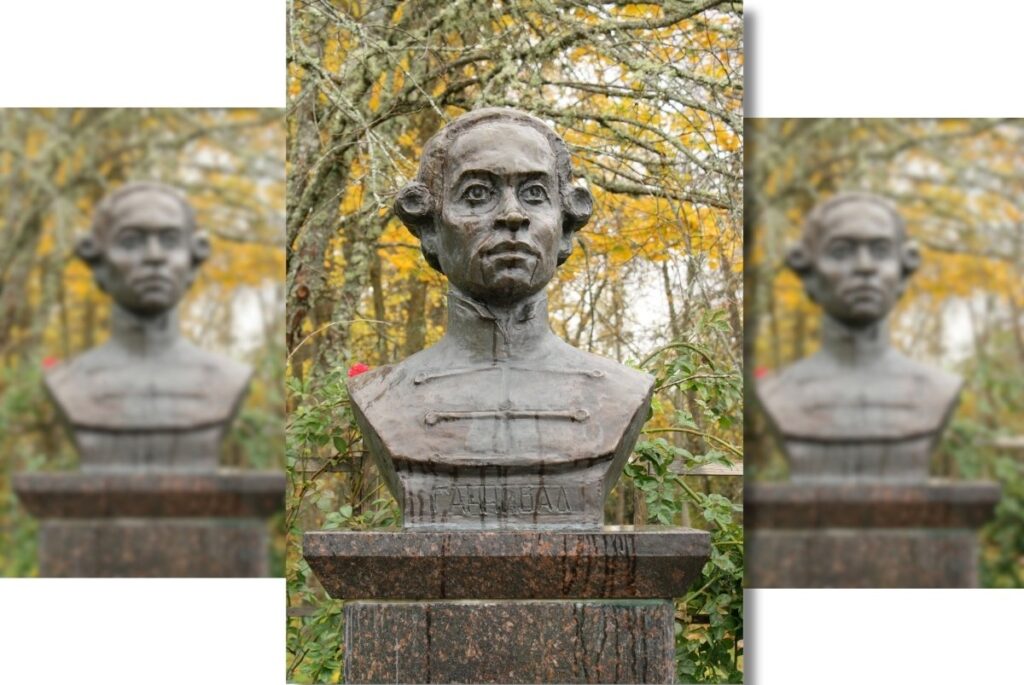
A monument to Hannibal
Family tradition and later accounts place him in the Ottoman sultan’s household. Pushkin wrote of Sava Raguzinsky arranging his transfer to Peter the Great. The surviving evidence for these early years is incomplete, including the precise dates of his journey and arrival in Russia.
There, he came under Peter I’s patronage.
He was baptised with Peter as his godfather and became known as Abram Petrovich. The exact baptism chronology varies between accounts. Peter recognised abilities beyond the novelty with which a European court might regard an African child. Education gave Hannibal a path into military engineering. He began studying in France in 1717, later returning to work on fortifications and engineering projects in Russia.
He became a professional military engineer, not simply a beneficiary of royal favour.
His French years were part of a wider education in military engineering. Accounts of his life also describe military service and injury there. They should be read with care: Pushkin’s literary portrait drew on family history, but it was a work of fiction, not a complete service record.
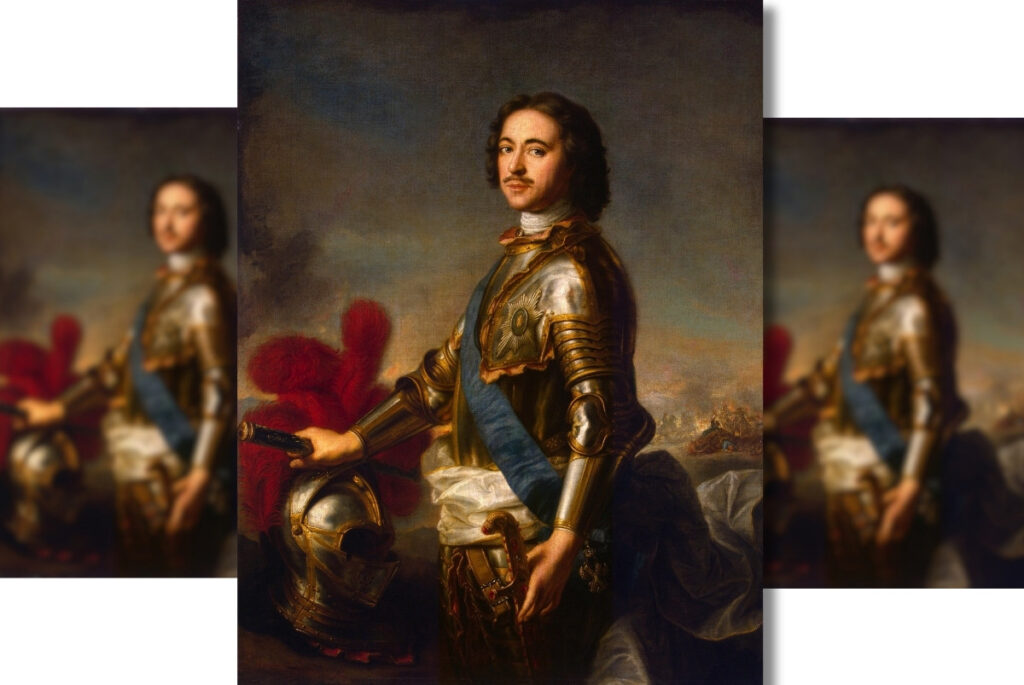
Peter the Great
After Peter’s death, his career did not proceed smoothly. He fell from favour and was sent to Siberia in 1727, then gradually returned to service and influence. By 1759 he had reached the rank of general-in-chief,
among the highest military ranks in the Russian Empire.
His career included periods away from active service and life on estates near present-day Tallinn, followed by later appointments and further land grants. He married twice and had a large family. His son Osip was the father of Nadezhda, who became Alexander Pushkin’s mother. His final retirement came in 1762.
Pushkin never knew his great-grandfather personally.
Hannibal died in 1781; Pushkin was born in 1799. The poet nevertheless took a deep interest in his history, drawing on family papers and stories for the unfinished novel usually translated as The Moor of Peter the Great. Like Mark Twain’s A Connecticut Yankee in King Arthur’s Court, the title promises an outsider at a royal court, though the books are very different. Pushkin’s work is fiction, not a reliable biography in every detail. Hannibal’s documented trajectory is extraordinary enough: from Africa through the upheavals of Constantinople, France and Siberia to a senior position as an engineer and general in Russia.
Assen Peikov, the Bulgarian sculptor Rome made its own
What’s happening in the city? Follow GoGuide on Instagram to hear about it first.
Subscribe to our YouTube channel for a closer look at the city, and a wider view.