Assen Peikov, the Bulgarian sculptor Rome made its own
The artist behind the Leonardo da Vinci statue that greets travellers at Fiumicino.
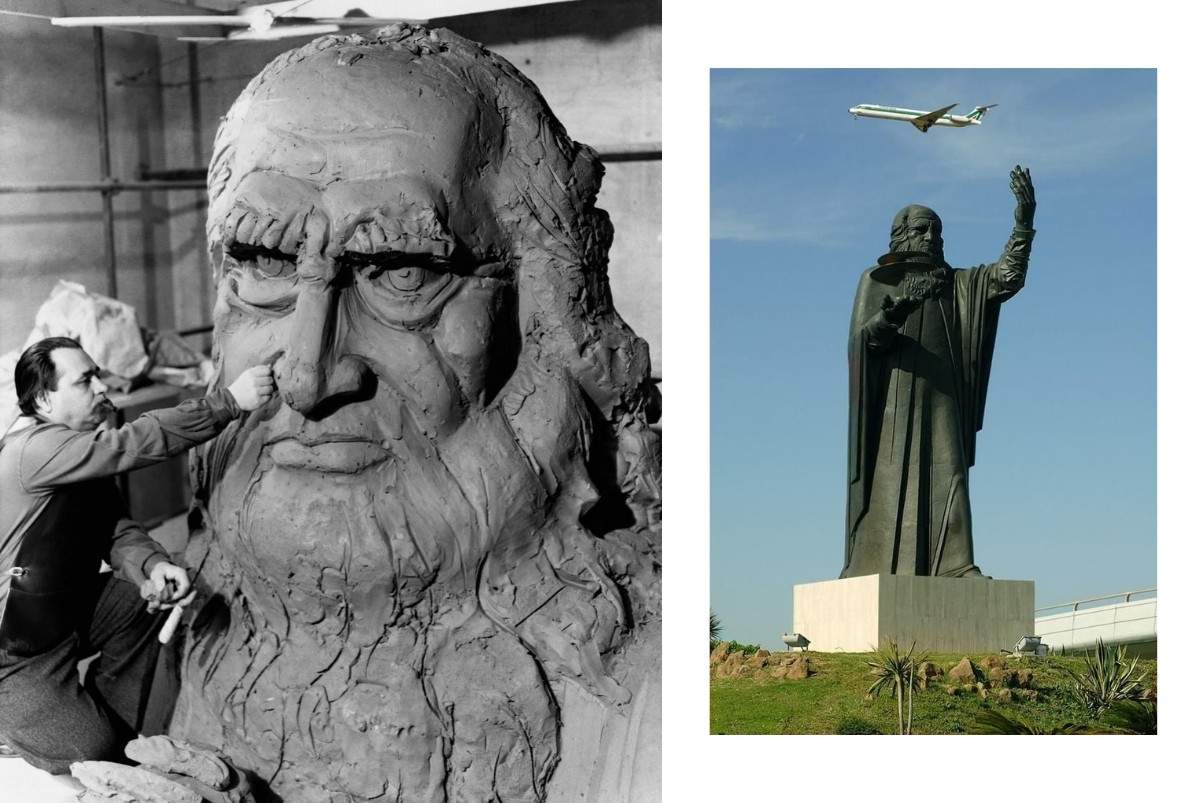
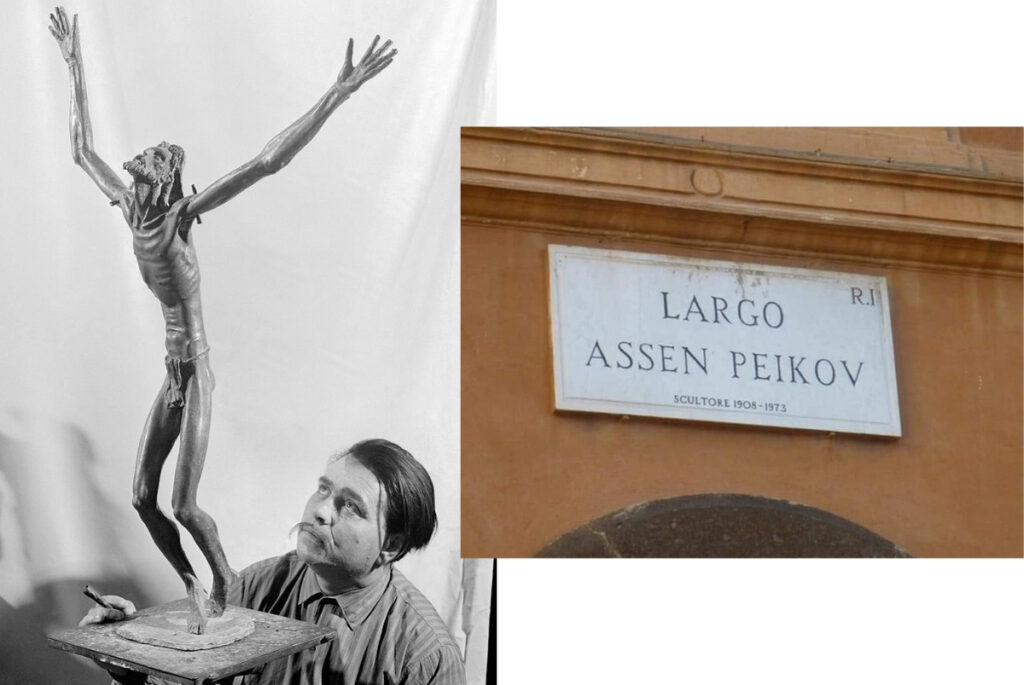
I first heard Assen Peikov’s name ten years ago in Rome,
when I came across Largo Assen Peikov. I felt a flash of Bulgarian pride, then spent years mistakenly thinking the square honoured another remarkable Asen, the aviation pioneer Jordanoff. Age eventually brought enough sense to distinguish them. There was more than one Bulgarian Asen with an international reputation. Perhaps Levski footballer Asen Mitkov will add another. Peikov was born in Sofia on 28 June 1908. Family losses shaped a youth spent between Sevlievo, Varna and Sozopol, where he discovered sculpture. He studied at Sofia’s art academy and moved to Italy in 1938. In Rome, his studio on the celebrated artists’ street Via Margutta became a gathering place for painters, performers and intellectuals.
His best-known work is the monumental bronze Leonardo da Vinci at Fiumicino Airport. Unveiled in 1960, it became a familiar presence for travellers arriving in and leaving Rome.
For many visitors, the sculpture is their first encounter with his work.
The association between artist and subject is so strong that searching for Peikov often brings up Leonardo before a portrait of the sculptor himself.
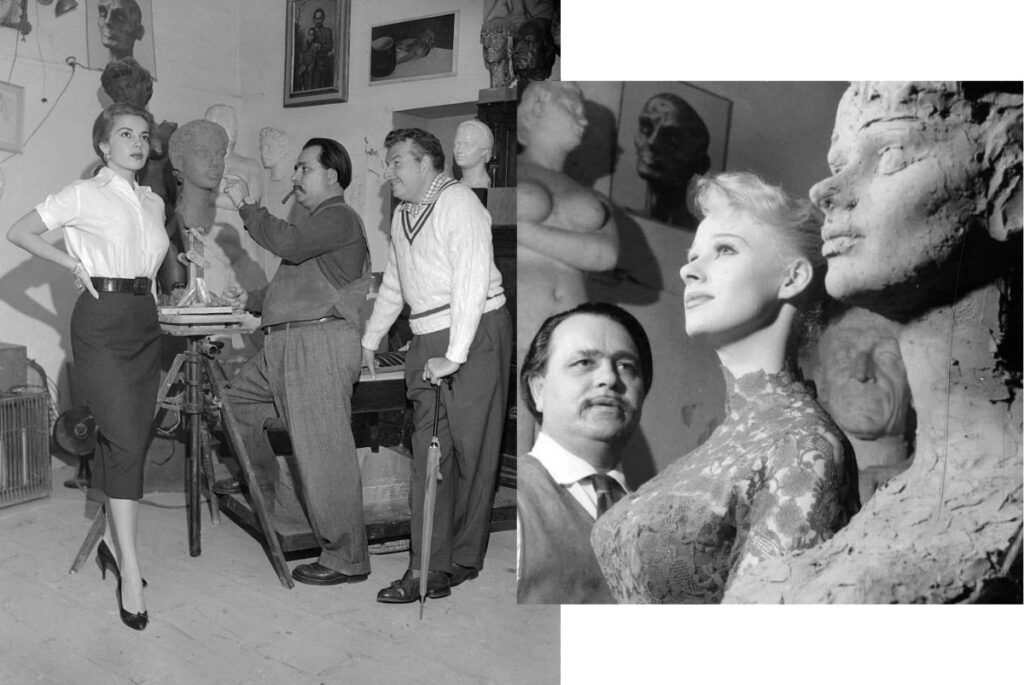
International success did not remove his desire to leave something in Bulgaria. In 1969, he returned to enter a competition for a monument to Khan Asparuh. The design received recognition but was not realised, a disappointment for a man who had made his mark abroad. To understand the pull of that return, it helps to remember a childhood marked by the early loss of both parents.
As a young man, he worked as a fisherman on the Black Sea coast.
Bulgaria held painful memories, and the political climate did not make returning straightforward for an artist who had settled in the West. Rome had given him a career, celebrated sitters and a public monument known far beyond the city. Why did a work for Asparuh matter? Nostalgia may be part of the answer, along with the wish to leave a lasting contribution at home. The unrealised project stands beside the very visible one at Fiumicino, two different answers to the question of recognition.
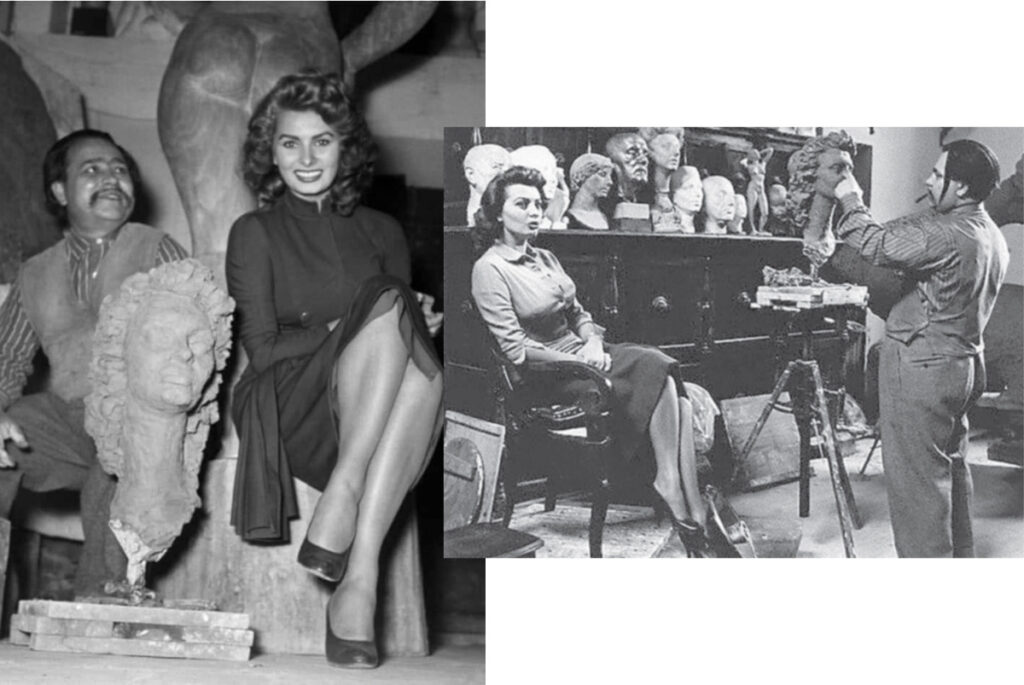
His Roman life gave him another kind of belonging: a studio, friendships and a place within the city’s artistic world.
That makes the pull of Bulgaria all the more interesting.
Peikov died in Rome on 25 September 1973. The city had become his home, but reducing that life to a choice between being Bulgarian and being Roman misses something. He could belong to both, even when recognition arrived unevenly. Assen Peikov of Rome: the phrase carries pride and a little sadness together.
Theodore Ushev and George Lucas’s museum
What’s happening in the city? Follow GoGuide on Instagram to hear about it first.
Subscribe to our YouTube channel for a closer look at the city, and a wider view.