Vasil Popov: “Reality usually turns out to be the most frightening thing”
The Karaevren author on folklore, travelling to Antarctica and the thin line between legend and human nature.
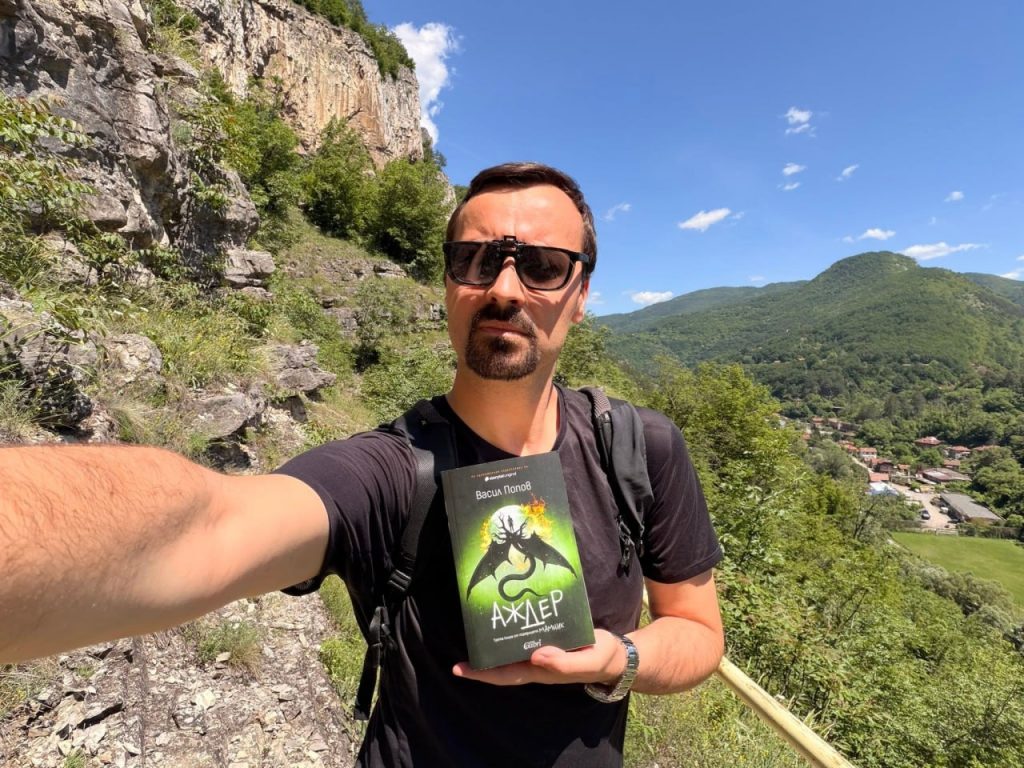
For many Bulgarian readers, it began with Mamnik. Then came Lehusa, Azhder and the conclusion to the dragon saga, Karaevren.
Their author, Vasil Popov, has turned his fantasy world into a phenomenon,
changing expectations of both the genre and a successful writing career in Bulgaria. More importantly, he has awakened a fresh interest in Bulgarian folklore and mysticism, something he considers a personal mission. Travelling between forgotten villages and the ice of Antarctica, he keeps discovering that the most frightening things are often the most human.
At the time of our conversation, Karaevren had just come out. You called it your most ambitious and merciless story. What did you need to go through as a writer to reach that ending? Does it close a circle or open a door?
The dragon saga certainly ends with this book. It began at the end of Lehusa, developed new knots in Azhder, and now the mystery needed unravelling.
I admit I finished Karaevren with some relief. Keeping track of threads across three books is demanding and puts you under pressure. I was hurrying not just because of deadlines or readers wanting the next instalment, but because I cannot imagine spending years writing this kind of story. Some writers talk about waiting for inspiration,
but I work with synopses, tables and notes so that I do not forget anything.
Keeping all that going for five years? I cannot imagine it. Finishing was a weight off my mind. I have said goodbye to quite a few characters. There are doors left open, but I think this is the final book, or at least I will leave the series alone for a while. I need to write other things too.
Beyond particular creatures, what keeps you interested in Bulgarian folklore? Is there a belief, image or mystery you still cannot quite explain?
I am finding them all the time. I love travelling around Bulgaria for literary events, meeting local people and hearing their legends, but also learning how they live and what troubles them. In Pavlikeni, for example, I learned more about nearby Gorna Lipnitsa. I had heard of its dragon without knowing the details. The regional museum’s director had written about it and excitedly offered to take me to the village. Most dragon legends come from wooded mountain villages. This one is on a plain.
There is a place marked by two ancient stones where people believe a dragon once fell,
wounded by lightning. It was at the edge of the village. People fenced it off so that even the dogs would not bother the fallen creature, and brought it milk and dairy food. In folklore, dragons often love milk and gain strength from it. A votive stone stood there for a long time before disappearing in the eighties. Older men told me they had played on it as children, and remembered villagers gathering on Thursdays around Easter to honour the dragon. Originally it was women, later everyone. Its disappearance is the mystery. During the socialist period, road and pavement works meant it was supposedly moved temporarily, but it never returned. It apparently bore Latin or Greek inscriptions. I have tried to find a photograph, and wonder whether it is still somewhere in the village. No photograph yet, but certainly a mystery.
You were preparing a collection of frightening Bulgarian folk songs. Which fears seem to persist across the centuries, and where do people find hope?
There are many fears. I often explain how I developed the mamnik. In folklore it is a small black bird created by a witch to do her bidding, stealing milk and grain from the neighbours. I knew that could not be my whole story: today, people laugh when they hear it. But losing milk and grain once meant hunger and death. What seems absurd now represented a very real fear.
I read the lehusa as a personification of postnatal depression.
Women loved by dragons, described as weeping for no apparent reason and avoiding others, also suggest depression to me. As for hope, just as people imagined creatures to name illnesses and conditions they could not explain, they devised ways to protect themselves. Rules and prohibitions could offer psychological reassurance: do this and evil will not reach you. Family curses recur too, particularly a mother’s curse. Folklore is not naïve about motherhood. A mother can be as cruel as she is kind, separating lovers or inadvertently harming her own child, even turning him into a dragon. There are many songs like that.
Looking back at your writing, is there a theme you keep returning to without planning it?
Children, parents and mothers are everywhere in this series, along with what they do to one another. Stoyan and his mother in Azhder, for instance. I try to make each story about more than a monster, looking through problems that remain real for society today so that we can see what created the monster. Reality usually turns out to be the most frightening thing.
You studied ecology and have a strong interest in science. Are you a scientist who discovered storytelling, or a writer with a scientific eye? Do you recognise something of yourself in someone like James Cameron, both artist and explorer?
I can only hope to reach anything like Cameron’s scale! I think of him when people ask how I handle criticism. Generally, I welcome it if it is constructive and well meant, rather than just “What is this rubbish?” You need to consider who is speaking and what they are saying. Sometimes people, even other writers, come and lecture me on how to write my story. I remember an interview in which Cameron responded to criticism by pointing to his box-office record.
As a child, I dreamed of directing. I began writing down the stories I imagined,
and became a writer almost by accident. I had not realised I could write. I am glad life went that way, because I do not think directing and its enormous stress would suit me. I was accepted to study directing in Germany, but stayed here and studied ecology instead. So I am a storyteller first, a scientist second, though the two keep coming together. Karaevren even has an environmental thread involving river pollution.
Outside writing and expeditions, what restores you, entertains you and helps you relax?
Travel gives me enormous pleasure. Mountains, villages: I need to be outside. When the weather turns good, sitting down to write is the last thing I want. People suggest writing somewhere beautiful, but once I am there I want to explore it. I read and watch films. I am a huge film lover. I have made an hour’s reading each day part of my work, something unrelated to my own writing or research. I also make time for films and series and count that as work. I meet film and television professionals who have no time to watch things and do not recognise the references I give them. We need to keep up with what is being made and what audiences watch and want, rather than making something that belonged ten or fifteen years ago.
Beyond your books, which mystery of nature, history or human beings would you most like to solve?
I have been reading about the search for Vasil Levski’s grave. A commission of sorts investigated it in the early twentieth century. What interests me is how quickly knowledge of its location seems to have been lost. I had assumed his remains simply disappeared, but accounts describe a burial and a grave marked by three bricks. The apparent neglect feels disrespectful towards such an important figure in Bulgarian history. There may be a wonderful novel there, but approaching someone of that stature takes courage and serious preparation. Historical fiction demands very specific knowledge: character, health, the texture of an ordinary day.
Antarctica is now part of your life story. Is there another expedition you have long wanted to make?
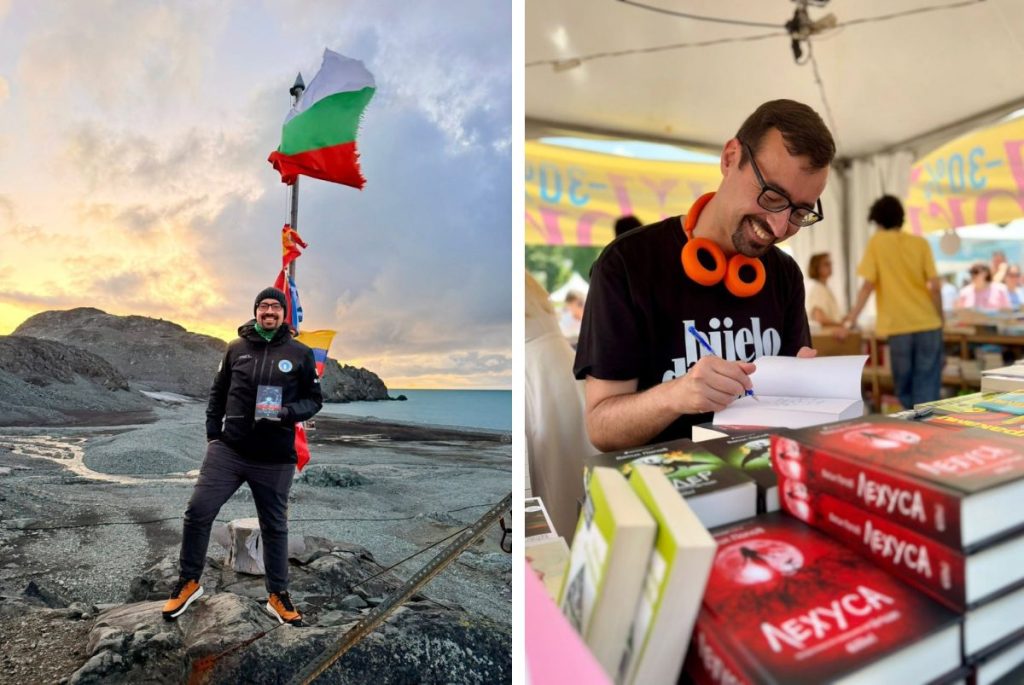
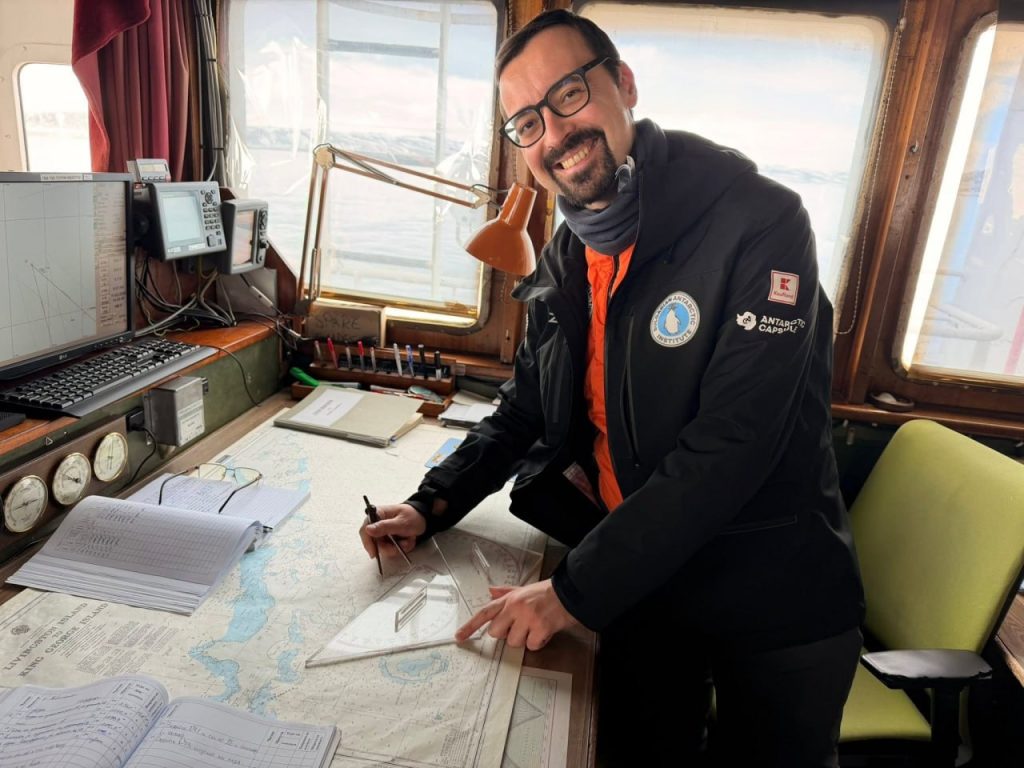
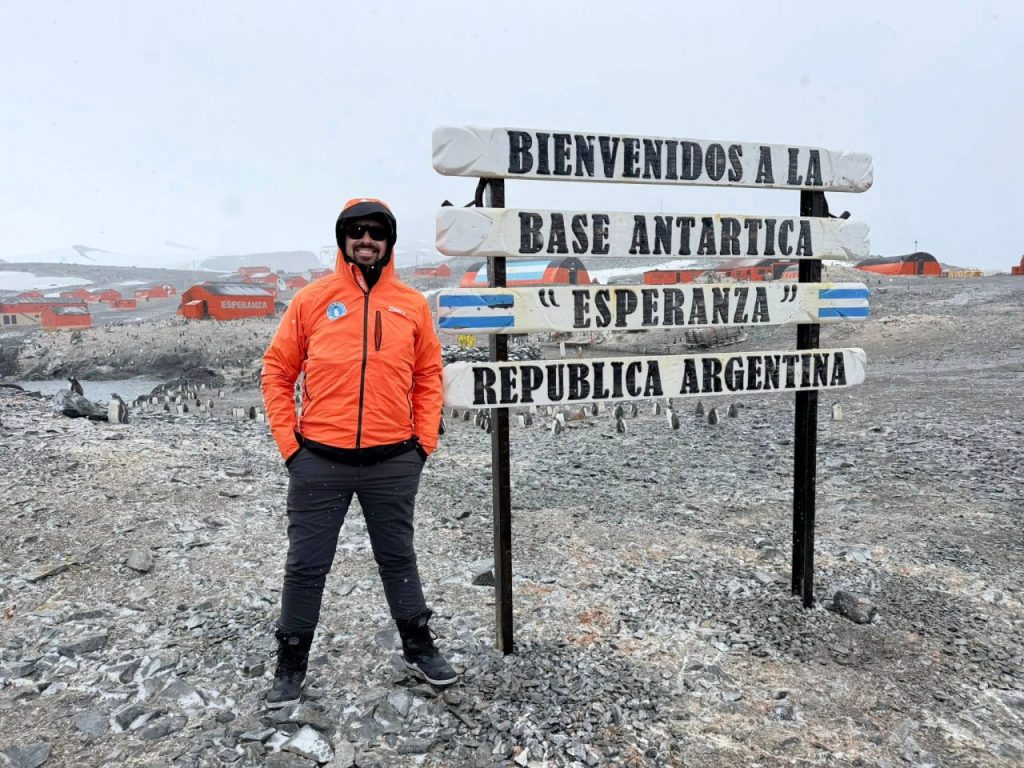
Nowhere has called to me as Antarctica did, and it is hard to imagine anywhere more remote. Professor Pimpirev invited me, and I wanted impressions for the second part of Permafrost. It feels like another planet, even in the relationships between people. Many Bulgarian expedition members tell stories of dreaming about deceased relatives on their first night on Livingston Island. Boyan Biolchev describes something similar in Antarctica: The Eye of the Cosmos. I had used that idea as a supernatural element in my book without really believing it. Then it happened to me. I dreamed of my grandfather, who had died six years earlier. Nothing extraordinary happened in the dream. We were in the village, talking, then saying we should sleep because we had an early start. Yet it felt completely real.
What impressed you most about the continent?
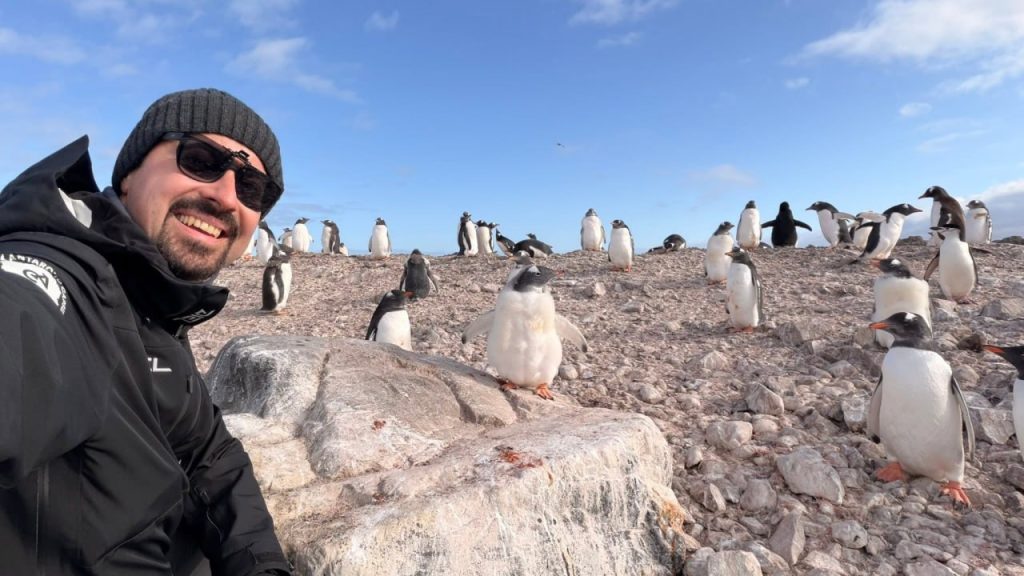
The whales. It was like seeing God. I saw them several times, but the closest encounter came on our last evening. We were aboard the ship, with an extraordinary sunset, glaciers around us and penguins leaping from the water. I was filming when a mother whale and her calf passed beneath us. It felt as though they were seeing us off. What were the chances, and at sunset too?
Did the visit make you optimistic about the planet’s climate?
Not at all. Professor Pimpirev showed me how glaciers near the base had looked only ten or twenty years earlier. So much had melted. I visited during the Antarctic summer, expecting something like a Bulgarian winter, but it was often above freezing. Along the ice-free stretches of shore, you could walk in autumn shoes.
After Antarctica, you planned to return to the Permafrost sequel. What else was on your desk?
I had everything I needed for that, with plans to write the following year, because Karaevren still needed work for its print edition. I was also editing Martar, a sort of collaboration with Zahari Baharov. We had developed a television series, but production was delayed, so I suggested writing the story as a novel. It had been ready for two or three years, waiting for its moment, with a spring release in print and audio in mind.
What has happened that you never believed would? Or do we experience only what we have already allowed ourselves to imagine?
I imagined all sorts of things, but perhaps never thought so many could happen. Antarctica and the Mamnik series are two. A third is being able to do nothing but write for a living. I did not think that was possible in Bulgaria, especially with genre fiction, which used to be looked down on. I never imagined these books could find such an audience and such remarkable fans. Yet here we are. Those dreams came true.
Don’t say we didn’t tell you: new books that impressed us
What’s happening in the city? Follow GoGuide on Instagram to hear about it first.
Subscribe to our YouTube channel for a closer look at the city, and a wider view.