Bulgaria’s new wave: Tsar Plah
The band on starting again, singing in Bulgarian and giving the music room to breathe.
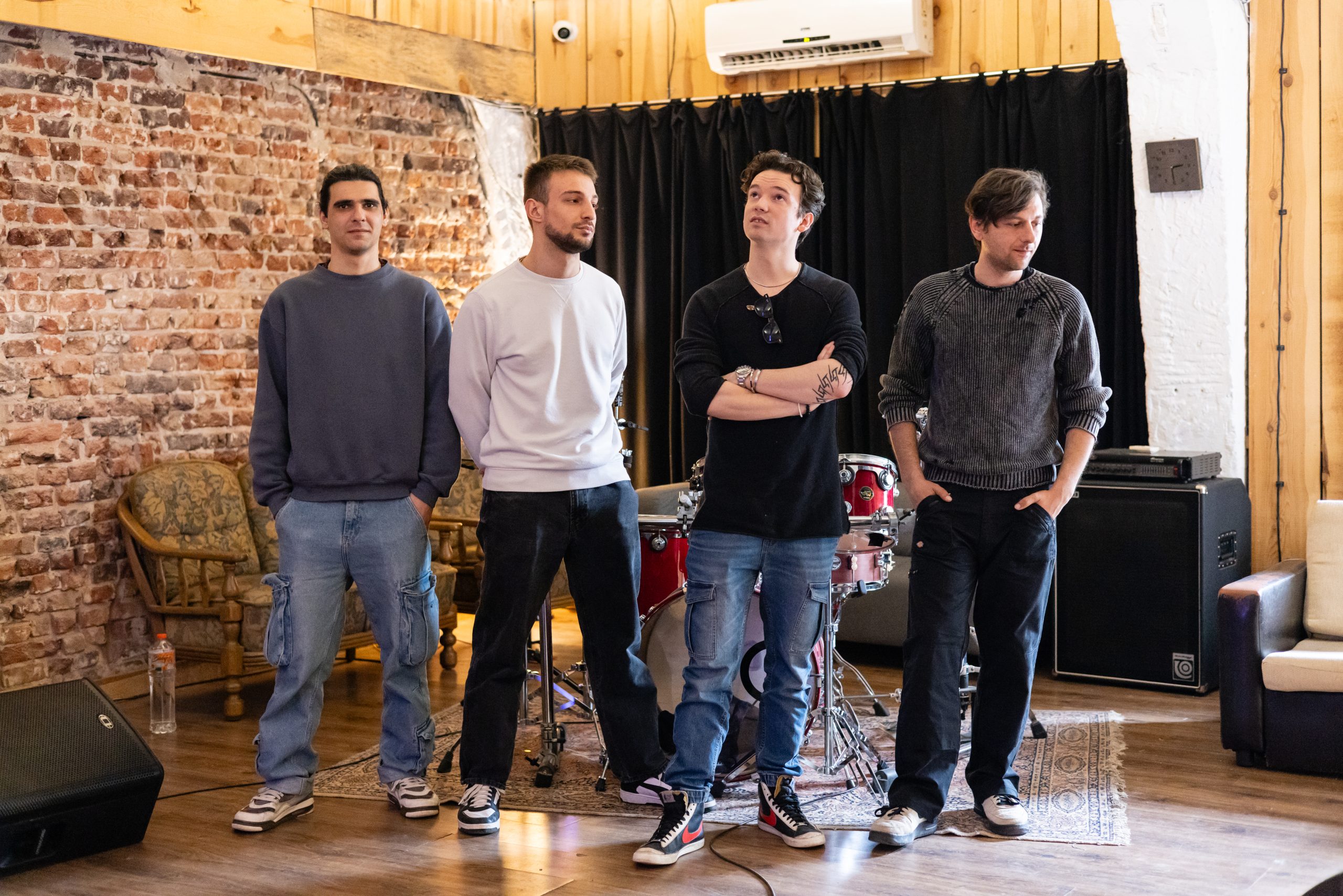
Tsar Plah is a name that sticks, whether you want it to or not.
It means King Rat, inviting an immediate association with James Clavell’s novel. The band’s own story, though, is about finding a place in Bulgaria’s alternative scene. We met vocalist Kosta Kolarov, guitarist Tsvetan Shangov, bassist Dimitar Dimov and drummer Teodor Chirpanliev a year after their debut, Nay-posle Tishina, or Silence at Last. Tsar Plah grew from Kosta and Dimitar’s years in Bloodrush, a transformation that brought them together with Tsvetan and Teodor. Their Bulgarian lyrics, forceful sound and meticulous presentation make a striking combination. This conversation, recorded in spring 2026 around the single “Tam”, looks at how they got here and what they were building next.
After ten years of Bloodrush, beginning while you were at school, Tsar Plah became official in 2023. How did you reach that new beginning?
Kosta: Towards the end of Bloodrush, we tried to change the whole thing, musically and in direction. We were living in different places, and an established audience had expectations. It did not work particularly well. Eventually, changing something that had already told its story no longer made sense. We wanted to begin again. That was frightening after ten years of building, but Mitko and I stayed together. He suggested Tedo.
Teodor: I said yes and suggested Tsetso.
Tsvetan: Then I said yes, and we got going.
The video for “Tam” features all of you. Is it the beginning of another album?
Teodor: It should be a single from the album we are writing and recording. We shot it in fields and woods, in the cold. It was great fun.
Kosta: We are working hard on album two. We set ourselves the challenge of making two albums in two years. A lot depends on these next few days, because we are going into another writing session. We hope to have it ready by the end of 2026.
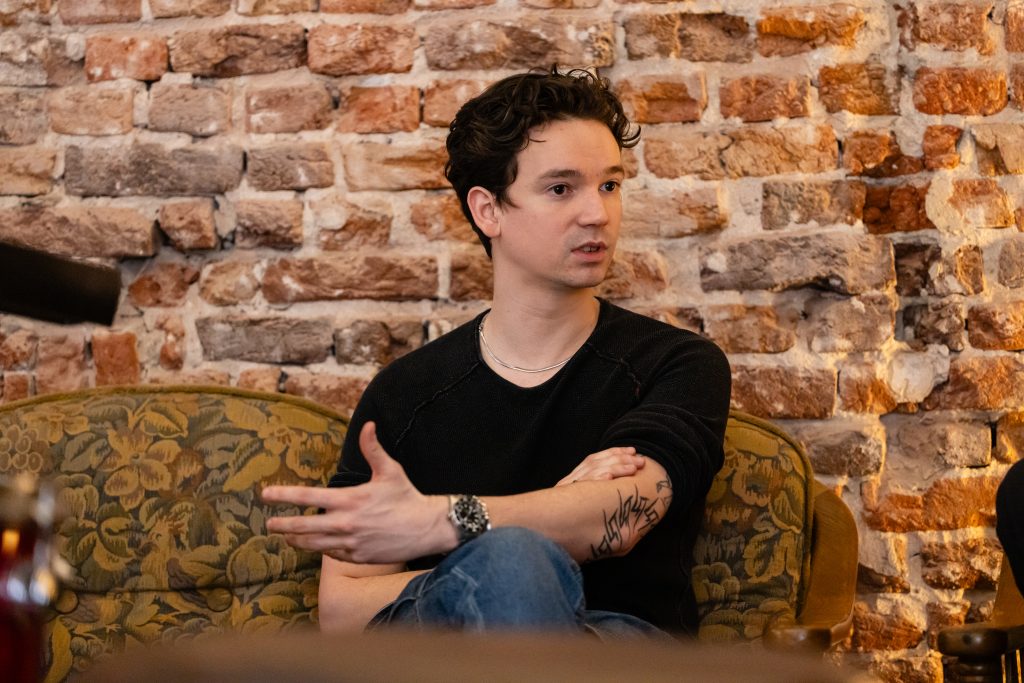
Your production is unusually polished for an alternative band. Who works with you, and why is that important?
Teodor: There are more than four people in this band. Our visual and creative director Petar Tuhchiev and Kiril Sapundzhiev belong to it as much as we do. We are lucky to have a wider team so invested in the work.
Kosta: We also have skills beyond playing. Whatever we make, we want to push our abilities and make it as good as we can. Pesho, Kiro and Mitko are talented, active and creative; Mitko contributes to the visuals as well as playing bass.
Teodor: These days, the music is not the whole picture. You need a visual presence.
Every aspect needs attention if you want to build a world and communicate an idea in as many ways as possible.
What does singing in Bulgarian give you? Could the language be an advantage beyond Bulgaria?
Teodor: I think I can speak for all of us: Bulgarian is our first language, so writing and making music in it comes naturally. We bring together many influences from Western music. When you translate those influences into Bulgarian, the result becomes distinctive and authentic. There is no exact equivalent elsewhere, because so much music is in English. We grew up with English-speaking bands and rarely heard this kind of music in Bulgarian. Starting can be frightening. People hesitate because the words and ways of expressing themselves come less easily at first, but it is worth it. Bulgarian is a beautiful language.
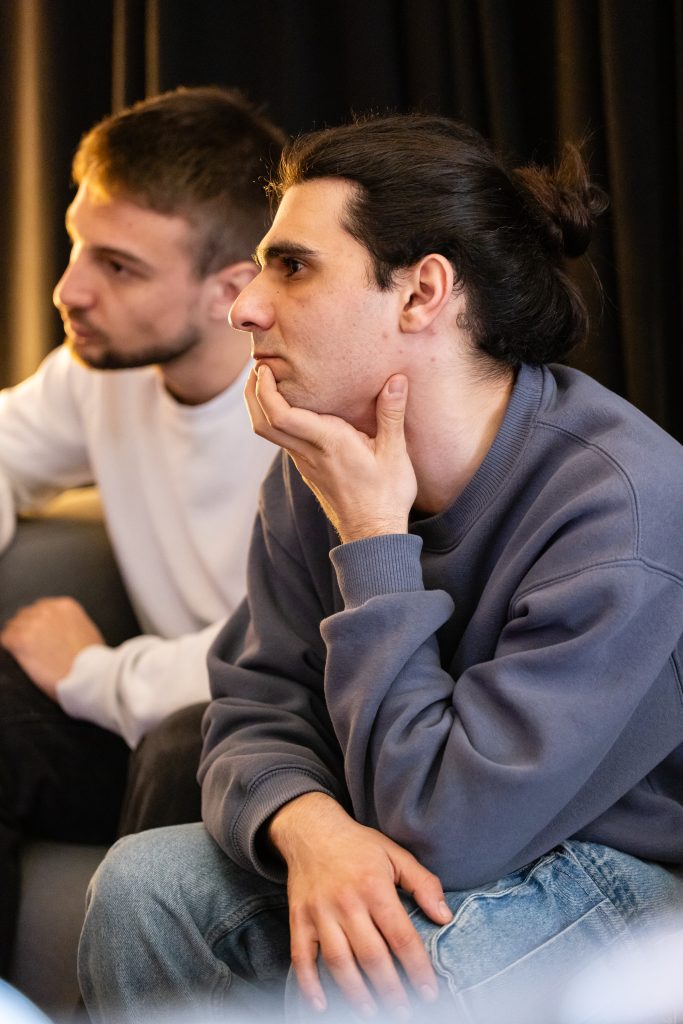
Kosta: I love discovering it and finding new ways to express myself. In Bloodrush, we wrote in English for ten years. Mitko wrote most of the lyrics and was better at it; mine were simpler. I am not claiming they are suddenly sophisticated now, but the process is more interesting to me. I enjoy experimenting in Bulgarian more than reaching for familiar English-language clichés.
Your debut is called Silence at Last. What does silence mean in your music, and do we need more of it?
Teodor: Absolutely. In the madness around us, we need to slow down, step back and leave our own bubble. A fast daily routine overloads your brain, your RAM, until you stop noticing simple things. As a child, I was often told that rests are part of music too.
Pauses matter. You need space and air.
Tsvetan: Yes, that lets the music breathe.
You belong to a new wave of Bulgarian music. What responsibility comes with that?
Kosta: Although everyone associates us with Bloodrush and that long history, this feels like an entirely new life to me. I would say we have covered ground that takes many bands years. I do not feel entitled to define our place in the scene, but yes, we are part of a new wave. As for responsibility, every artist owes something to their audience, whatever their own self-image. We try to honour that through our messages and the way we communicate with listeners and the people around us. It does not come from a label or someone telling us what we ought to do. It is simply who we are. Art should cultivate something in people. We want to make music as well as we possibly can and set a good example.
Teodor: Perhaps our greatest responsibility is to ourselves: to keep doing our best, pushing and finding new limits to break through, and new things that challenge us.
Is there a live moment that has stayed with you?
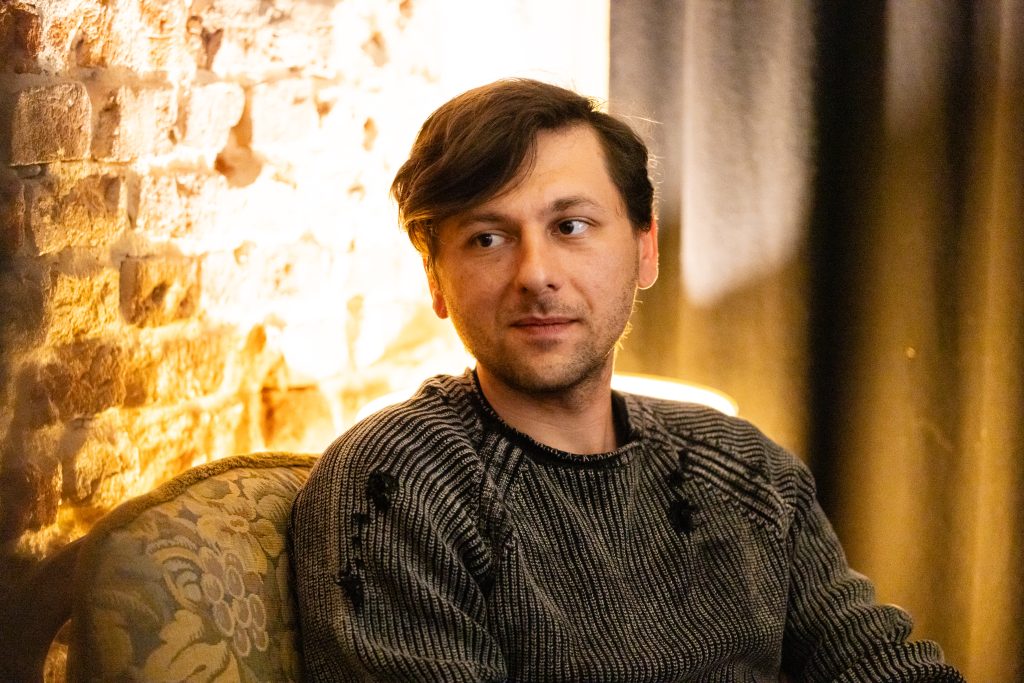
Dimitar: I cannot pick just one show. Recently, though, audiences have been so involved that at times I cannot hear Kosta singing. I connect that with choosing Bulgarian. Participation has seemed to grow exponentially at the last few concerts because the words are accessible. Singing along in your own language feels more natural.
Kosta: We all agree now that this music, as we currently present it, belongs on stage, in front of a standing audience there for a rock concert. If that is what you want to hear, come and see it live. That is where the real party happens.
You have spent time in London and spoken about opportunities in Bulgaria. What makes the difference?
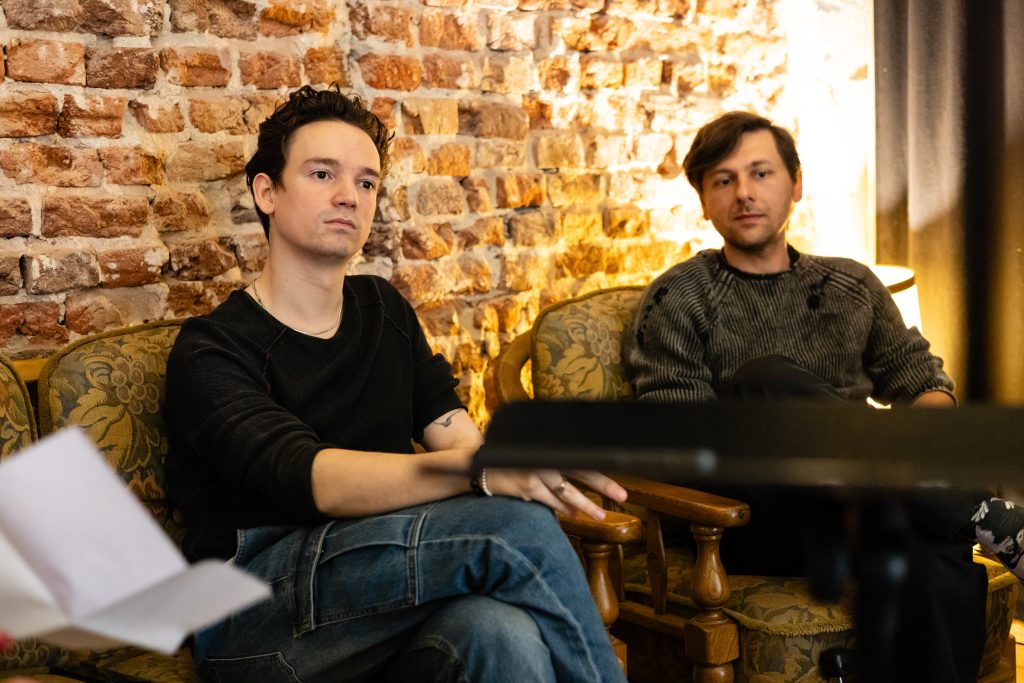
Kosta: Bulgaria still has many unexplored niches, not only in music. Small and medium-sized businesses often get trampled on, unfortunately, but there is still room to find something to develop. I think our progress owes a great deal to singing in Bulgarian and committing ourselves to the local scene and audience. People identify with us more quickly than if we sang in English and tried to establish ourselves abroad. Plenty of Bulgarian bands live, write and play here but see themselves primarily as international acts. There is nothing wrong with that. We simply chose this path deliberately, for now, and I think the decision has made sense. England, where I lived, is saturated with culture. One day it is AC/DC, the next Shakira, then Taylor Swift. There is much less unoccupied space, and finding a position is difficult. Not impossible, but we did not even manage to turn that environment into inspiration to try something ourselves. If anything,
I felt a need to make something in Bulgaria and develop it here.
That does not mean we never want to try taking it abroad.
Teodor: Another factor is commitment. Some rock bands are something friends do at weekends, a release from the rest of life. For us, this is one of the central things in our lives.
Is it possible to earn a living solely as a musician?
Teodor: Absolutely.
Kosta: I have some way to go before answering that categorically. We do not yet live on the band’s income alone. We have ideas about how that might happen, but for now we also have jobs, albeit within music. Other Bulgarian bands seem to make it work, and we look at what we can learn. Dido Peshev from Last Hope and Bare Hands Society comes to mind: he built a community through art. There are ways. You have to commit to them.
What was ahead for the band when we spoke?
Kosta: The 25 June show at Maymunarnika was to be our biggest challenge yet. We had invested a great deal of time and resources, and hoped it would be worth it. Alongside the second album, we were planning more singles, including one for June. The summer calendar included Hills of Rock in Plovdiv and July Morning in Pomorie, with further appearances awaiting confirmation. Those were our plans at the time of the interview.
What will save the world?
Kosta: Everyone doing their best to become the best version of themselves. I do not see another way. If we do things carelessly, without considering the result or the consequences of our actions, nothing will save it.
Cool Den: the band that keeps you on your feet
What’s happening in the city? Follow GoGuide on Instagram to hear about it first.
Subscribe to our YouTube channel for a closer look at the city, and a wider view.