Bulgaria's language bill meets the internet's sense of humour
A proposed language law has sent Bulgarian social media back to the days of Latin-letter texting. Naturally, the jokes write themselves.
Zdr! Kp? Or, in English texting shorthand: hey, what's up?
Remember when everyone seemed to type Bulgarian in Latin letters online? It was called shlyokavitsa. No secret code, no elaborate new alphabet, just Bulgarian written with Latin characters rather than Cyrillic. To the young, it was the language of a new era. To their elders, it looked like illiteracy. Eventually, most of us grew out of the habit.
But is shlyokavitsa making a comeback?
The unlikely catalyst is a Bulgarian-language bill that MPs passed at first reading on 4 November 2026. It has not completed the legislative process. It proposes restrictions on the use of foreign languages in public spaces, while allowing Bulgarian texts to be transliterated under certain conditions. At first glance, the aim sounds reasonable. Bulgarian is part of our national identity, and public institutions ought to set an example in how they use it. Still, if so many MPs are keen to protect the language, perhaps instead of drafting absurd legislation,
they could start by speaking good Bulgarian in parliament.
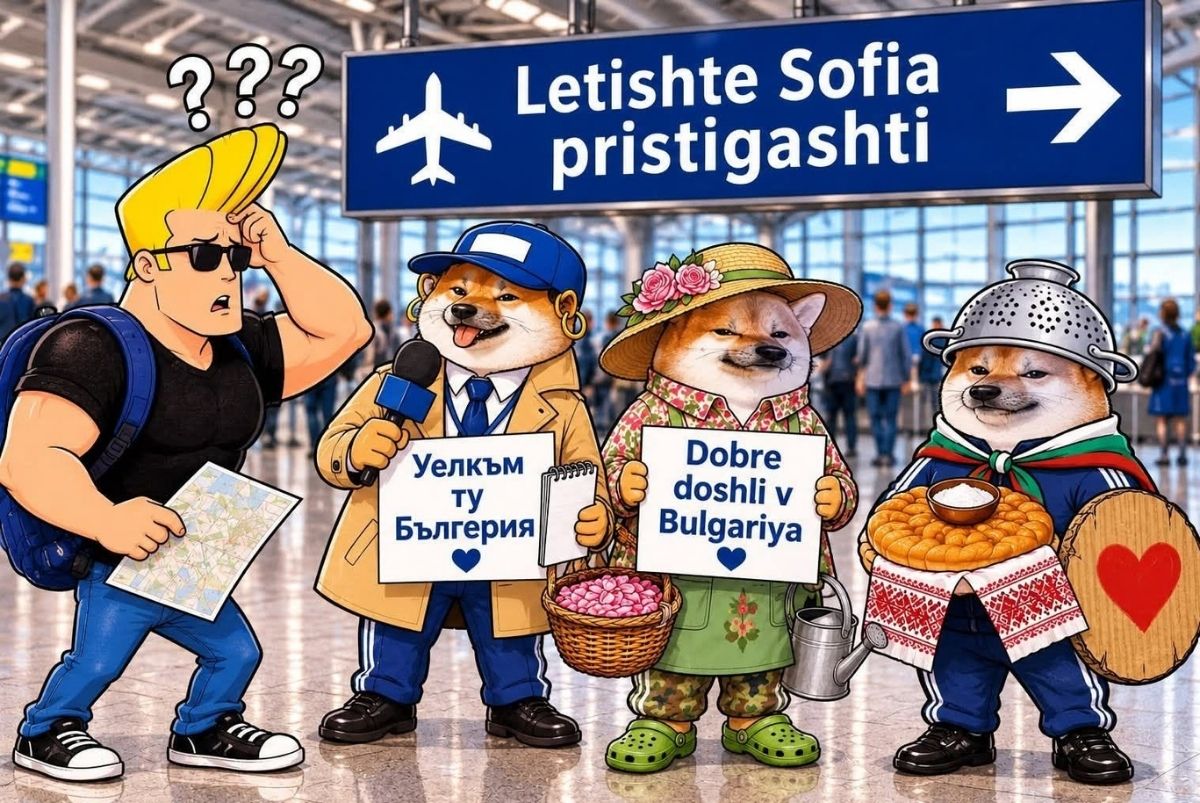
The disputed text would require public signs, notices and labels to use standard Bulgarian. The following paragraph would allow Latin lettering beneath the Cyrillic text, in accordance with the existing Transliteration Act. It also expressly allows foreign languages for commercial or tourist activities, or where a special law permits them. The proposal does not require every English sign to be replaced by transliterated Bulgarian. The internet responded with a flood of shlyokavitsa. The Bulgarian name for the Ministry of Culture, for instance, becomes Ministerstvo na kulturata: the same Bulgarian words in Latin letters, rather than an English translation. These are jokes about the proposal, not evidence that institutions will actually be putting up signs like these. With that distinction made, here are some of the funniest responses.
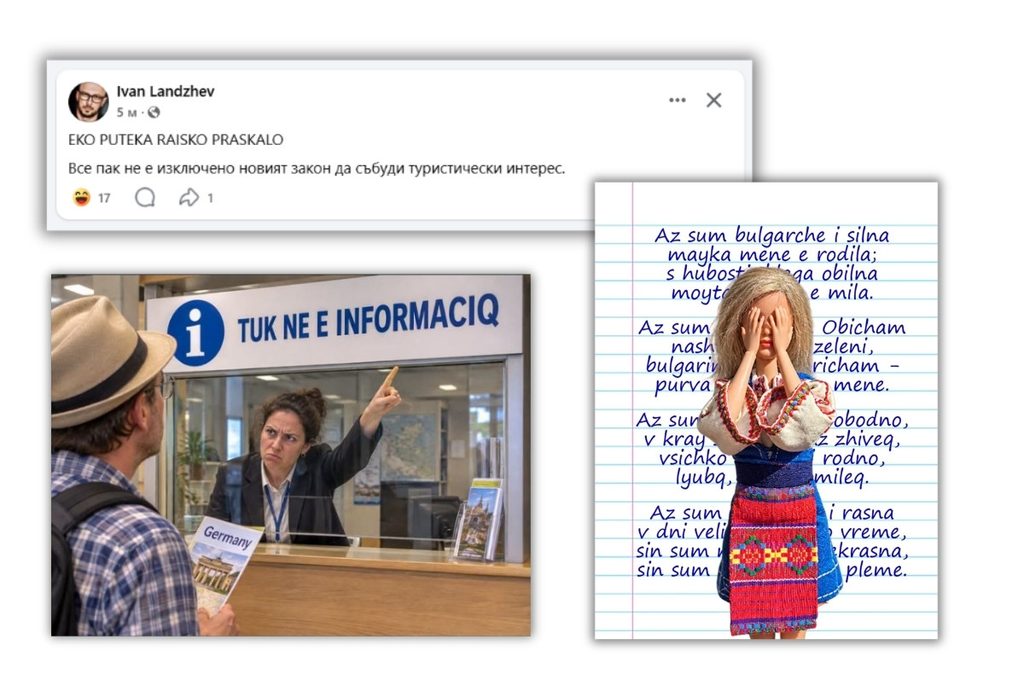
Mitko Pavlov leans into the irony: after years of English lessons and online chat, Bulgarian typed in Latin letters is suddenly being treated as a linguistic achievement.
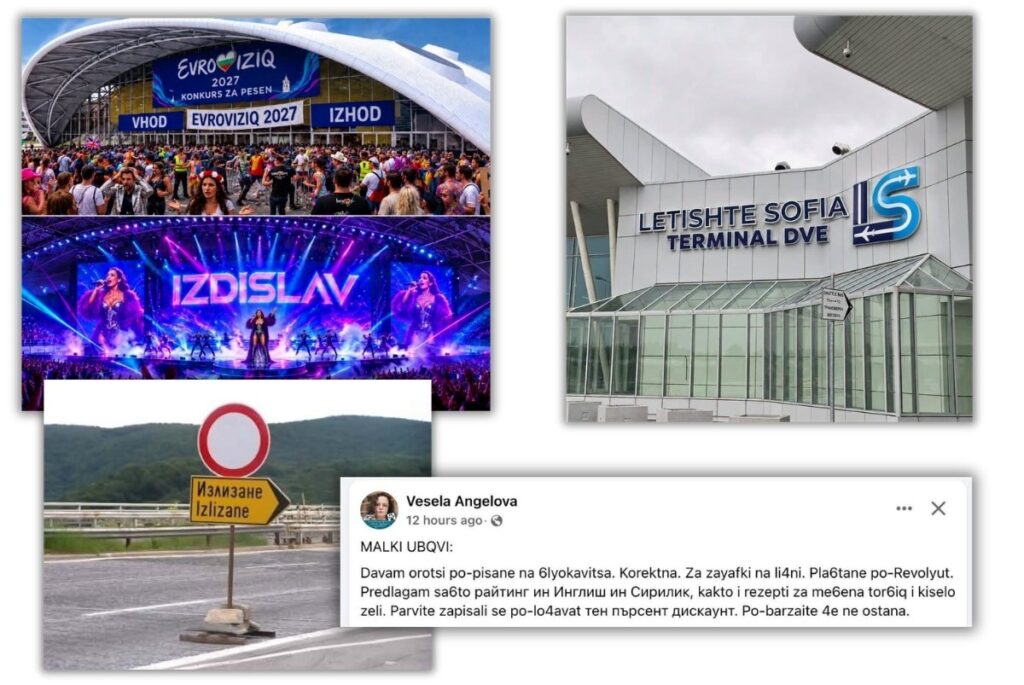
Val Stoeva takes the idea to its absurd conclusion: imagine introducing international readers to Bulgarian literature simply by changing its alphabet. Her post mixes criticism, satire and speculation, rather than setting out requirements of the bill.
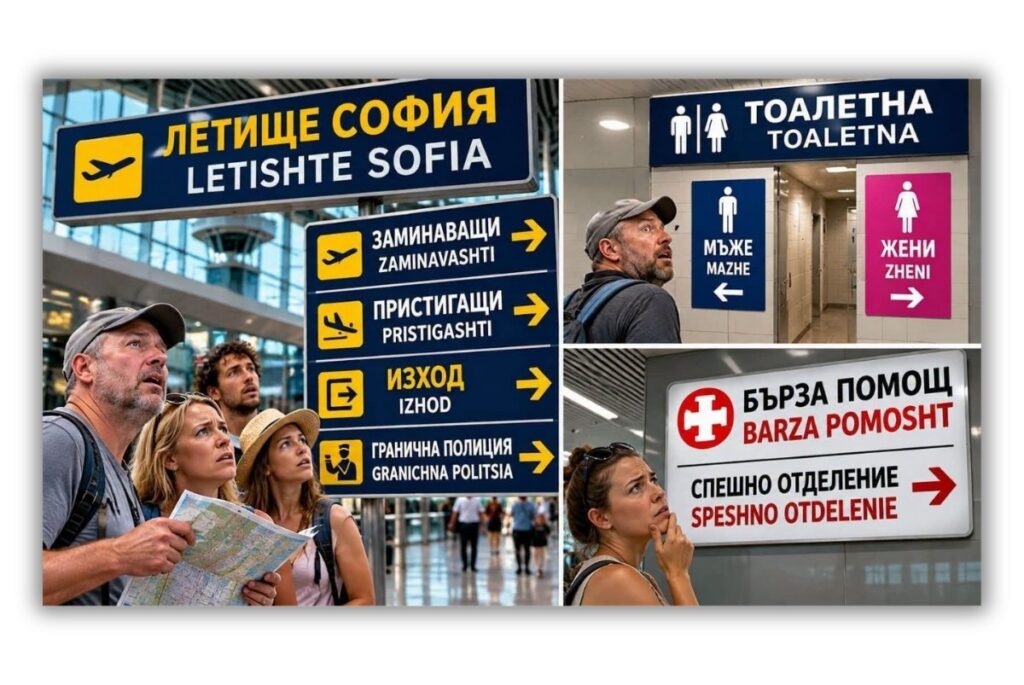
Maria Kassimova-Moisset imagines a sign with three lines: Bulgarian in Cyrillic, Bulgarian in Latin letters, then English written in Cyrillic. The joke keeps moving the language barrier instead of removing it.
Finally, Ey Bo insists on correct spelling in a post that gleefully mangles it. The performance speaks for itself.
The best comments and memes about Eurovision 2027 in Burgas (in Bulgarian)
What's happening in the city? Follow GoGuide on Instagram to hear about it first.
Subscribe to our YouTube channel and see the city up close and from a different angle.