Mermaids around the world: beautiful statues, darker stories
A journey through sea legends with very little in common with Disney.
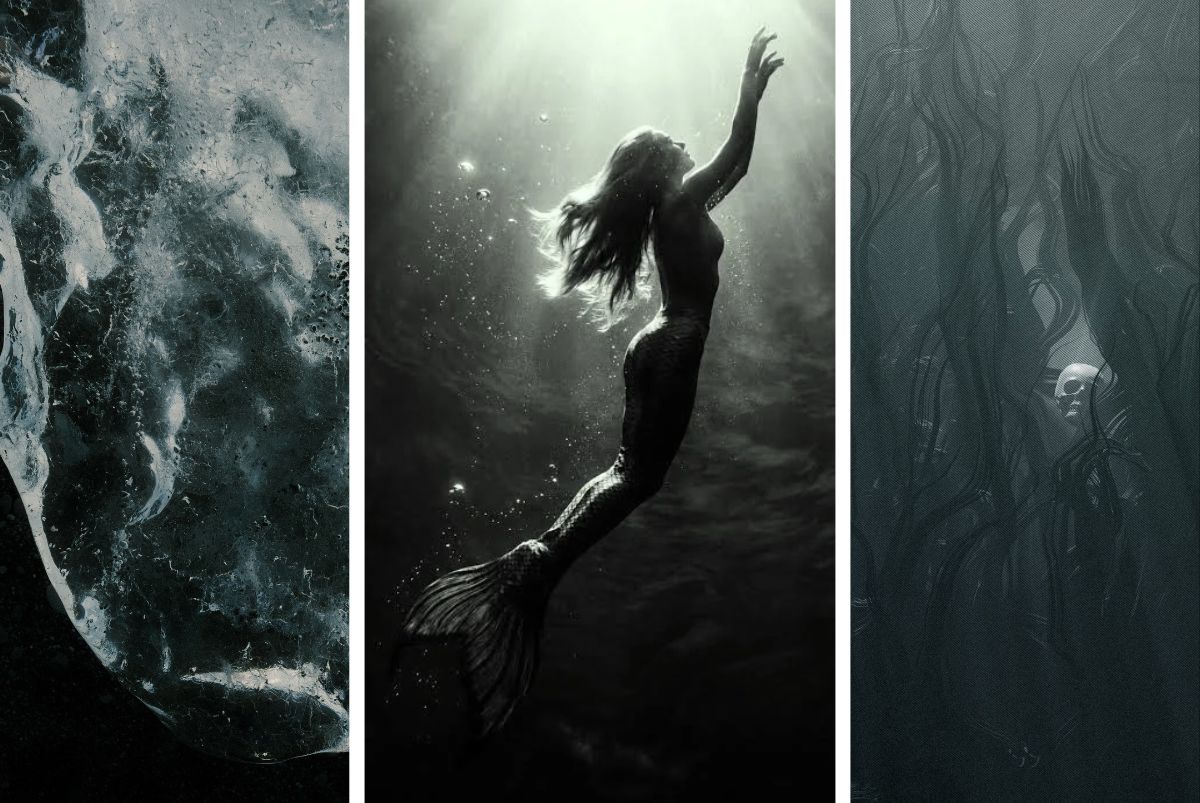
By Daniele Monteleone. English version of GoGuide’s Bulgarian edition. Bulgarian translation and editing from English: Kristiyana Burdeva.
In Hans Christian Andersen’s tale, mermaids cannot cry, which makes their suffering all the greater.
Published in 1837, The Little Mermaid travelled around the world before inspiring Disney’s much later animated film. Admit it: say “mermaid” and you probably picture Ariel, her overprotective father King Triton and her singing sisters. The studio knew how to make a fairy tale end happily. Folklore is rather less reassuring. Its water spirits can be dangerous, alluring and cruel. The sirens of Homer’s Odyssey, though distinct from fish-tailed mermaids, belong to that wider tradition of irresistible voices at sea; Odysseus has himself tied to the mast to hear them without following. Art has long been fascinated by such figures. In the spirit of the spooky season, we are leaving paintings behind and travelling in search of statues, and the stories gathered around them.
Copenhagen: Edvard Eriksen’s Little Mermaid
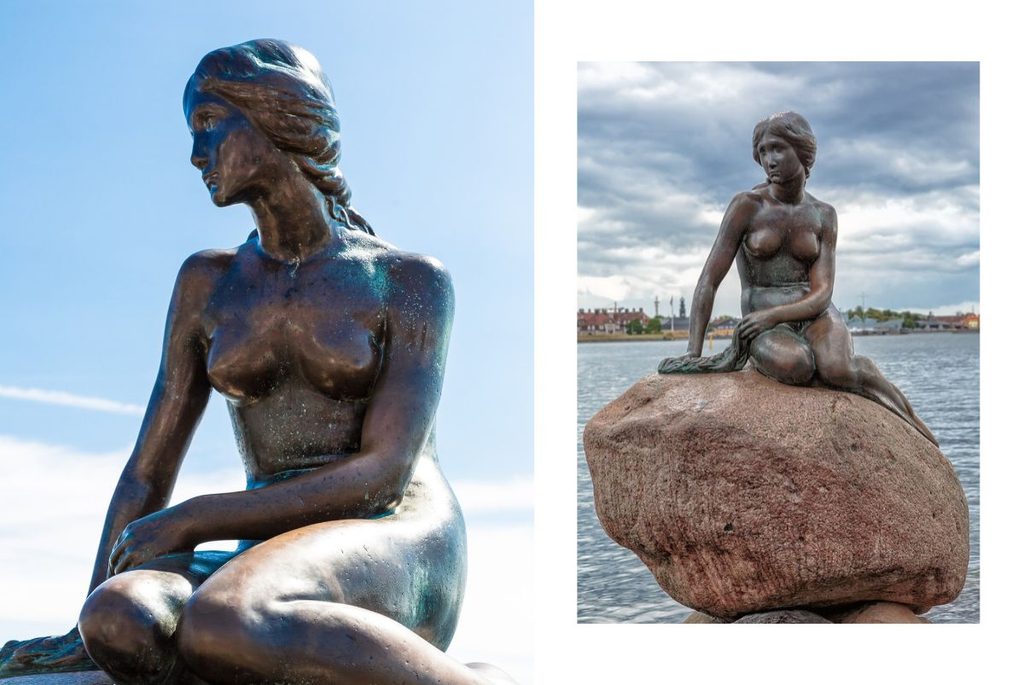
If any mermaid has a claim to worldwide fame, it is Copenhagen’s. Inspired by Andersen’s story, Edvard Eriksen’s bronze figure sits on a rock beside the harbour. His wife Eline modelled for the body, while ballerina Ellen Price inspired the face. She seems to watch the horizon, waiting for ships to return.
Her peaceful appearance is deceptive. The statue has had an eventful life.
She was beheaded in 1964, has been covered in paint and was once dislodged from her rock. Repeated restoration has returned her to the harbour. Quite a turbulent existence for someone who cannot move.
Napier: Pania of the Reef
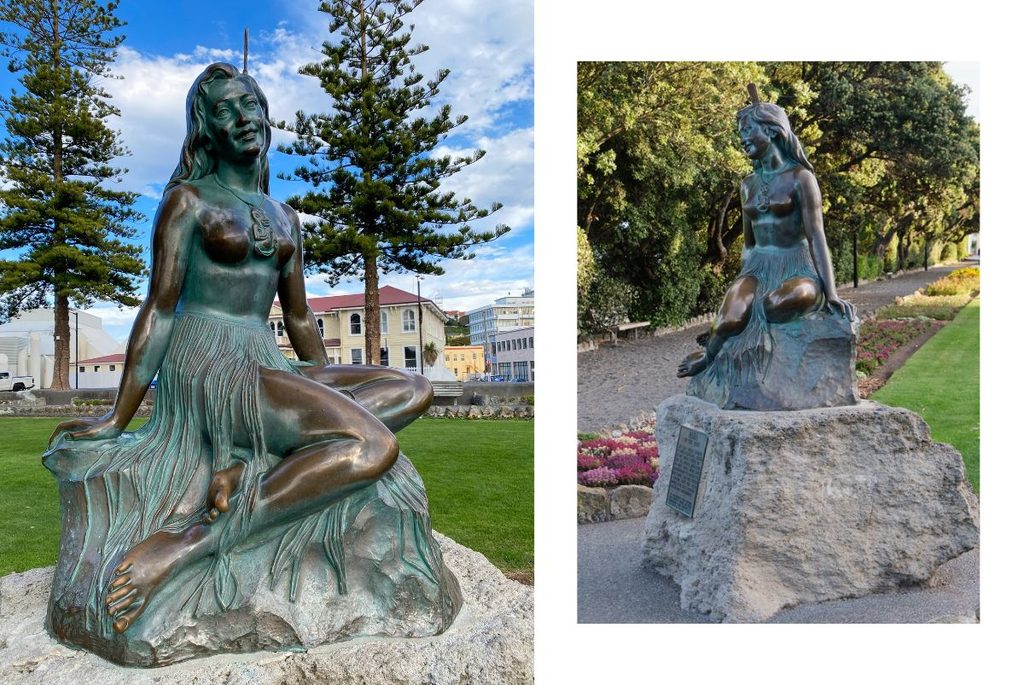
From Denmark, we cross the world to Napier in New Zealand and Pania, a sea figure in Māori tradition. Her story survives in different versions. The inscription on the statue recalls how the voices of the sea people drew her back into the water.
But returning to her lover was another matter.
When she tried to come ashore again, she was transformed into the reef beyond Napier’s breakwater. The statue, presented to the city in 1954, gives that story a presence on land.
Songkhla: the Golden Mermaid
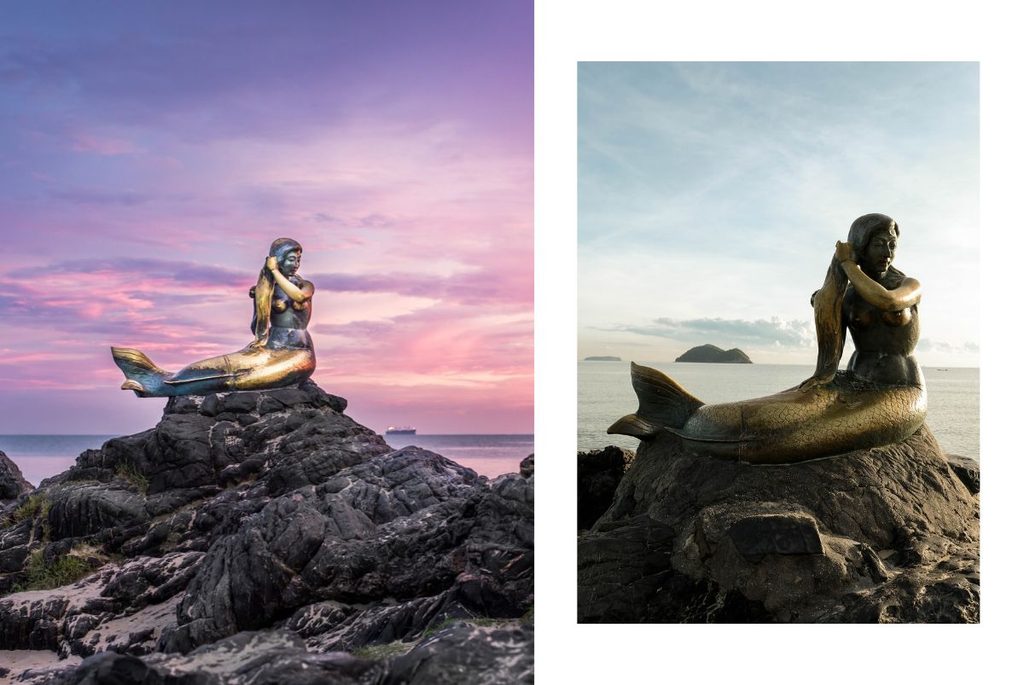
Our next stop is Songkhla in Thailand, where the Golden Mermaid sits on a coastal rock. One local story attached to her concerns love between a mermaid and a fisherman.
One day, the fisherman saw a beautiful mermaid on the beach,
sitting on a rock and combing her long golden hair. He fell in love immediately, but she was frightened when she saw him and disappeared. He returned every day to the same rock, hoping to see her again. She never came back.
Taranto: mermaids on the waterfront
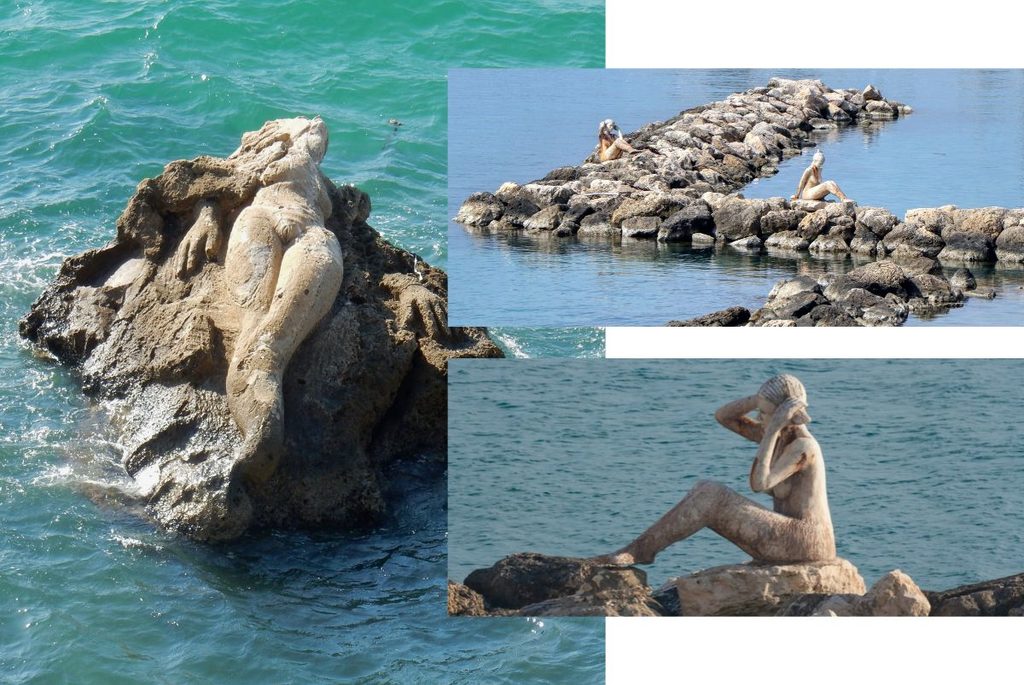
On Taranto’s waterfront in Italy, mermaid figures rest on the rocks. They are associated with the legend of Scuma, a story with enough drama for a feature film. A beautiful woman, frequently left alone by her fisherman husband, accepted another man’s advances. Overcome by guilt, she confessed.
Her husband responded with terrible violence.
Knowing she could not swim, he threw her into the sea and left. Mermaids rescued her and, captivated by her beauty, made her their queen, Scuma. Her husband regretted his actions and returned to search for her. The mermaids tried to drown him, but Scuma herself saved him. With a fairy’s help, she became human again and the couple reunited. Whether he deserved that ending is another question.
Syracuse: the Mermaid of Sicily
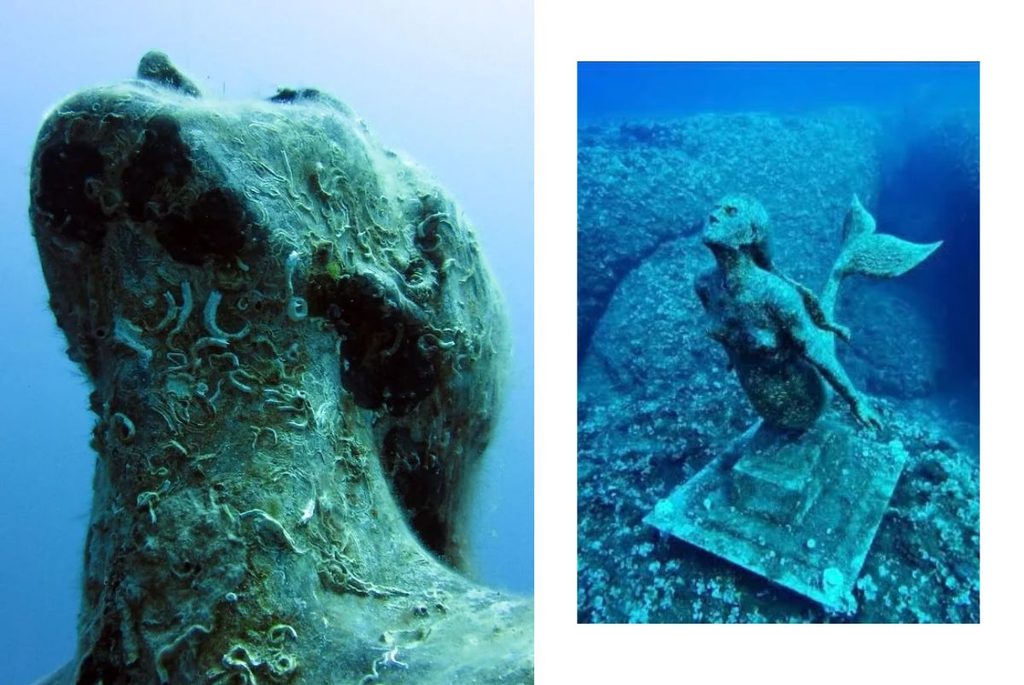
We stay in Italy, but head beneath the surface. Unlike the other statues here, the Mermaid of Sicily lies underwater in the Plemmirio marine protected area near Syracuse. The bronze memorial was installed in 2008.
It honours Rossana Maiorca,
the champion freediver who died in 2005, commemorating a life deeply connected with the sea.
Giardini Naxos: the mermaid facing away from the sea
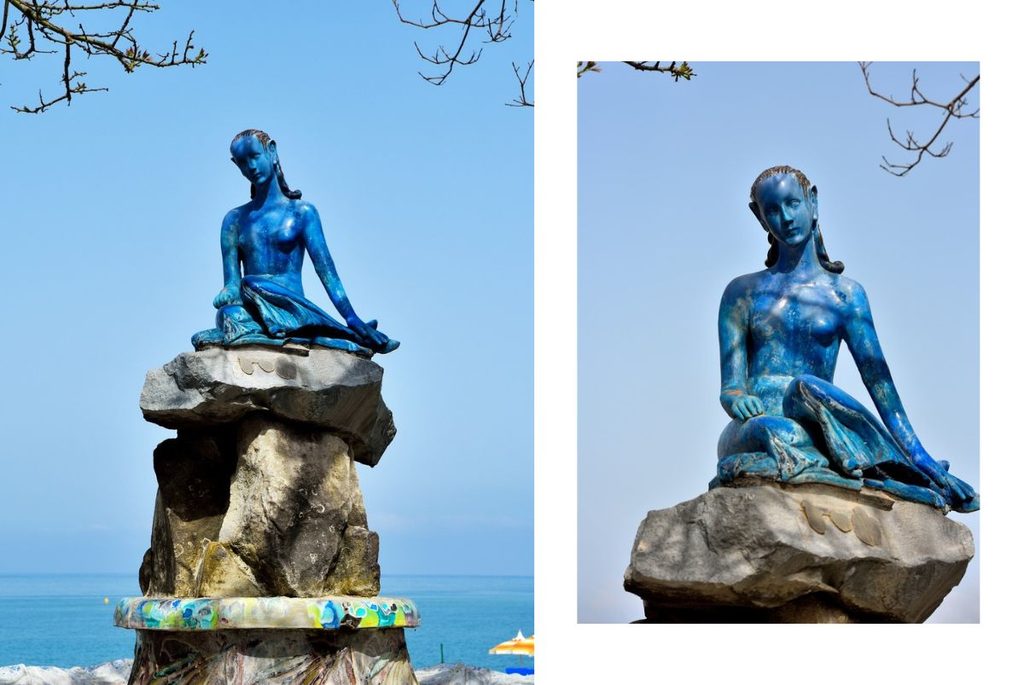
Our final stop is also in Sicily. Giardini Naxos has a bronze mermaid at a waterfront fountain. The striking detail is her orientation: she turns her back to the sea. Her appearance invites comparison with Copenhagen’s Little Mermaid.
So, what should we make of mermaids?
Beautiful women with fish tails, or frightening beings waiting to draw someone into the depths? The stories have held people’s attention for centuries. Some see only folklore; others prefer to leave a little room for mystery.
Perhaps that is what keeps us looking out to sea.
Who knows what a story might bring ashore?
Europe’s most haunting cities
What’s happening in the city? Follow GoGuide on Instagram to hear about it first.
Subscribe to our YouTube channel for a closer look at the city, and a wider view.