From an Irish pub argument to Guinness World Records
How a question about a game bird grew into a global obsession.
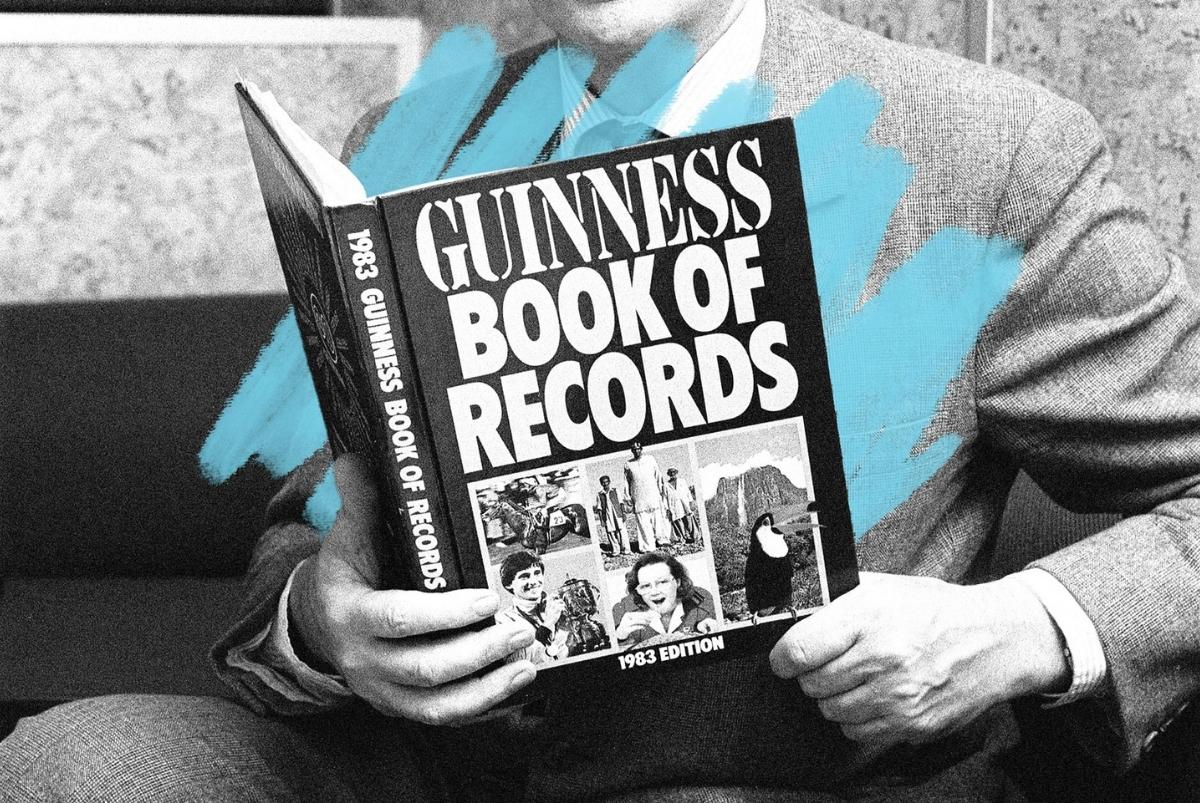
When I was a child, people seemed to be forever talking about the Guinness Book of Records.
I imagined a huge notebook with white pages and a brown cover, something out of a Disney cartoon, in which anyone could write down an achievement. It was a wonderfully chaotic idea. Then, in 2001, I saw an actual edition in Bulgaria: glossy, futuristic and thoroughly in keeping with the new millennium.
Who was Guinness, and why did everyone want to be in his book?
Better Guinness’s book than Barney Stinson’s, surely. And yes, the name really does come from the Irish brewery. In 1951, its managing director, Sir Hugh Beaver, was on a shooting trip in County Wexford when an argument broke out over Europe’s fastest game bird. Nobody could find a reliable answer in the available reference books. Beaver realised that similar arguments must be happening constantly, particularly in British and Irish pubs. A book of verified facts and records might come in useful.
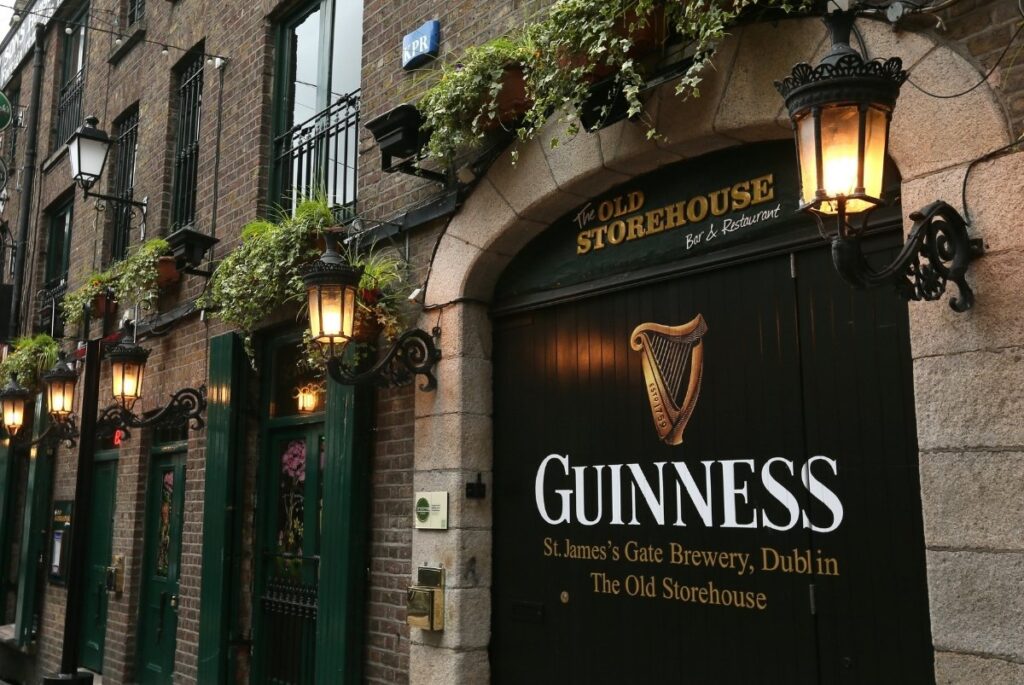
Think of it as a promising form of pub peacekeeping.
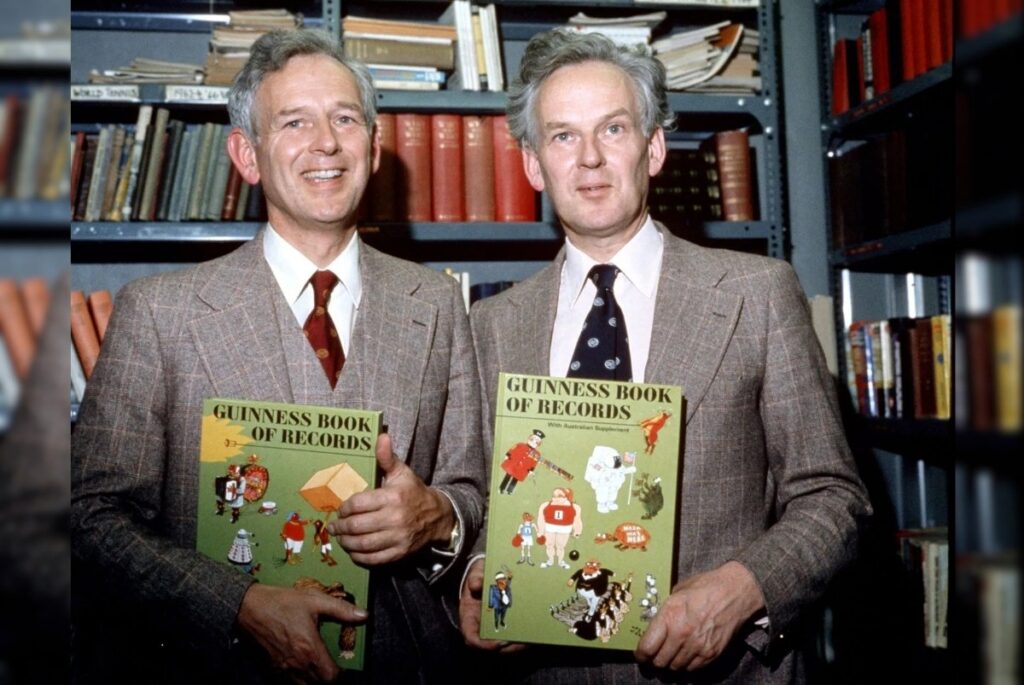
In 1954, Beaver commissioned twins Norris and Ross McWhirter, whose business was finding and checking facts, to compile the book. Perhaps the closest contemporary comparison is checking what an AI answer has confidently got wrong. The first edition took thirteen and a half weeks of intensive work, including weekends and holidays. Guinness World Records’ official timeline dates its publication to 27 August 1955.
An American edition followed in 1956 under the title The Guinness Book of Superlatives. If football can become soccer across the Atlantic, records can surely become superlatives.
By 1964, sales across all editions and languages had reached a million copies.
The BBC programme Record Breakers began in 1972, with Roy Castle and the McWhirter twins, whose extraordinary recall became part of its appeal. Ross was murdered in 1975. Norris continued as editor until 1986, then as a consultant until 1996. The first Guinness records museum opened in New York’s Empire State Building in 1976, with a Hollywood museum following in 1991. In 1999, the brand adopted the name Guinness World Records.

The edition I first encountered twenty-five years ago was full of people and their wonderfully peculiar achievements. I have never forgotten the fingernails: they looked long enough to fill our kitchen. There are separate categories for men, women, one hand and individual nails, so the subject is more complicated than one definitive record. I will be sitting that competition out. And before anyone starts another argument about anatomical proportions, this is not a dependable league table of human masculinity. Some animal dimensions, blue whales included, are enough to silence even the most confident Balkan macho man.
Bulgaria has its own, rather more wholesome approach to extraordinary lengths.
Take the martenitsa, the red-and-white thread decoration worn to welcome spring. Guinness lists Vidin Municipality’s 16,704-metre creation, measured on 1 March 2015. As for the question that started everything, its entry for the fastest game bird names the red-breasted merganser, with a recorded level-flight speed of 130 kilometres per hour. It is Guinness’s likely answer to Beaver’s European conundrum, even though the book developed into a collection of world records.
What’s happening in the city? Follow GoGuide on Instagram to hear about it first.
Subscribe to our YouTube channel for a closer look at the city, and a wider view.