Dua Lipa’s library of forbidden books
A hundred books that challenge power, censorship and the limits of who gets to speak.

Photography: @dualipa
Dua Lipa’s private life may make headlines,
but another of her great loves deserves our attention: books. The singer and founder of the Service95 Book Club has helped create the Manifesto Library, dedicated to books that confront power, censorship and exclusion. Reading a book and talking about it can still be a remarkably defiant act. Service95 was conceived as a meeting place for writers and readers, wherever they live and whatever their circumstances.
For Lipa, reading across borders brings people closer, even when others would prefer to keep them apart.
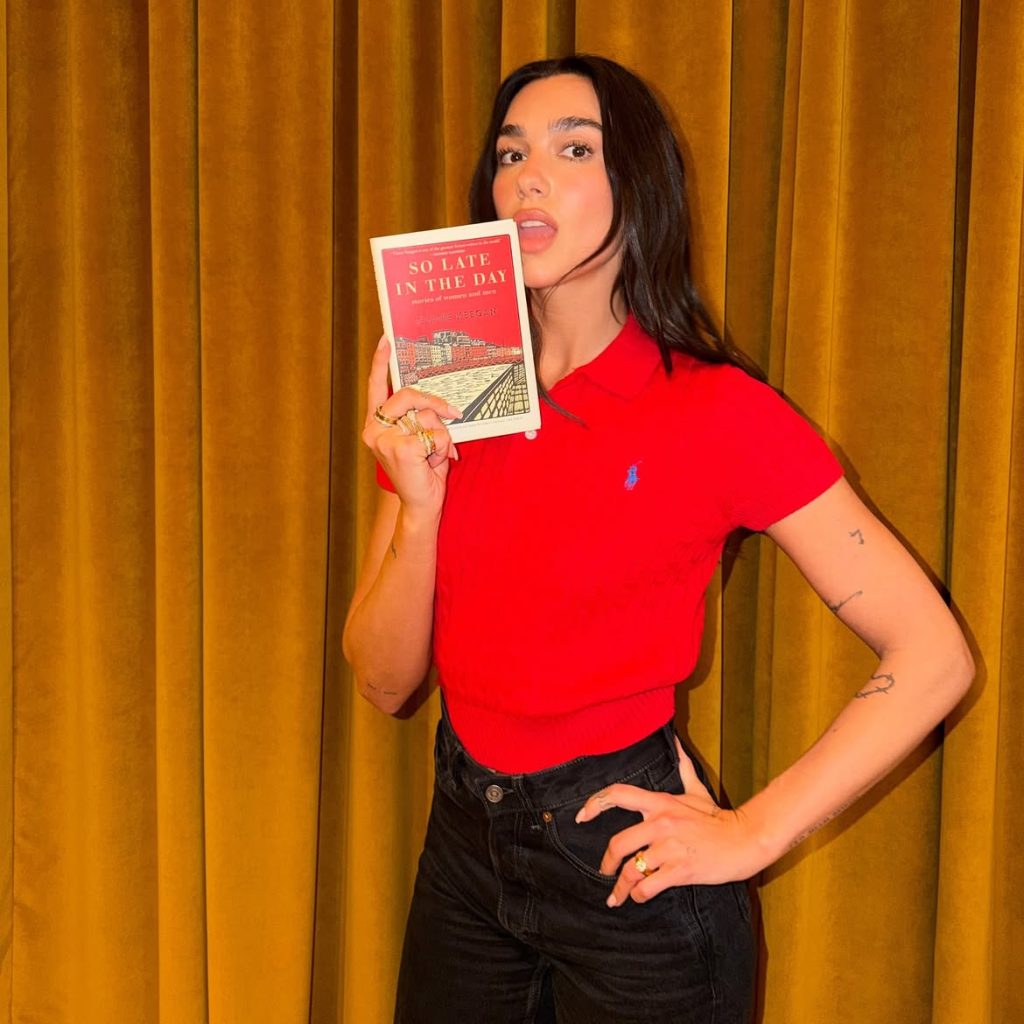
The collection brings together a hundred books that ask difficult questions and have faced challenge or censorship. Some have been banned in schools because they address race or sexuality. Others have been kept out of shop windows. In the most extreme cases, writers have paid for their words with their lives.
The Manifesto Library is a physical place in Porto, Portugal.
Book lovers will already know the city for Livraria Lello, the historic bookshop that turns 120 in 2026 and is frequently counted among the world’s most beautiful. The library forms part of its cultural space, with a hundred titles arranged in four categories. “Power” gathers works that challenge prevailing political and social structures, from Simone de Beauvoir’s The Second Sex to George Orwell’s dystopian classic Nineteen Eighty-Four.

“Control” considers the restrictions placed on freedom of thought through propaganda, surveillance and institutional pressure. Titles include Margaret Atwood’s The Handmaid’s Tale, Franz Kafka’s The Trial and Yoko Ogawa’s The Memory Police. “Voice” makes room for writers marginalised, excluded or silenced over time, including Salman Rushdie’s The Satanic Verses and My Pen Is the Wing of a Bird, a collection of stories by Afghan women.
The fourth category, “Memory”, examines the erasure of history
through war and dictatorship. It includes Min Jin Lee’s historical epic Pachinko and The Books of Jacob by Nobel laureate Olga Tokarczuk, one of Lipa’s favourite authors. This is more than an archive of past censorship. It is a reminder of what remains at stake. Where people seek to control thought and distort facts, reading together can be an act of freedom. A few unhurried days are a good opportunity to discover one of these forbidden stories, many of which are also available in Bulgarian translation.
Don’t say we didn’t tell you: new books that caught our attention
What’s happening in the city? Follow GoGuide on Instagram to hear about it first.
Subscribe to our YouTube channel for a closer look at the city, and a wider view.