Osaka for the food, Kyoto for the soul, Tokyo for the pace: part one
A ten-day journey through three very different sides of Japan.
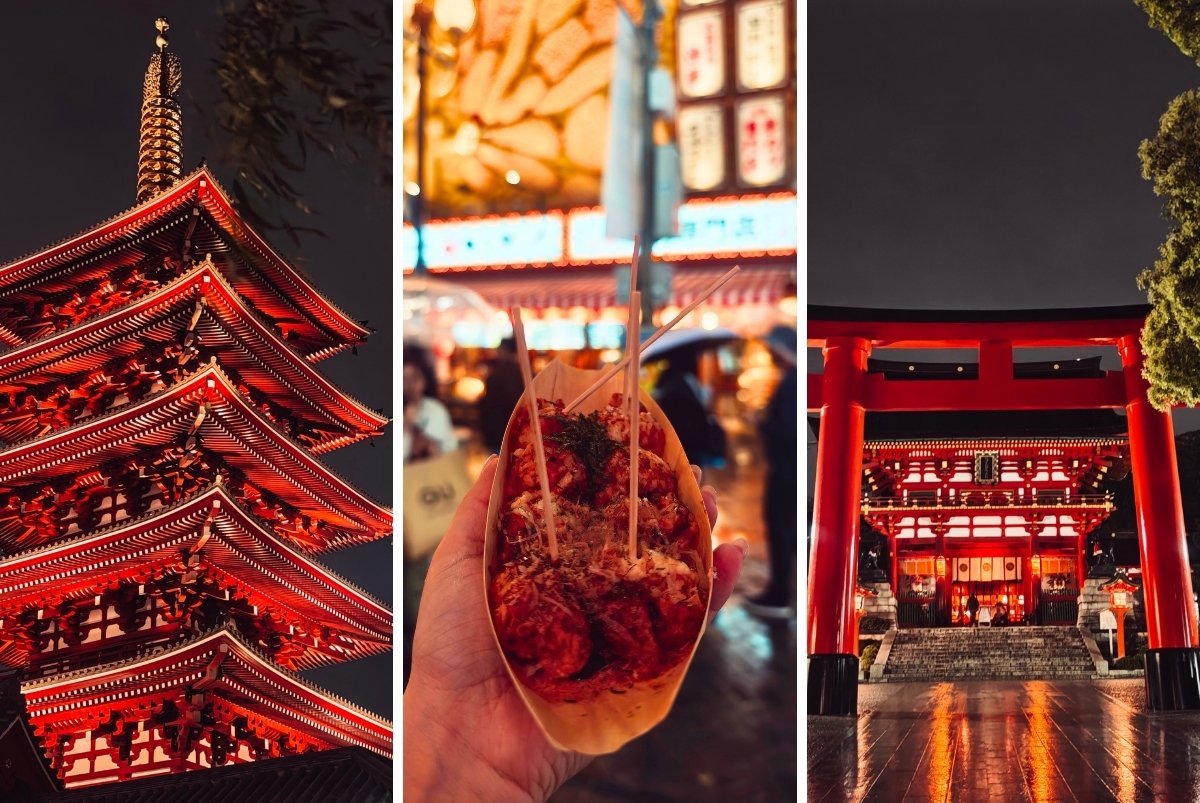
Japan reveals itself in layers.
A morning coffee, a temple and a street after dark can tell very different stories about a country that holds old traditions and new ideas close together. This itinerary follows three cities over ten days: one day in Osaka for a first taste, five in Kyoto to stop rushing, then four in Tokyo, where there will always be more to see. Whether you’re planning a trip or travelling from your armchair, come with us through busy landmarks, quieter corners and places to eat along the way. Part one takes in Osaka and Kyoto.
Day 1: Osaka, with an appetite
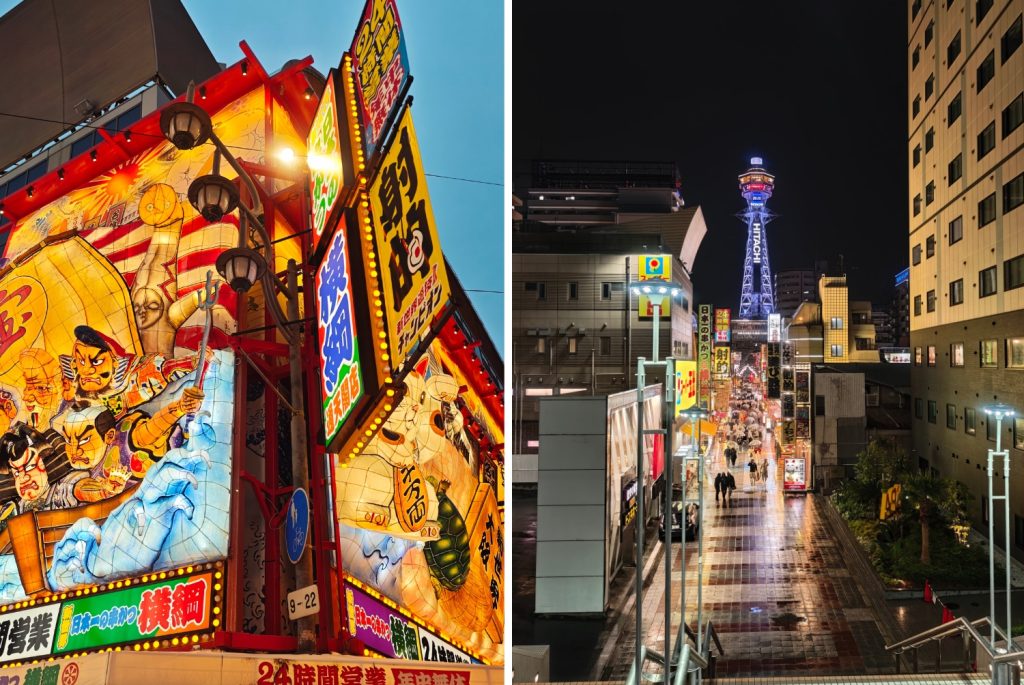
Osaka doesn’t much care whether you’re tired from the flight. Reach Dotonbori and the neon, sizzling food and crowds take over. The city’s famous idea of kuidaore, eating yourself into financial ruin, captures something of the enthusiasm. Dinner is taken seriously here.
A day is short, but enough for a taste.
Begin at Kuromon Market, where stalls and small eating areas offer plenty to try. Then consider Shitennoji, whose foundation is traditionally dated to 593 and associated with Prince Shotoku. The temple grounds offer a quieter change of pace, with gardens, water and turtles among the details to notice.
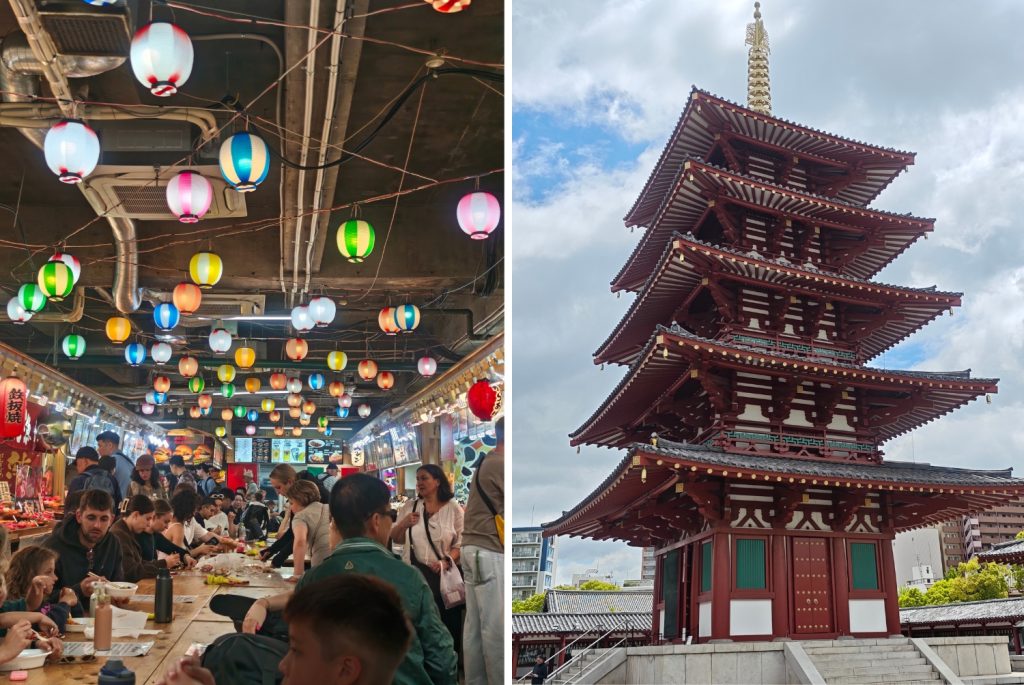
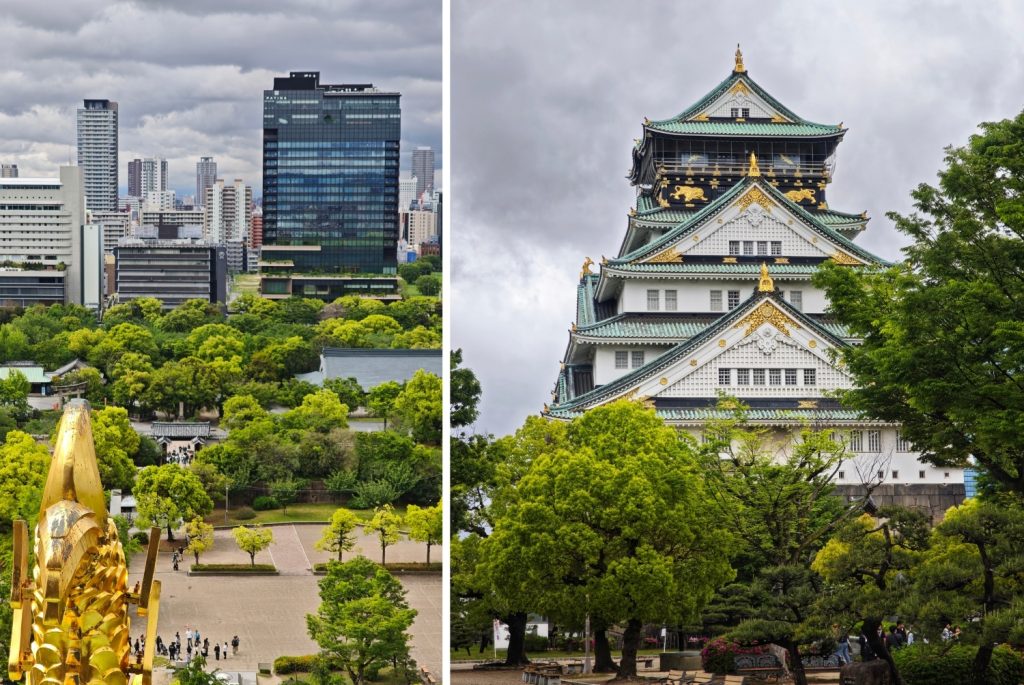
In the afternoon, head to Osaka Castle. If you have the energy, the upper-floor view puts the city into perspective. Check admission and access before visiting.
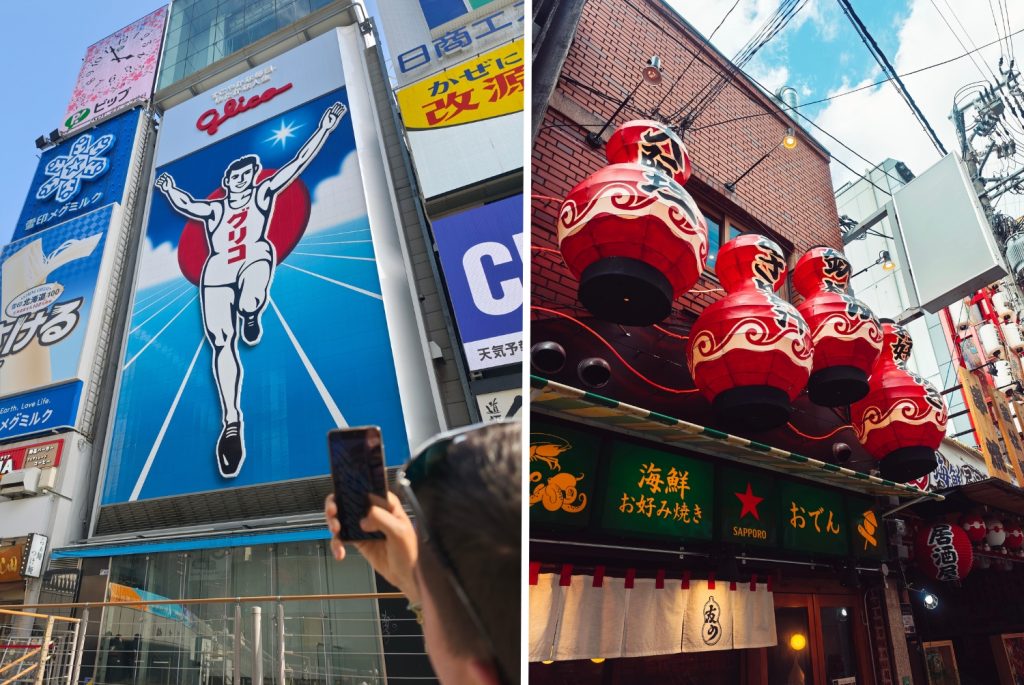
Come evening, return to Dotonbori: the canal, the huge crab at Kani Doraku and Glico’s running man make a memorable backdrop for another round of food.
Try okonomiyaki,
a savoury pancake with cabbage, batter and your chosen additions, cooked together on a hot griddle until the outside has a little crispness and the centre stays tender.
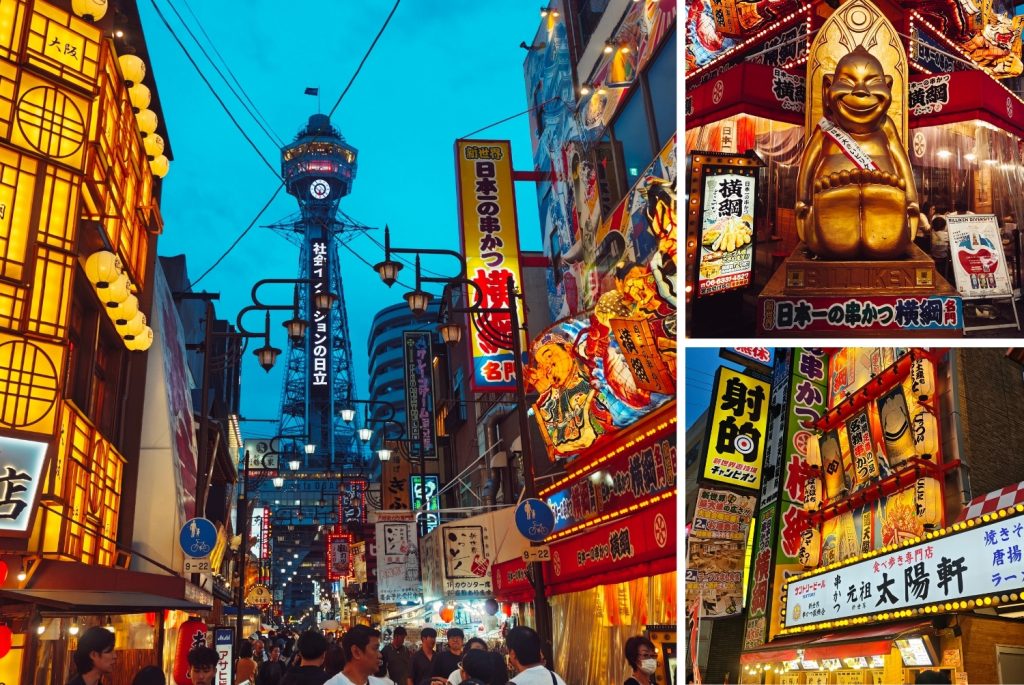
Tsutenkaku rises over Shinsekai, an older neighbourhood of neon signs, kushikatsu bars and a distinctly different mood from the city’s newer districts.
It changes character after dark.
A visit to the observation deck, subject to opening hours, offers another way to see Osaka. The view has a personality of its own, quite different from Kyoto’s temple landscapes or Tokyo’s scale.
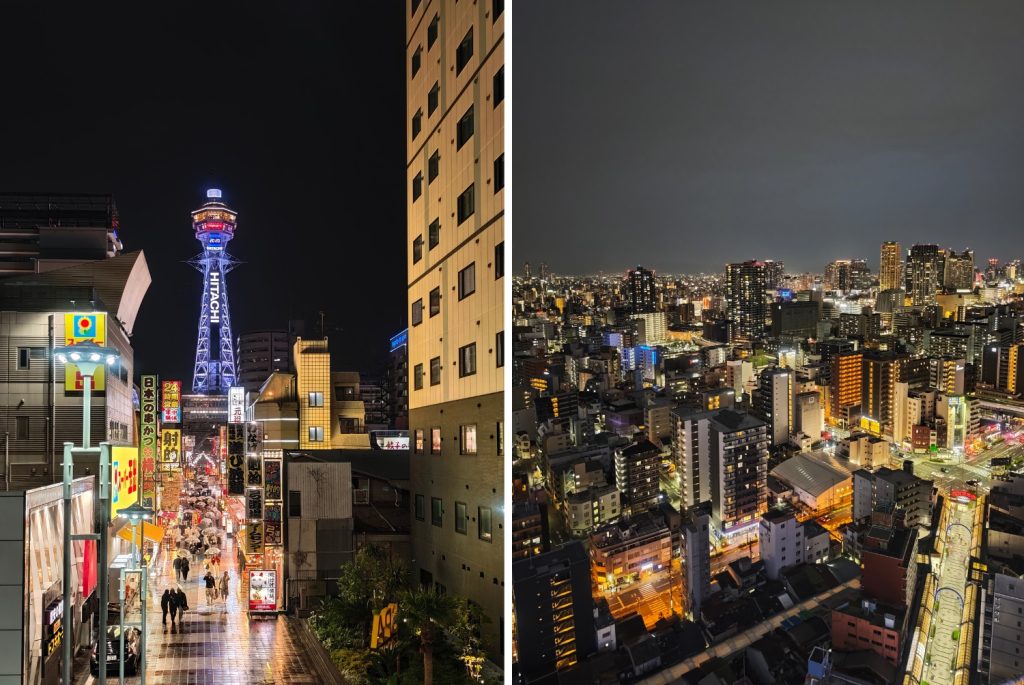
Umeda Sky Building makes a more overt architectural statement. Two towers meet at the top around the Floating Garden Observatory, with a broad panorama of the city.
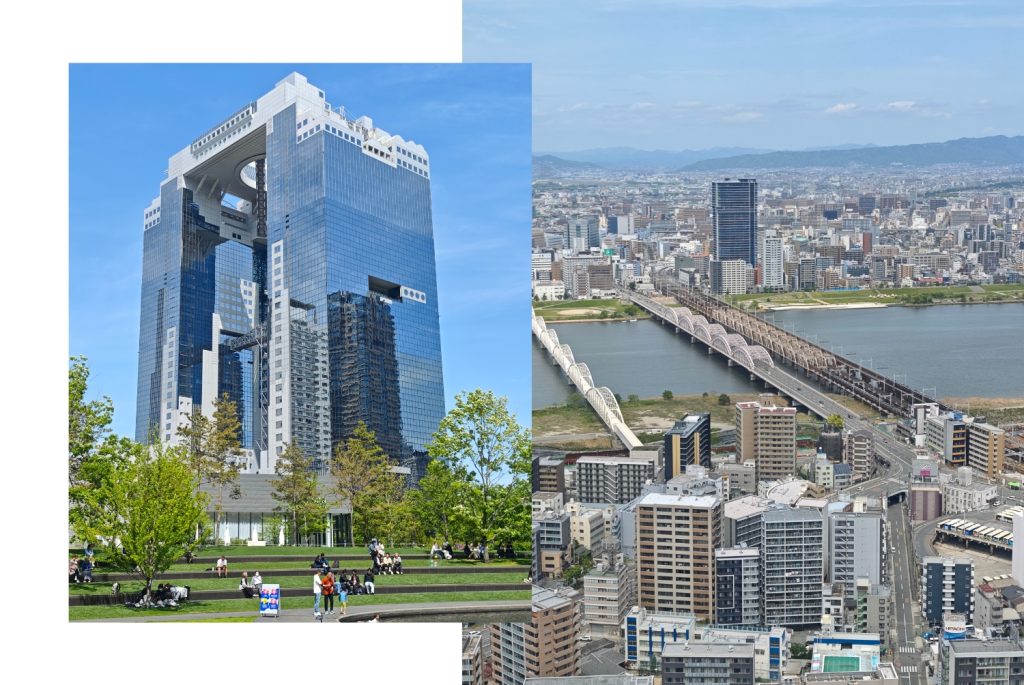
After dark, the lights stretch in every direction,
revealing the scale of the urban landscape.
The open-air rooftop adds wind and night air to the experience, when conditions allow access.
A practical note:
Look into an IC card such as ICOCA or Suica for eligible local transport and purchases. Acceptance, availability and ticket types vary. The Osaka Amazing Pass is another option to compare against your itinerary; check its current transport coverage and included attractions before buying.
A few more stops
Kushikatsu Daruma, Dotonbori
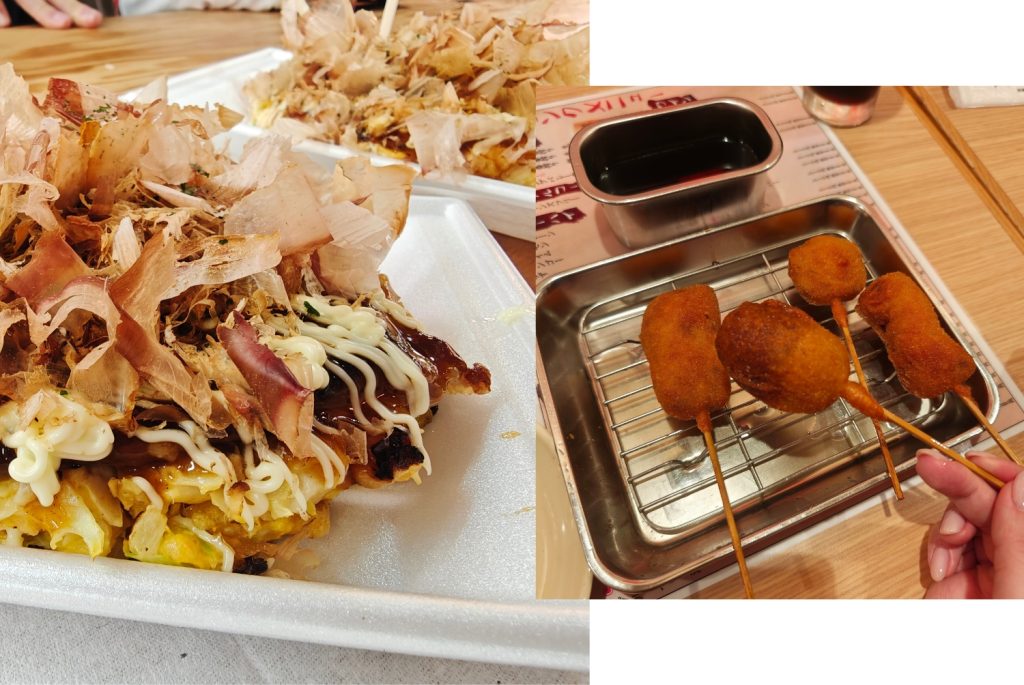
Kushikatsu are breaded, fried skewers of meat, vegetables or seafood. The familiar rule is no double-dipping into shared sauce. Follow the serving arrangements and guidance at the restaurant you visit.
Takoyaki Juhachiban, Dotonbori
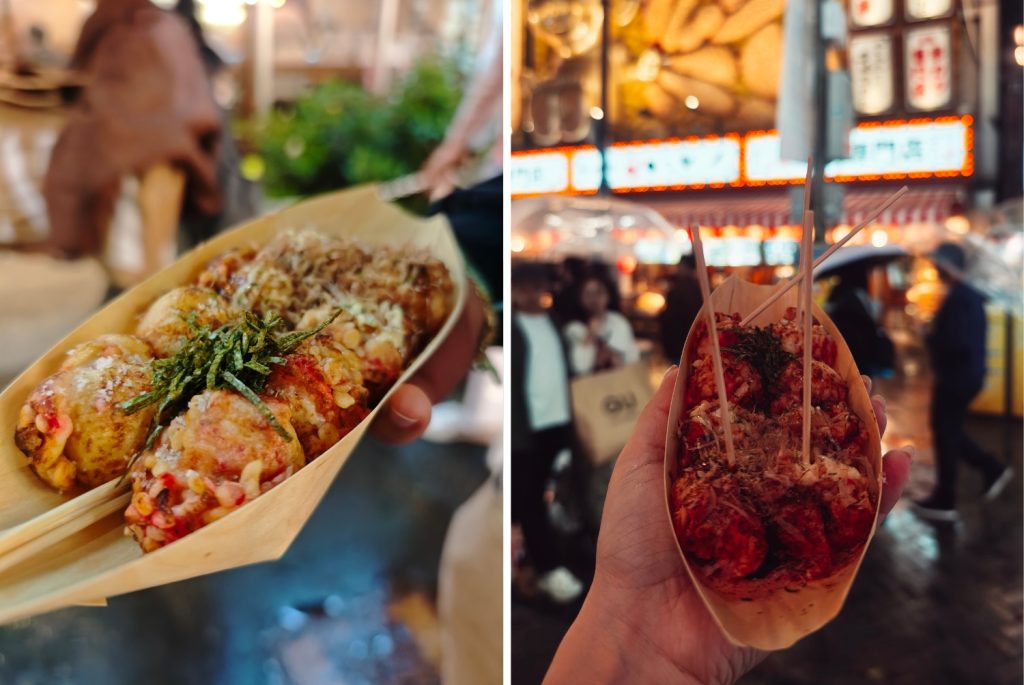
Takoyaki are balls of batter with octopus inside, turned by hand in a pan of rounded moulds. The outside develops a delicate crust while the centre stays soft and very hot. They’re closely tied to Osaka’s food identity.
HEP FIVE’s red Ferris wheel
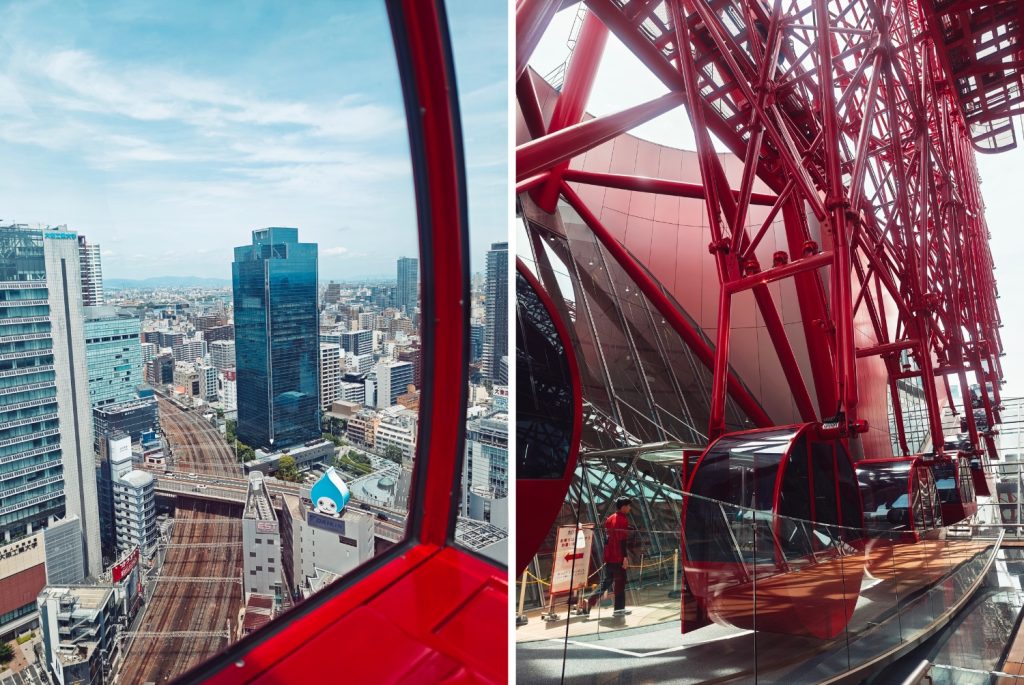
A Ferris wheel on top of a shopping centre in Umeda sounds improbable, and looks it too. Its highest point is around 106 metres above ground. Check operating information before heading up, particularly around maintenance closures.
Rikuro’s cheesecake, Namba
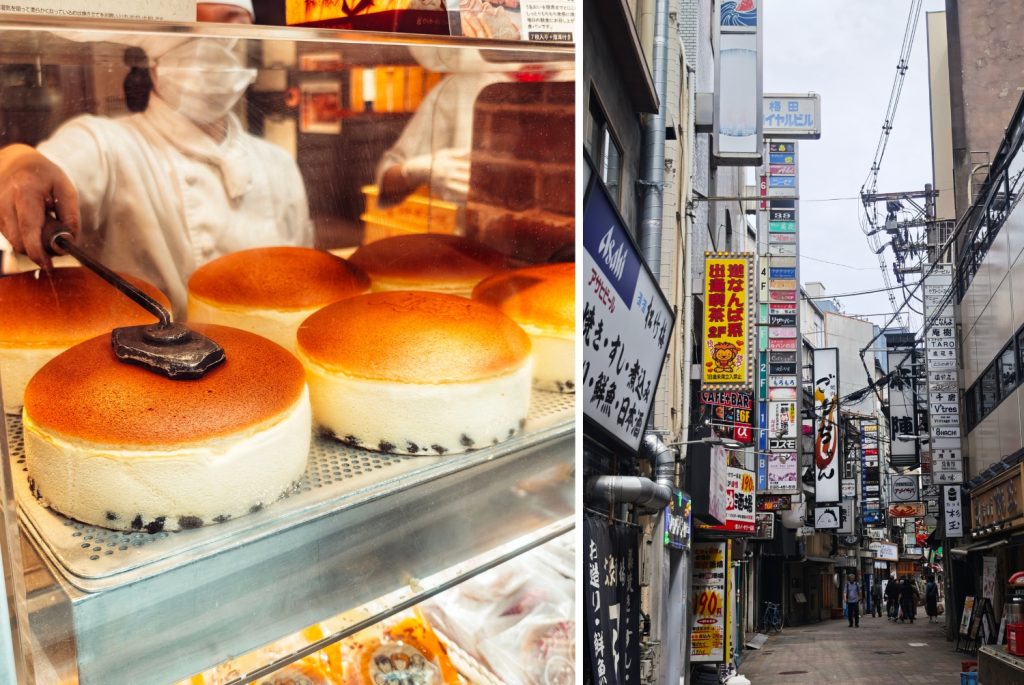
This is a different proposition from a dense, rich cheesecake. Light and gently wobbly, it sits somewhere between a soufflé and a cloud. The Namba shop is a popular stop, so allow time for a possible queue.
Days 2–6: Kyoto, at a different pace
After Osaka, Kyoto invites a slower rhythm. Five days give you room to move beyond ticking off sights. The idea of ma, the space or interval between things, offers a useful way to think about the visit: leave pauses in the plan and see what they make possible.
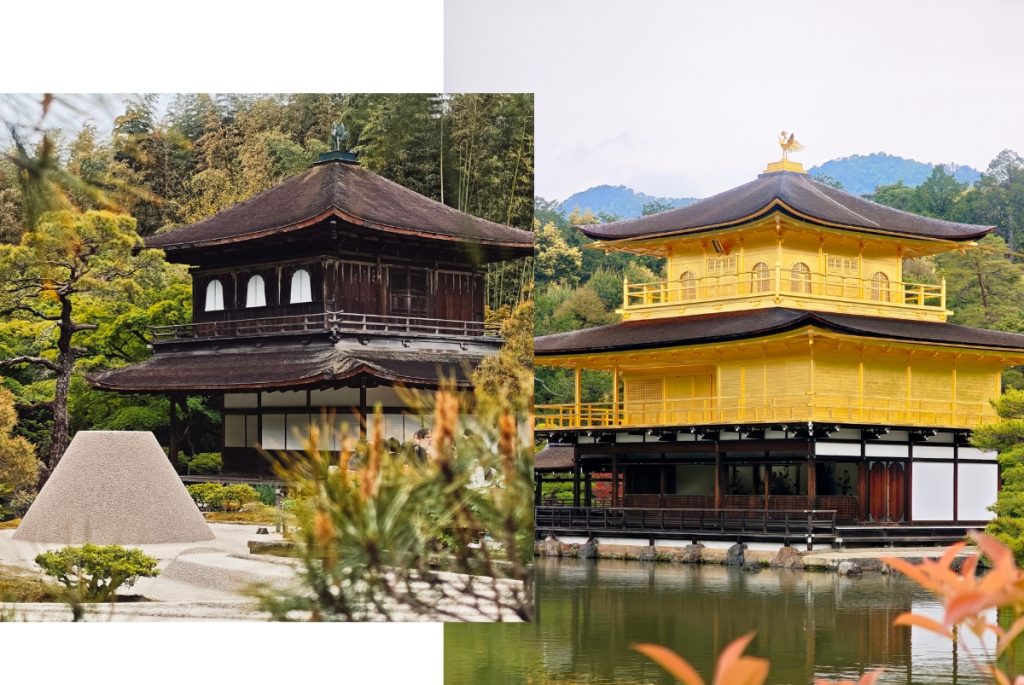
Begin with Kinkaku-ji, the Golden Pavilion. Gold leaf covers its upper two storeys, reflected in the pond below. Its history is tied to a 14th-century villa later converted into a temple. Choose your visiting time with the current opening hours in mind. Ginkaku-ji, the Silver Pavilion, offers a different atmosphere.
Despite the name, it isn’t covered in silver.
Its gardens bring together carefully formed sand, moss and considered views. Nearby, the Philosopher’s Path, Tetsugaku no Michi, follows a canal past trees and smaller temples. Associated with philosopher Nishida Kitaro’s walks, it changes with the seasons: blossom in spring, warmer colours in autumn.
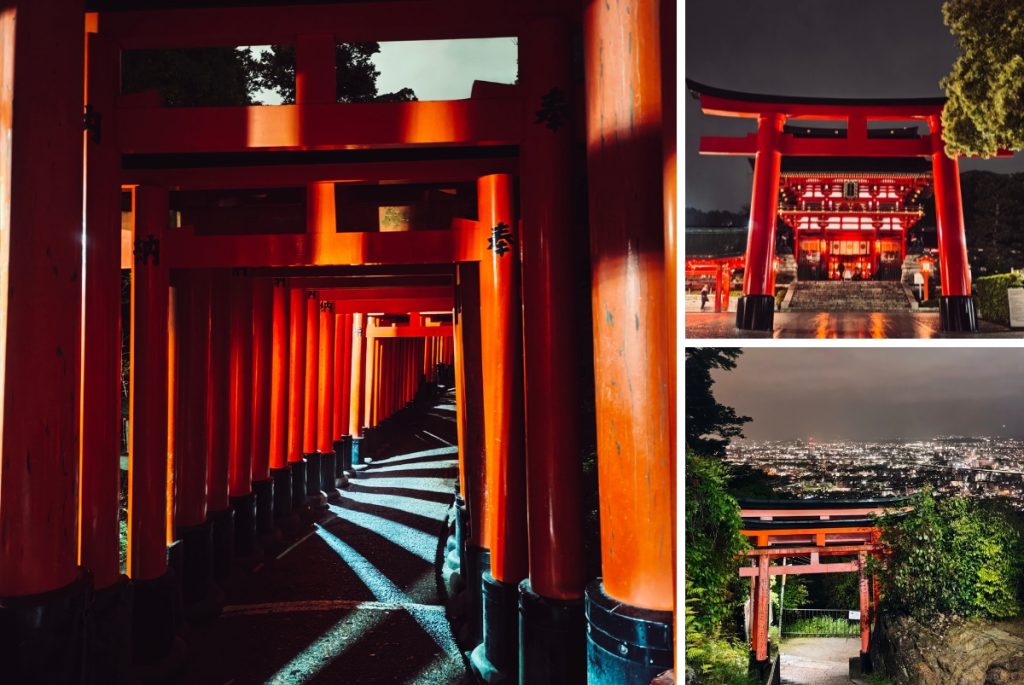
Fushimi Inari Taisha is unforgettable for its long sequences of vermilion torii gates climbing the wooded hillside.
Walking beneath them can feel almost otherworldly.
The gates continue beyond the busiest photograph spots, but a longer climb needs time, suitable footwear and attention to daylight and local guidance. Enjoy the views from the route without assuming the summit itself is a panoramic lookout.
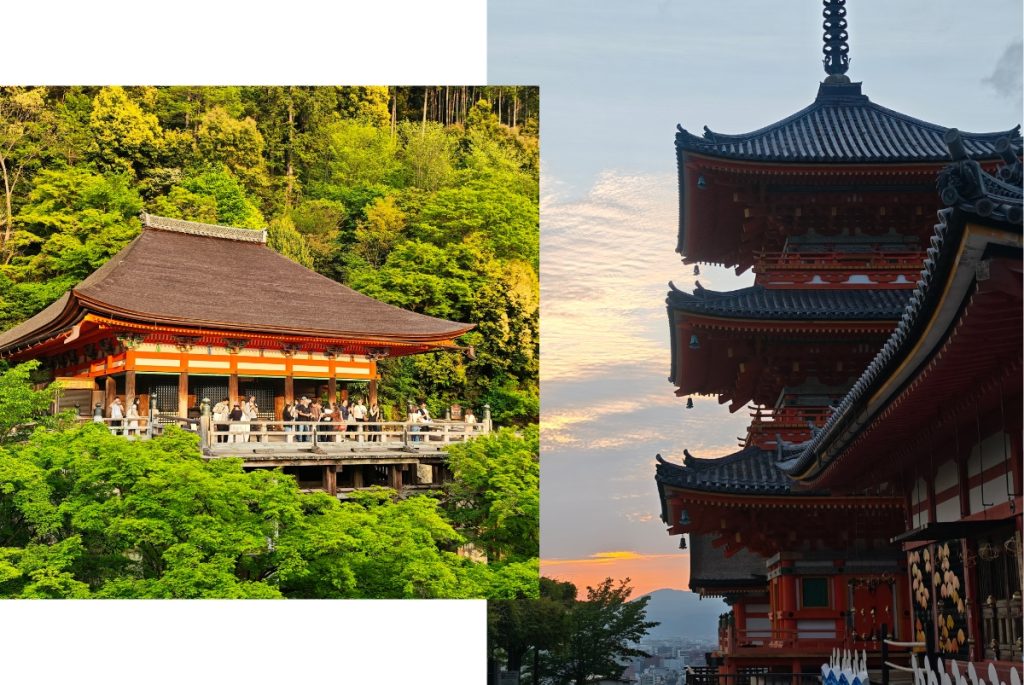
Kiyomizu-dera stands above the city with its remarkable wooden stage. Check the day’s closing time and any special evening opening before planning a sunset visit. Afterwards, Gion offers wooden façades, narrow streets and paper lanterns,
with a sense of lives continuing behind doors visitors don’t enter.
This is a working neighbourhood as well as a destination. Respect private streets, photography restrictions and the people going about their day. Seeing a geiko or maiko on the way to an appointment is a privilege, not an invitation to stop or follow them.
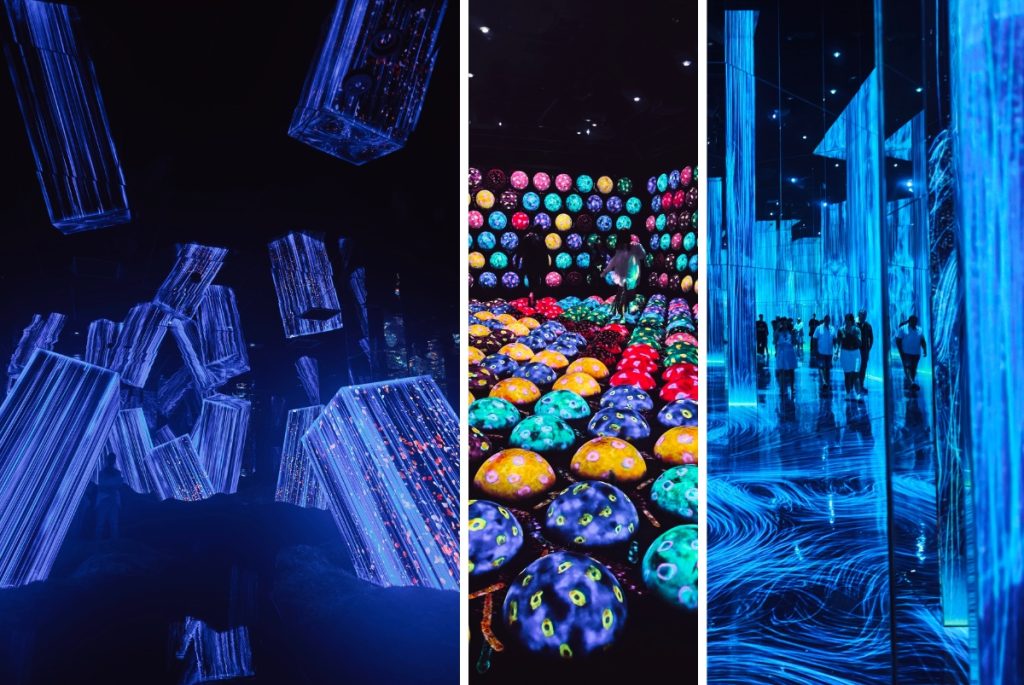
For a different side of Kyoto, consider teamLab Biovortex Kyoto. Digital artworks turn light, movement and space into an immersive environment. Check tickets and any artwork-specific restrictions before visiting. This is another expression of contemporary Japan, alongside the temples and historic streets.
A little further afield
A day trip to Nara
Nara is within reach of Kyoto by train, with journey times depending on the service and departure point. Deer roam the park and nearby areas among visitors and temples. They have a special place in local religious tradition, but remain animals to treat with care and space. Todai-ji provides another major reason to visit,
alongside the chance to spend a slower day outside Kyoto.
We’ll pause here, just beyond the halfway point of the trip. Tokyo’s streets and surprises await in part two.
Budapest: more than a summer fling
What’s happening in the city? Follow GoGuide on Instagram to hear about it first.
Subscribe to our YouTube channel for a closer look at the city, and a wider view.