Johnny Cash in nine songs: part one
The first half of our playlist for the Man in Black.
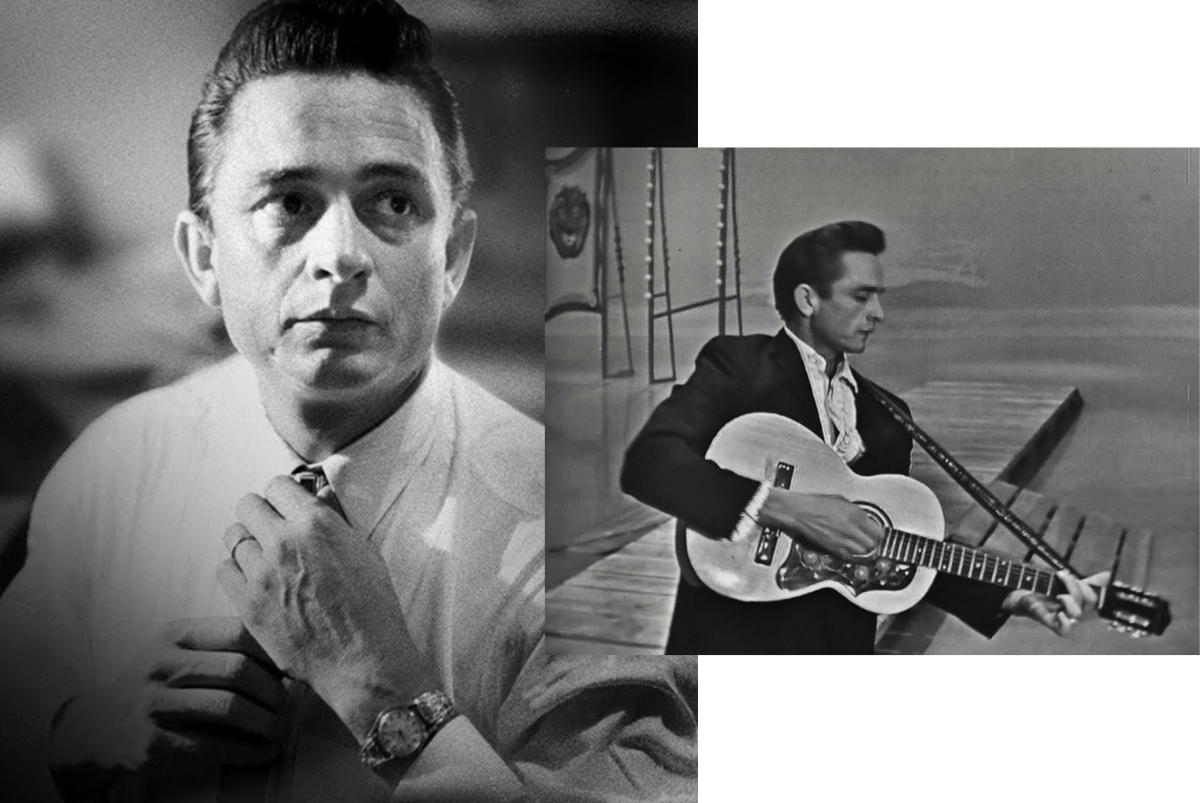
Popular music has never lacked nicknames.
David Bowie’s Thin White Duke, Elvis Presley’s King, Ozzy Osbourne’s Prince of Darkness: the title and the performer become almost inseparable. Johnny Cash is the Man in Black. With him, the colour feels less like a costume than a position, social, moral and almost biblical. Black for the poor, the marginalised, prisoners and the forgotten. In 1971, during the era of The Johnny Cash Show, he explained that choice in the form he knew best: a song.
“Man in Black” turns the question of what he wears into a statement of solidarity with people living on the losing side of things.
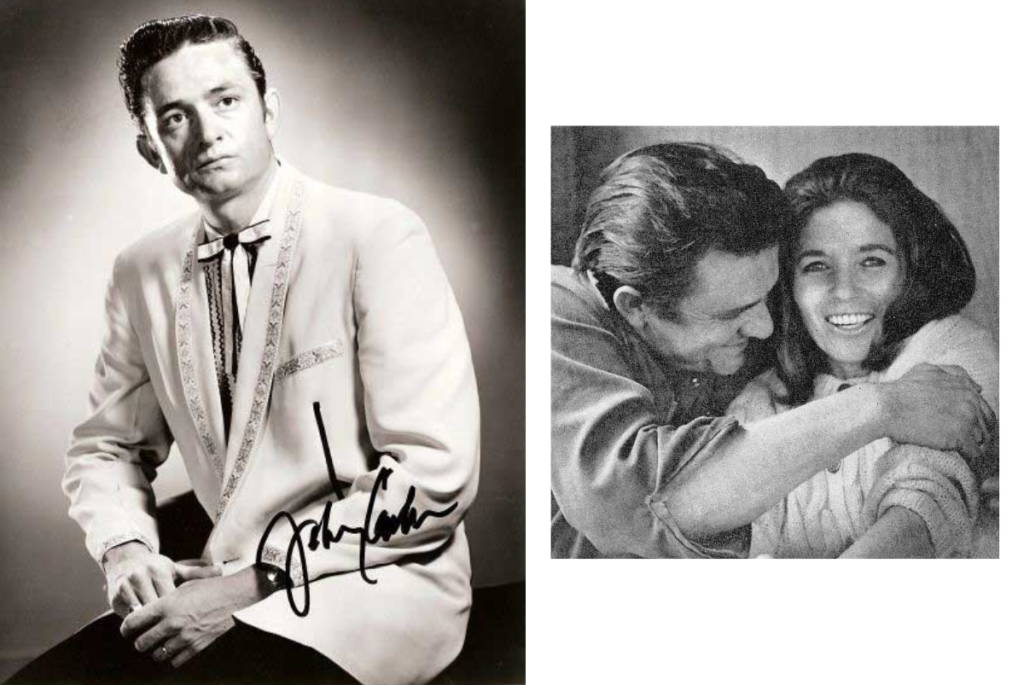
If you want to understand Johnny Cash,
the songs are the place to begin. These first four reveal the raw rockabilly rebel, the storyteller, the traditionalist and the artist who could make very little sound like an entire world.
1. Cry! Cry! Cry! (1955)
Early Cash is direct, without an orchestra or a cushion of backing voices. Here is the characteristic boom-chicka-boom rhythm associated with his guitarist Luther Perkins, a sound that would become an identity.
The song moves like a train that cannot stop.
There is momentum without hysteria. Rockabilly, country music meeting rock ’n’ roll energy, is presented in its barest form. Almost austere.
2. I Walk the Line (1956)
The tension is inward here: a man keeping watch over his own heart. We are still in rockabilly territory, but discipline now stands beside rebellion. Cash is promising to hold himself to a standard. Life would prove more complicated. In the late Fifties and early Sixties, constant touring and chart success brought their own pressures.
Fame did not leave his private life untouched.
Drug use, infidelity and emotional upheaval marked the period, alongside a growing closeness to June Carter. His marriage to Vivian eventually ended. The distance between the fidelity promised in the song and the life that followed became part of the complicated story behind the Man in Black.
3. Ring of Fire (1963)
The quiet intensity opens into something more expansive. Cash later described dreaming of the mariachi-style brass that became central to his recording.
The song is credited to June Carter and Merle Kilgore.
Its emotional force is often connected to Carter’s feelings for Cash. Whatever we hear in that biographical story, the recording makes desire sound both irresistible and dangerous.
4. A Boy Named Sue (1969)
Shel Silverstein wrote it, but Cash’s performance at San Quentin prison on 24 February 1969 made it his own. Reading from a sheet, he gives the song the energy of something being discovered in the room. The audience responds loudly, laughing and calling out. Beneath the humour is a story about
an absent father, hurt and a difficult inheritance of masculinity.
Pain becomes a source of toughness, though the song never lets that idea remain entirely comfortable. The San Quentin visit also produced one of Cash’s best-known photographs: Jim Marshall’s shot of the singer raising his middle finger. It has become a visual shorthand for the defiance people hear in his voice.
Part two follows the Man in Black into five more songs, and several more transformations.
Johnny Cash on the blues, life and all-consuming love
What’s happening in the city? Follow GoGuide on Instagram to hear about it first.
Subscribe to our YouTube channel for a closer look at the city, and a wider view.