Robert Duvall: the power of saying less
Remembering the performances that made his presence impossible to ignore.
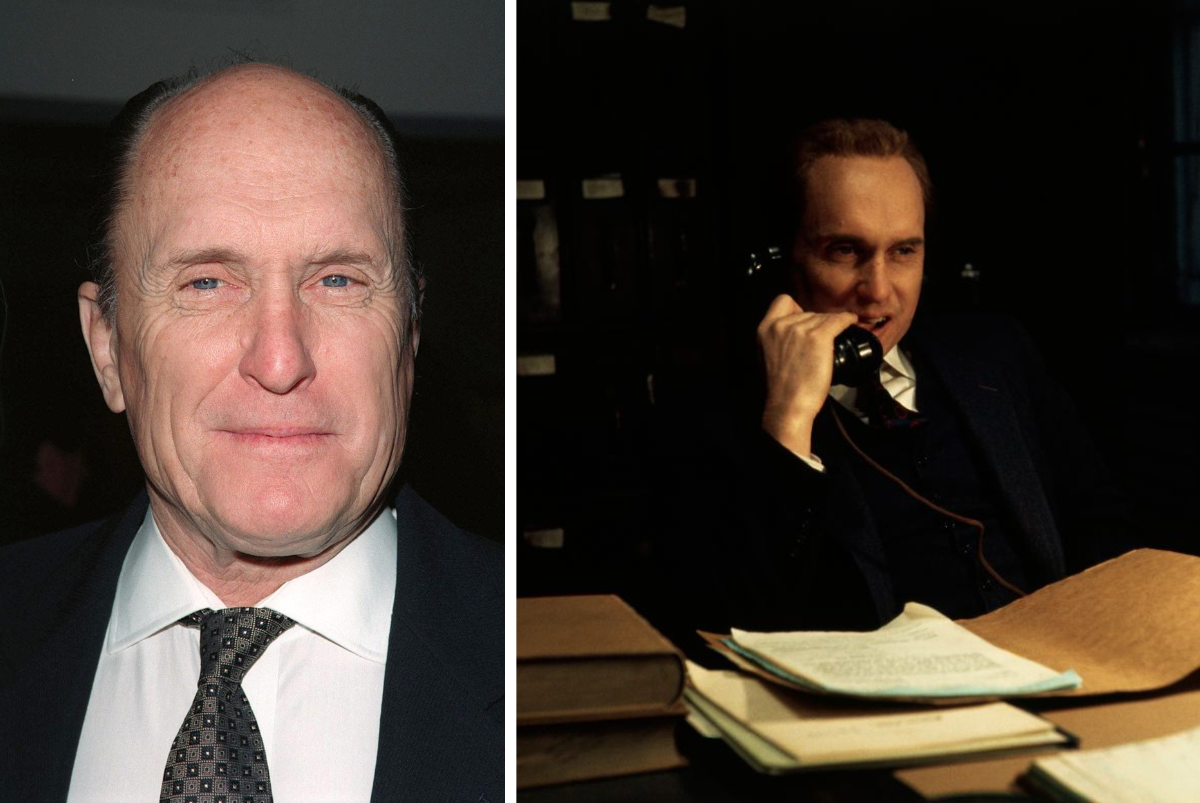
Some actors fill a room the moment they enter it. Robert Duvall could fill a screen without raising his voice.
Across more than six decades of work, he relied on a rarer, harder gift: the ability to carry a character’s life in a look, a pause or something left unsaid. Quietly. Like a ghost asking only to be noticed. A handful of titles cannot contain a career of that scale, but these are among the performances we return to. The ones that will stay with us.
To Kill a Mockingbird (1962)
Boo Radley, the outsider the local children fear before discovering he is their protector, marked Duvall’s feature-film debut. Screenwriter Horton Foote recommended him after seeing his stage work. It was an inspired choice.
Duvall refused to make Radley simple.
He is both a hero and a man left outside the community of Maycomb, Alabama. After saving Jem and Scout, he brings an extraordinary tenderness to a scene without needing a speech. Here was the quality Duvall would return to throughout his life: the quiet force of presence.
M*A*S*H (1970)
Two years before The Godfather, Robert Altman cast him as Major Frank Burns in the black comedy about surgeons during the Korean War. Burns is an exquisitely unlikable creation:
pious, ineffectual and utterly convinced of his own importance.
Duvall plays him as the perfect target, the first domino that has to fall so everyone else can dance around it. In a world of clowns, he is the man taking everything completely seriously. That is precisely what makes him funny. Without him, Altman’s machine loses its rhythm.
The Godfather (1972)
Tom Hagen is reason in a family driven by instinct: the Corleones’ lawyer, adviser and consigliere, a custodian of the old order as another generation presses forward.
It may be one of the film’s most difficult roles,
requiring him to remain indispensable in scenes dominated by Brando, Pacino and Caan. For Hagen, business is never simply business. Duvall understands that, giving him the dignity of someone who can be betrayed without being broken. His presence is essential to the first two films, in which he appears.
Apocalypse Now (1979)
“Someday this war’s gonna end.” The line sounds less like relief than regret. Lieutenant Colonel Kilgore, the officer deranged enough to arrange surfing under fire, could easily have become a cartoon.
Duvall’s attention to the character’s reality keeps him from becoming one.
The detail makes Kilgore more disturbing than a simple grotesque: a man who has found his purpose in chaos, and may not want to lose it.
Get Low (2009)
Felix Bush lives in the Tennessee woods, withdrawn from other people and from his own past. One day he arrives in town with an unusual request: he wants to hold his funeral while he is still alive. Director Aaron Schneider gives Duvall a leading role of formidable weight,
and he brings the whole length of his career to it.
Bush is difficult, unpredictable and tired. But when he finally delivers his own funeral speech, another man emerges: someone who has carried shame and guilt for decades and is at last setting them down. Duvall plays him quietly, inwardly, without grand gestures. That is what makes the performance devastating.
What happens to us when our heroes are gone?
What’s happening in the city? Follow GoGuide on Instagram to hear about it first.
Subscribe to our YouTube channel for a closer look at the city, and a wider view.