No bar, no stage, no showing off: ecstatic dance in Sofia
Piero Epifania on rhythm, shared space and dancing without an audience.
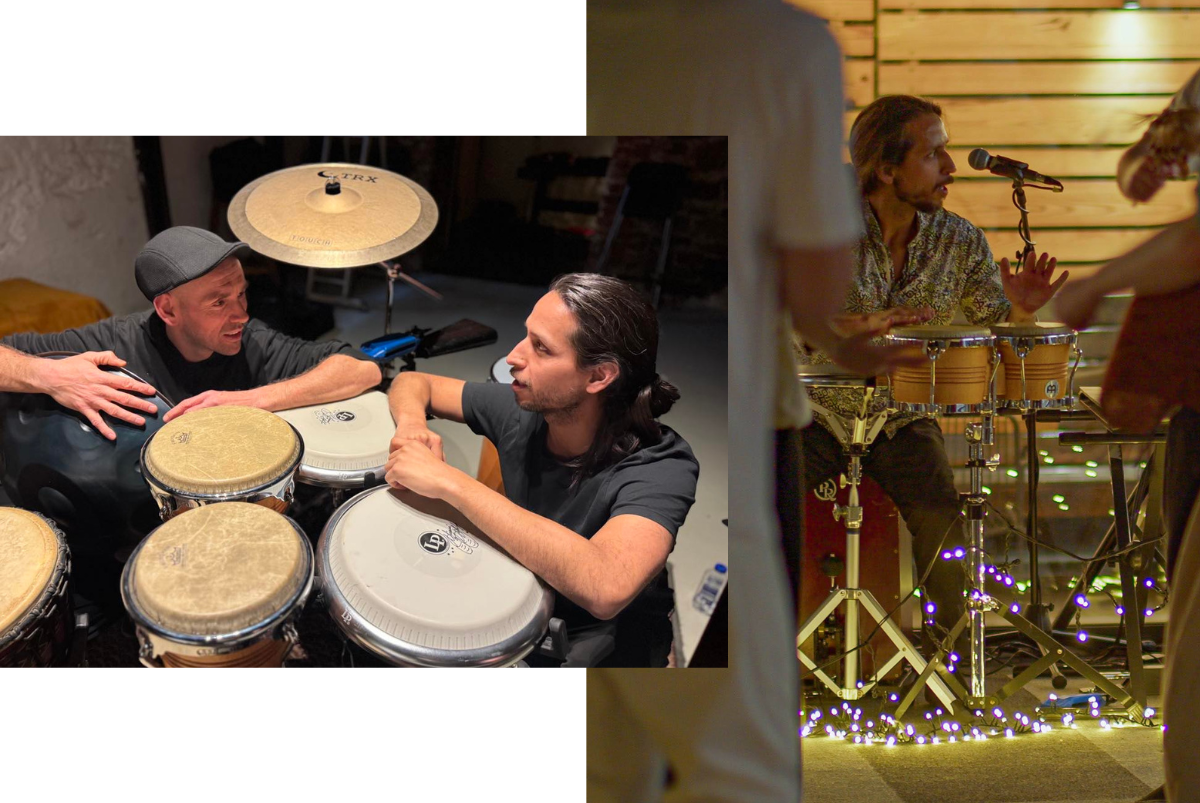
Photography: Piero Epifania’s archive
Ecstatic dance still sits a little below Sofia’s radar.
Imagine something between a movement practice, a musical journey and a quiet rebellion against the rules of nightlife. No stage, no bar, no alcohol. No correct steps and no expectations: just a body, a rhythm and room to move. Many people dance with their eyes closed or covered, and cameras stay off. Dance has long belonged to communal rituals, from ancient Greek festivals to traditions associated with trance. The contemporary urban format has a character of its own, without prescribed choreography or religious doctrine, and has travelled between dance communities around the world.
Among those giving it a face and a sound in Sofia are Ecstatic Sessions BG:
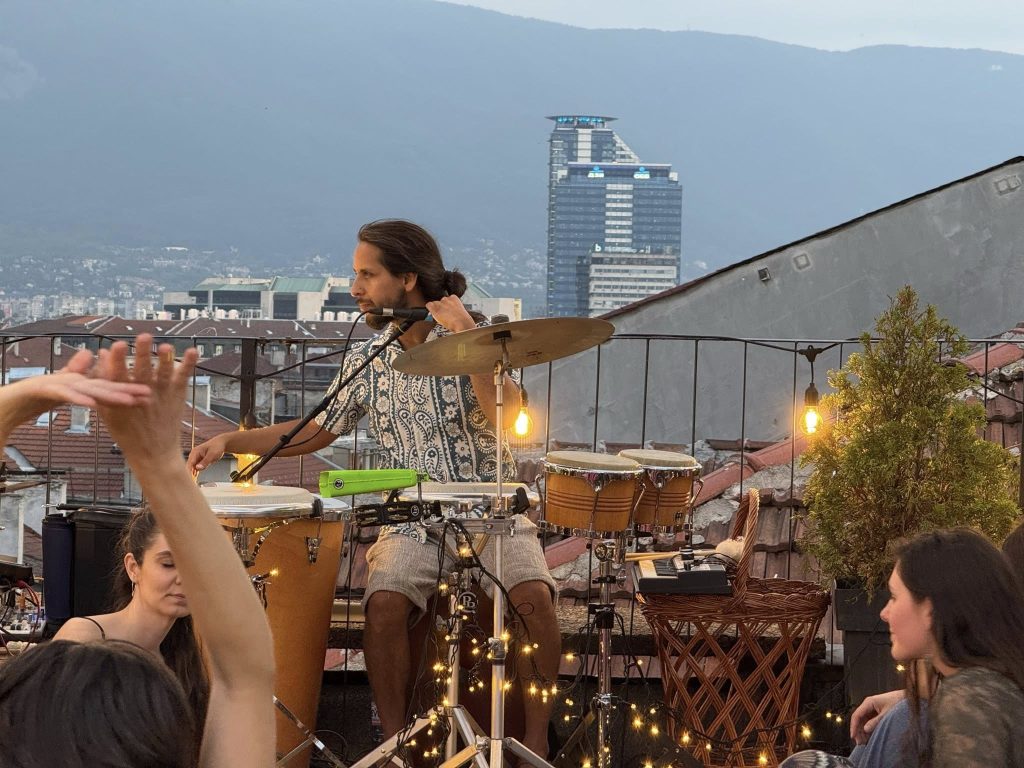
Petar Yordanov, known as Buny, Piero Epifania and Anna Sidova. We meet Piero, a Peruvian musician for whom rhythm is less a style than a way of life.
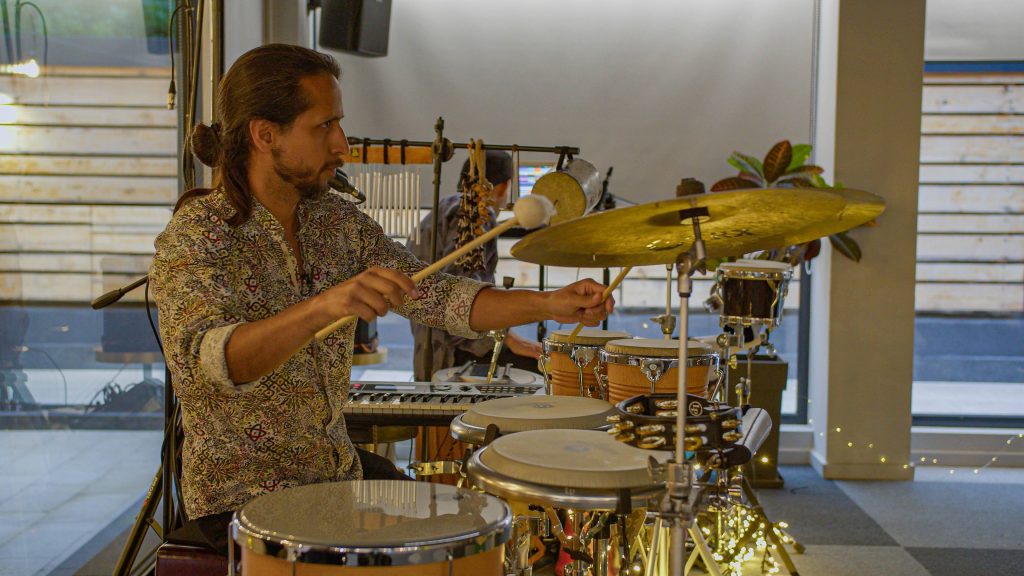
Working with trance rhythms, percussion and improvisation, he encourages people to stop thinking about movement and start feeling it. The room is shared, rather than divided into performers and spectators. Piero does not teach steps; he creates conditions in which people can relax and trust the rhythm. This is dancing to experience, rather than to watch. Come as you are.
Ecstatic dance sounds somewhere between a yoga retreat and a rave. What actually happens in your sessions, and what do people take from them?
It is an open space where people can move freely, without prejudice or taboos. There are no rules about how the dancing should look. The only requirement is mutual respect. The rest happens naturally: you listen to the music, follow your body and let the rhythm lead.
What do you and Buny play? Is there a ritual before you begin?
We play a long session built around trance rhythms, using different percussion instruments, didgeridoo and keyboards. There is a shared framework, but plenty of room for improvisation, so every session sounds different. Buny and I have known each other for more than ten years. He was one of the first musicians I met in Bulgaria, and our shared love of rhythm made everything feel natural from the beginning. We gather in a circle for a few minutes before and after the dancing, to acknowledge one another and create a calm, respectful atmosphere. Anna Sidova facilitates that part and takes care of making the space welcoming and open to everyone.
Is there already a core group coming every month, or are you still explaining what you do?
I am still relatively new to ecstatic dance. Ani and Buny invited me to join forces and develop this project, which has been a very pleasant surprise. There are familiar faces now, but every session brings a different group. Some have followed ecstatic dance for years and practised it in different countries. In Sofia, though, it is still more of a discovery than a mass movement.
You play a lot of instruments. Which could you not live without? And how did you get from Lima to Sofia?
I wish I could say I had completely mastered one instrument. I work mainly as a percussionist, and my principal instrument is the cajón, which comes from Peru. I grew up with it, but I feel at home with other Latin percussion too. I first came to Bulgaria in 2014 and, as so often happens, love changed everything. I stayed for the city, my friends and colleagues, and the people around me.
This feature was produced as part of the Migrants with Talents project, supported by Lidl Bulgaria’s You and Lidl for Our Tomorrow initiative, in partnership with the Workshop for Civic Initiatives Foundation, the Bulgarian Donors’ Forum and the Association of European Journalists.
A star is born: the story of a Sofia band
What’s happening in the city? Follow GoGuide on Instagram to hear about it first.
Subscribe to our YouTube channel for a closer look at the city, and a wider view.